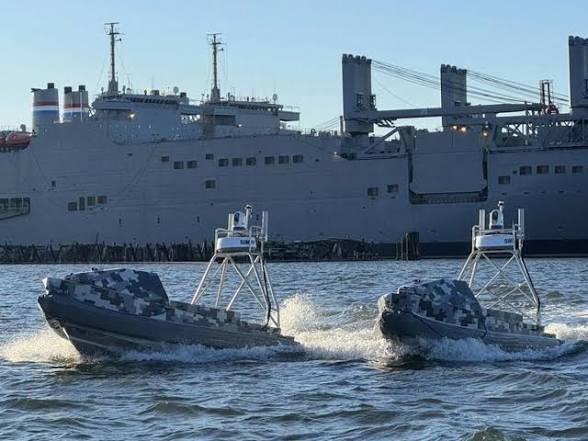
The United States has introduced its uncrewed drone boats into the Gulf theater of operations as part of its ongoing campaign against Iran, in a step that shows the U.S. Navy is treating these platforms as a real field asset in an actual conflict environment. The Pentagon confirmed, according to Reuters, that these boats are being used in patrol missions as part of Operation Epic Fury after logging hundreds of hours and thousands of nautical miles in operational service.
The vessel used in this mission is the GARC, a small, high-speed, relatively low-cost drone boat designed to operate autonomously in contested maritime environments. The manufacturer says the platform can be adapted for reconnaissance, strike, survey, and interception missions, with an open architecture that allows different payloads and sensor packages to be integrated depending on the task.
Detail
The importance of these boats in the Gulf is operational and tactical. The maritime theater here is crowded, fragmented, and economically sensitive, while Washington needs constant monitoring of shipping lanes, small craft, and fast-moving threats without exhausting its larger ships or exposing human crews to direct danger. That is why deploying drone boats fits into a broader effort the U.S. Fifth Fleet has pursued for years to expand the use of uncrewed systems and link them to continuous maritime surveillance across Middle Eastern waters.
Tactically, these boats serve four main roles.
• First: intensifying presence. Large numbers of them can be deployed across wide areas at a lower cost than operating large crewed platforms.
• Second: absorbing risk. They can move close to threat areas or suspicious objects without risking a human crew.
• Third: building a real-time maritime picture. These platforms monitor patterns and detect unusual behavior with greater speed and longer endurance.
• Fourth: sending a deterrent signal. The very deployment of fast, autonomous boats that can be expanded in number means واشنطن is trying to turn the Gulf into a dense surveillance zone where it becomes difficult to operate without being exposed.
But this mission does not mean the system is free of constraints. U.S. reports themselves indicate that the unmanned boat program has faced technical and safety setbacks in earlier stages, which means these platforms remain more of a support, surveillance, and pressure tool than a fully independent combat asset.
What next?
The key question now is how these boats will be integrated with crewed ships, aerial reconnaissance, and surveillance networks in the Gulf. If Washington succeeds in that integration, the drone boat could shift from a marginal reconnaissance tool into a permanent element in the architecture of U.S. maritime deterrence in the region.