Hormuz has become the war’s most decisive question. Whoever imposes their equation there moves closer to claiming victory.
The strait is no longer merely an Iranian pressure tool or a global shipping chokepoint. It has become the most urgent operational objective, after the early hopes of swiftly toppling the Iranian regime or permanently ending its nuclear capability began to recede. With that shift, the war has slid into a more dangerous phase, as power plants, water networks, desalination facilities, and even prisons and detention centers have entered the zone of direct threat.
According to a report published by The Washington Post, American and Israeli security circles now see reopening the strait as a possible title for the next phase, as new U.S. reinforcements head to the region, including around 4,500 sailors and Marines, alongside the accelerated deployment of a similar maritime unit. These circles read that path as a political opportunity for U.S. President Donald Trump to declare that he has broken Iran’s grip on the world’s most important oil corridor, even if the war’s broader objectives remain out of reach.
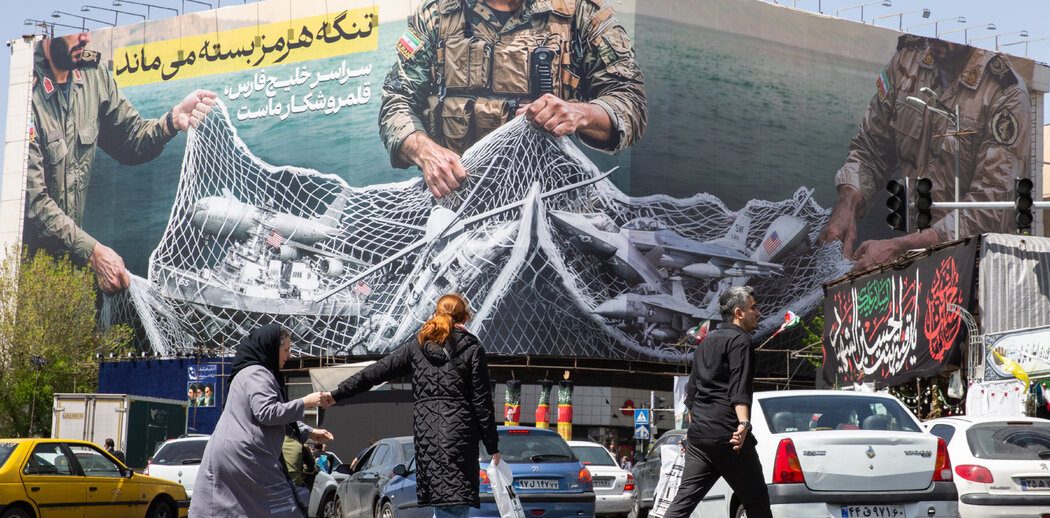
At the same time, the Iranian response is no longer limited to conventional military threats. Tehran has rejected Trump’s ultimatum to fully reopen the strait and has raised the stakes by threatening to target energy, water and desalination facilities across the region if Iranian power plants are struck. At the same time, it has stuck to an ambiguous formula: the strait is not closed, but it is not open to enemies.
On a parallel track, reports coming out of Iran paint an even darker picture inside the prisons. Political detainees and foreign nationals are stranded in facilities that have been damaged or lie near sites that have come under bombardment, amid security disorder, communications blackouts and growing fears that prisoners could be used as human shields or simply left exposed to danger without protection.
Detail
Politically, the battle over Hormuz now appears easier to market than the larger goals raised at the start of the war. Instead of talking about regime change or permanently shutting the nuclear file, the focus is shifting toward a clearer and more measurable objective: reopening the strait, protecting energy shipments, and reducing Iran’s ability to use maritime traffic as a deterrent tool in any future confrontation.
But that objective is far from simple. Even with U.S. strikes on missile positions, vessels suspected of laying mines, and fast boats along the waterway, the paralysis in tanker traffic has not been broken. The concern is no longer limited to mines or coastal missiles. It has expanded into the prospect of a prolonged attritional effort that would force the United States to escort ships and monitor threats over an open-ended period, under simultaneous pressure from markets, energy flows and politics.
In parallel, the war is entering a more sensitive humanitarian phase. Trump’s threat to strike Iranian power plants has triggered a wave of fear inside Iran, because hitting the electrical grid would not simply plunge cities into darkness. It would also threaten hospitals, water systems, communications and everyday supply chains. And with Iran threatening in return to hit Gulf energy and desalination facilities, millions of civilians are being pulled into a zone of direct vulnerability, not merely as collateral damage, but as part of the deterrence equation itself.
The effects are already beginning to show. Press reports have spoken of widespread electricity outages in parts of Tehran after new strikes, and of rising public anxiety over the war’s slide toward attacks on essential infrastructure. Across the region, there are also concrete signs of a widening danger: an injury caused by interception debris near Abu Dhabi, reports of an explosion near a vessel off Sharjah, and the continued rise in oil prices alongside falling equities under the pressure of Hormuz-related threats.
A report published by The Wall Street Journal adds another layer of darkness. According to the investigation, the war has not only boxed in the Iranian military, but has also reached the surroundings of facilities holding dissidents, political prisoners and foreign nationals. Some compounds have been directly or partially damaged, while detainees in prisons such as Evin are living under the impact of explosions, smoke, food shortages and security disorder. That means a war supposedly aimed at pressuring the regime’s structure could in practice become an added danger to the most vulnerable people trapped inside it, including its opponents and hostage detainees.
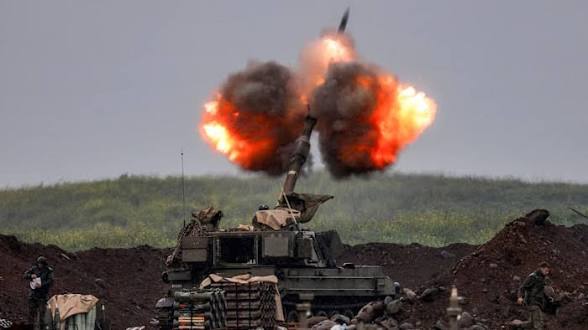
At the same time, the battlefield continues to widen. Iran has kept firing missiles at Israel, including strikes near Dimona and Arad that have raised fresh questions about the effectiveness of Israeli air defenses under sustained attritional pressure. Israel, for its part, has expanded its operations in Iran and Lebanon, with growing indications that the war is not moving toward a near end, but toward a reordering of its priorities: from a fast and sweeping conclusion to a long battle over deterrence, energy, sea lanes and civilian infrastructure.
What Next?
The coming weeks will determine whether Washington will settle for more aerial and naval pressure to reopen Hormuz, or move toward a more dangerous step near Kharg Island and the export corridors. But what is already clear is that the war has moved beyond the framework of conventional strikes and entered a phase in which oil, electricity, water and prisons have become part of the battlefield itself, not merely its backdrop.