News
The Middle East has entered a denser and more entangled phase, as Khamenei the son’s speech came as a declaration of how this stage will be managed: betting on Hormuz, maintaining pressure on the bases, which in effect means threatening the neighboring states, and hinting at additional fronts, at a moment when Beirut was being bombed in its center, ships were coming under attack across the Gulf and Iraqi waters, and Gulf capitals were dealing in real time with drones, missiles, and trajectories threatening energy and navigation alike.
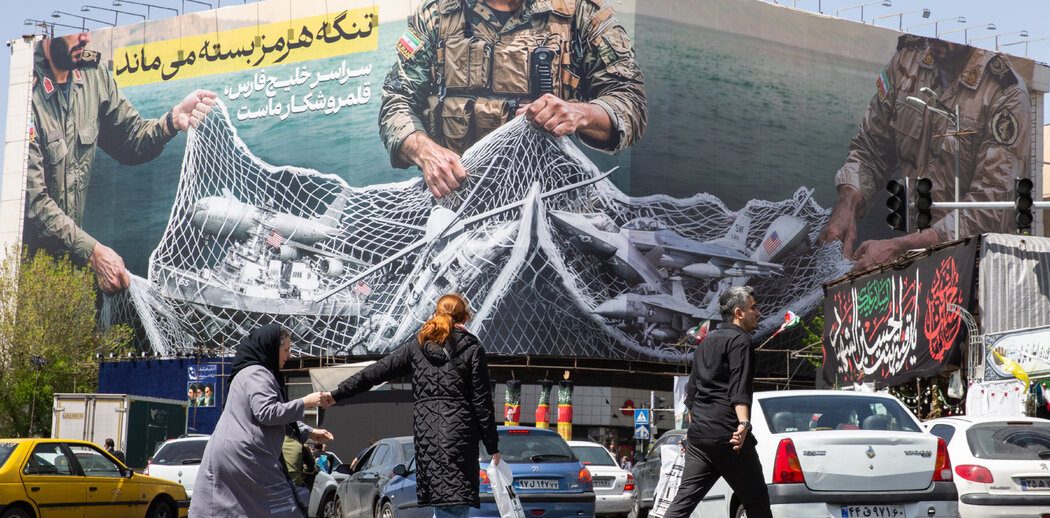
The speech did not come out as an ordinary political position. It looked more like an attempt to redefine the center of gravity in the war. If Tehran can no longer shift the balance militarily through ballistic missiles, it is trying instead to raise the economic cost through the sea, energy, bases, and proxies. In that sense, Hormuz appeared in the speech as a final instrument of economic strangulation and a regional message that war on Iran will not remain confined within its borders.
Detail
• The new supreme leader’s first speech came in a fully escalatory tone:
keeping the Hormuz card active,
pressuring the so-called U.S. bases in the region,
and signaling the possibility of opening other fronts.
• But the message was delivered only in written form. No image, no spoken address, and no public appearance to settle the doubts surrounding his fate.
That made the absence itself part of the text:
is he avoiding any electronic signature that could help reveal his location?
or is an earlier injury still preventing him from appearing?
So far, there is no conclusive answer, and that vacuum weakens the image of control the speech was meant to project.
• In the Gulf, the messages did not remain theoretical. Gulf defenses did their job, while ships and tankers came under attack in and around the Gulf and Iraqi waters, and oil prices climbed again with the Strait of Hormuz still under threat.
• In Lebanon, Israeli strikes moved into central Beirut near government headquarters, signaling that the war, which has already engulfed the south, the Bekaa, and the southern suburbs, has now entered the heart of the capital, carrying an unmistakable political and psychological message.
• In Iraq, the picture looked even more fragile: a strike on an Italian base and an attack that wounded six French soldiers in Erbil, alongside continuing fears that the country could once again turn into an open arena for score-settling between strikes on Popular Mobilization positions and attacks carried out by factions loyal to Tehran. In that sense, Baghdad is facing the direct spillover of a war widening over its own territory.
• On the western edge of the scene, troubling signs also emerged of possible further expansion after fears were raised over renewed friction along the Syria-Hezbollah line, adding the prospect of yet another front to the current map of fire.
What Next?
The next test will not be in the force of the words, but in the site of the next explosion. Will the Strait of Hormuz remain the main pressure point? Will strikes push deeper into the heart of Beirut? Will Iraq turn into an even heavier arena for proxies and reprisals? Or will the new supreme leader’s absence from view, combined with the presence of his escalatory message, itself become a sign of internal disarray at the very moment the system is trying to appear more ruthless than ever?