
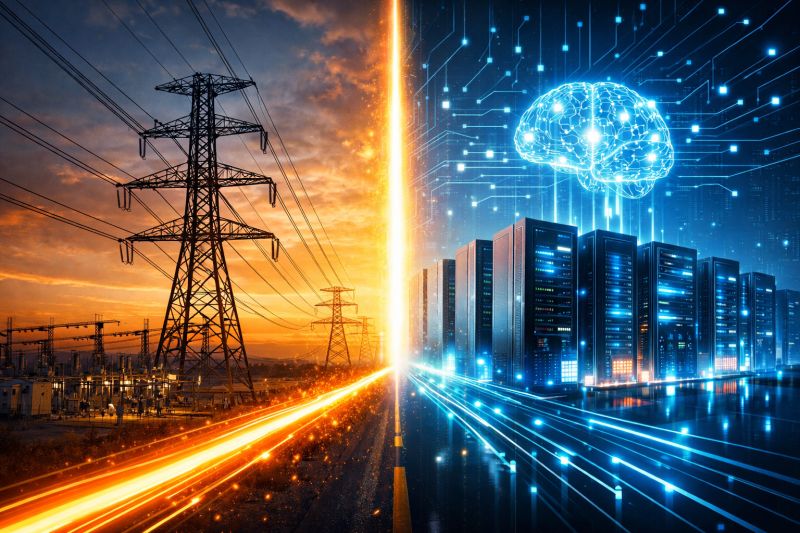
Technology companies are increasingly turning to private power plants and electricity grids to meet the growing energy demands of AI data centers, in a rapid shift aimed at reducing pressure on public grids and limiting rising electricity costs. This trend follows mounting political pressure in the United States urging tech firms to bear the full cost of their energy consumption.
This transformation highlights a widening gap between the massive energy needs of data centers and the ability of public utilities to keep up, driving the need for a new model based on power generation out of the traditional grids.
Details
- AI data centers consume unprecedented amounts of electricity.
- A single facility often exceeding 100 megawatts in demand—comparable to the energy needs of small cities.
- As hundreds of new data centers are planned, pressure on existing infrastructure continues to intensify.
- Utilities face slow decision-making and delays in building new power plants due to regulatory complexity and unstable policies.
- This has led to longer connection timelines for new projects, pushing developers toward faster alternatives.
- Early estimates suggest that private grids could supply around one-fifth of the planned data center energy demand.
Meeting this surge through public grids alone could increase consumer electricity prices by as much as 40 percent, while also raising concerns about grid reliability. Private grids, in contrast, offer a way to isolate these impacts and shield consumers.
Although private power systems are not new, their role is expected to expand significantly alongside the AI boom. Projections indicate that data centers could consume nearly one-fifth of total U.S. electricity within the next decade, reinforcing the shift toward private energy solutions.
What’s Next?
Attentions are now turned to how quickly private power projects can be deployed and whether public grids can adapt, as the impact on electricity prices and supply stability comes into sharper focus.