The Wall Street Journal offers a reading of the Iran war that goes beyond the figure of Donald Trump, arguing that the more important issue is the transformation in how U.S. force is used. Instead of the limited, gradual responses that shaped Washington’s approach for decades, Operation Epic Fury emerged as a new model based on a broad opening strike and the imposition of a high military ceiling on the adversary from the first moment.
Details
• The newspaper says the war on Iran is the first major U.S. operation in a generation to abandon the logic of escalation management and proportional response in favor of dense, early, forward-deployed force.
• Under the old doctrine, Washington responded to escalation with a calculated and limited strike: one site for one site, a barracks for an attack, or a small military target for a field provocation.
• The goal of this approach was to keep the war under control and prevent the adversary from pushing the confrontation to a wider level.
• But the article argues that this logic gradually became more of a political ritual than an effective strategy, because it gave adversaries room to test Washington step by step without paying a decisive cost.
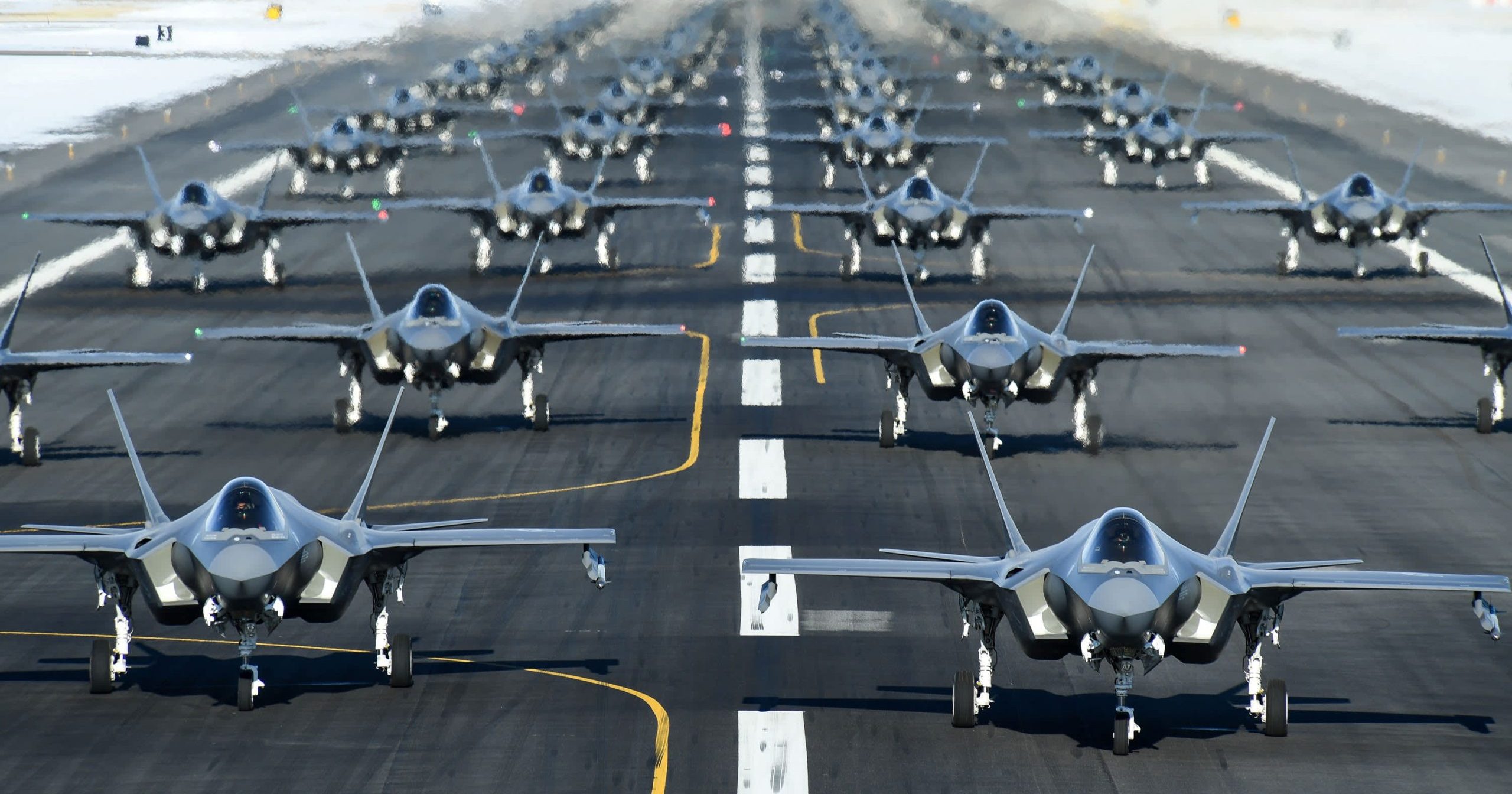
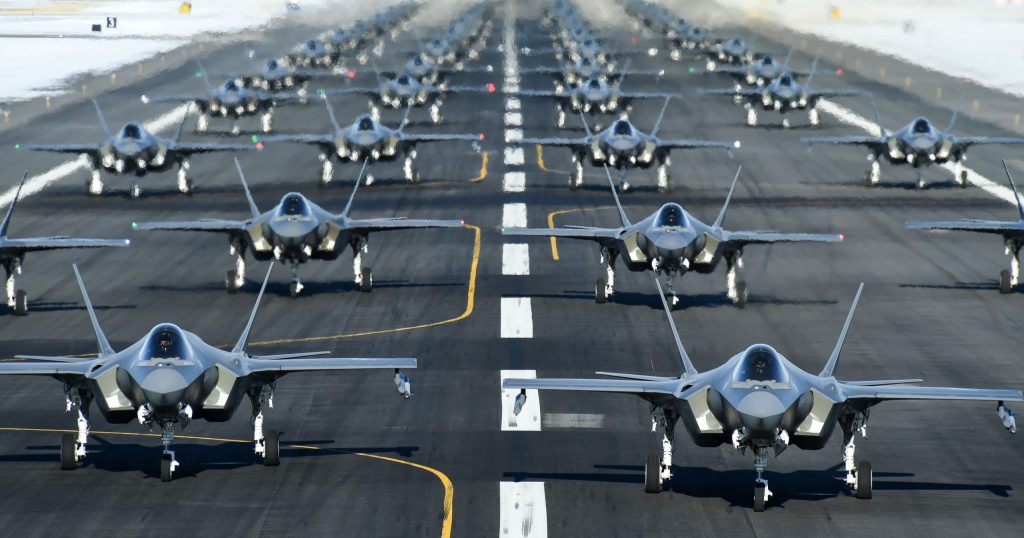
• By contrast, the high strategic ceiling doctrine is based on striking the adversary’s core military infrastructure from the beginning, rather than waiting for escalation phases one step at a time.
• According to the article, Washington and Tel Aviv carried out around 900 strikes in 12 hours during the first phase of Operation Epic Fury, targeting Iran’s military infrastructure, air defenses, and regime leadership simultaneously.
• The idea is that America did not wait for the IRGC to escalate. Instead, it imposed on it a military ceiling it could not breach.
• Iran tried to respond by threatening the Strait of Hormuz and striking nearby Arab states, but the article says those moves failed to change the battlefield calculus.
• Therefore, the new doctrine does not measure success only by the number of strikes, but by the first strike’s ability to prevent the adversary from owning the escalation ladder later.
⸻
A Methodical Comparison Between Escalation Management and High-Ceiling War!
First: The Military Objective
Escalation Management:
It aims to prevent the war from expanding through limited and calculated responses. The idea is that the adversary will understand the message and back down after a proportional strike.
High Strategic Ceiling War:
It aims to paralyze the adversary’s ability to escalate from the beginning. The message is not only a warning, but a rapid change in the balance of power.
Second: The Use of Force
Escalation Management:
It uses force gradually: a small strike, then waiting for the adversary’s response, then another strike if needed.
High Strategic Ceiling War:
It uses force intensively at the beginning. The opening strike is large enough to define the limits of the war before the adversary can impose them.
Third: Its Effect on the Adversary
Escalation Management:
It gives the adversary time to adapt, move proxies, open side fronts, and test red lines.
High Strategic Ceiling War:
It disorients the adversary early, hitting command centers, defenses, and military infrastructure at the same time, making its escalation options less effective.
Fourth: Civilians and Infrastructure
Escalation Management:
It may avoid civilians, but it does not make civilian infrastructure a clear part of the political exit architecture.
High Strategic Ceiling War:
According to the article, Washington avoids striking electricity, water, and civilian oil facilities not only for humanitarian reasons, but because it wants to preserve a political exit for the Iranian regime.
Fifth: The Negotiating Card
Escalation Management:
Negotiations usually come after a series of strikes and counterstrikes, and both sides may reach the table only after a long war of attrition.
High Strategic Ceiling War:
Negotiations begin after a new military reality has been imposed. The adversary sits at the table knowing that the ceiling of escalation against it has already been set.
Sixth: The Risks
Escalation Management:
Its risk is that it may encourage the adversary to go further, because it knows the response will usually be limited.
High Strategic Ceiling War:
Its risk is that it may push the adversary into an uncontrolled response if it feels its survival is threatened. That is why it requires precise calibration between overwhelming force and leaving a political exit.
⸻
The Core of the New Doctrine
• The new doctrine is not based on destroying Iran completely, but on striking the regime’s military machine while leaving essential civilian infrastructure standing.
• This creates what the article calls a golden bridge: an exit that allows the regime to retreat without declaring total defeat.
• Excluding electricity, water, and oil facilities from broad targeting is not a minor detail, but part of the architecture of the war itself.
• When U.S. forces targeted Kharg Island, the strikes focused, according to the article, on military assets rather than facilities that operate oil exports.
• In this sense, Washington is trying to combine maximum military pressure with maximum preservation of settlement cards.
⸻
The Naval Blockade as a Second Phase
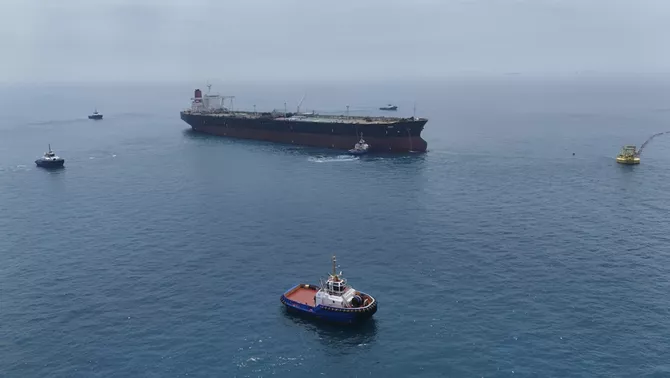
• After the failure of the first round of Islamabad talks, Washington moved to the naval blockade as the second phase of the new doctrine.
• The article describes the blockade as the new form of proportionality: massive economic pressure, but without fully destroying facilities that both sides may later need in a settlement.
• The difference is that pressure here does not come through a symbolic strike, but through a blockade that squeezes the regime and imposes a rising daily cost.
• The blockade gives Washington the ability to apply gradual strangulation after the initial military shock, while keeping oil and civilian infrastructure as negotiating cards.
⸻
The Exit Dilemma
• The article argues that ending the war requires political architecture, not just direct negotiations.
• The reason is that Iran’s current leadership, as the article describes it, is divided and paralyzed, and cannot accept unconditional surrender.
• That is why the writer proposes an exit formula that allows both sides to sell the outcome domestically, such as prisoner exchanges, a temporary truce, and the removal of young political prisoners from Iran to protect them from execution.
• These steps are not presented as surrender, but as arrangements that allow de-escalation without immediate political collapse.
⸻
What’s Next?
If the Wall Street Journal’s reading is correct, the legacy of the Iran war will be a change in how adversaries think about American power. Iran built its strategy for decades on the idea that Washington would fear direct war and settle for gradual responses. Now, the message is different: America may start from the high ceiling, strike hard militarily, avoid civilians, then use blockade and negotiation to engineer the exit. This is a more dangerous equation for Iran, and also worrying for China and every adversary that built its calculations on the assumption that American superiority had become unusable.