The private sector now urgently needs anti-drone defenses, as drone threats expand against critical infrastructure in the United States and abroad.
Details
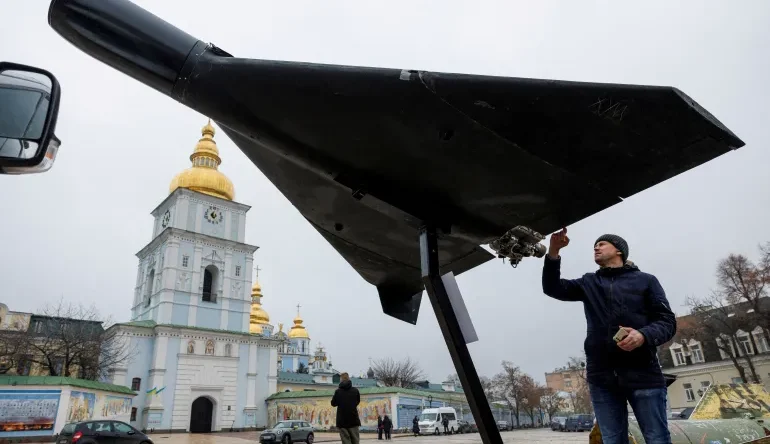
• The war with Iran has become the second major conflict confirming that the era of mass drone warfare has fully arrived, and that the way wars are fought has changed fundamentally.
• The article noted that U.S. facilities in the Gulf appeared highly vulnerable to Iranian drone attacks, which hit critical assets in Saudi Arabia, Kuwait, and elsewhere!
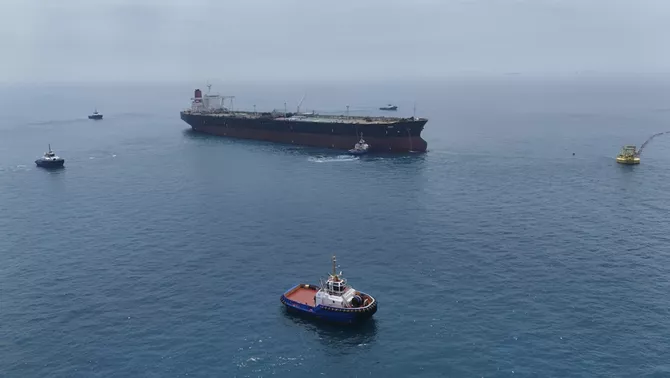
• According to the article, the attacks were not limited to military bases and airfields, but also targeted ports, airports, refineries, power plants, and gas facilities.
• It pointed out that the attack on Ras Laffan in Qatar reduced the country’s LNG export capacity by 17%, and repairs could take up to 5 years!
• Inside the United States, the newspaper says the appearance of sophisticated drones near military bases in Louisiana and Washington in March increased concerns that potential adversaries are becoming bold enough to breach U.S. borders.
• The Pentagon is moving to strengthen defenses at its bases, but the bigger problem is protecting what lies outside those bases: refineries, power plants, and industrial facilities.
• The article compared protecting the airspace above sensitive sites to ground perimeter security and cybersecurity, arguing that facilities need a virtual fence in the sky.
• The newspaper called on the Federal Aviation Administration to develop a mechanism to restrict airspace above critical infrastructure, as it already does around major events and sensitive government sites.
• It proposed using electronic defense tools such as high-powered microwaves and electronic jamming to disable drones without firing projectiles into crowded airspace.
• It stressed that these systems must operate under strict limits, including range restrictions, geofenced boundaries, and automatic shutdown when manned aircraft are detected.
• It said the technology already exists, but the missing link is public policy and a regulatory framework that allows these systems to be sold to the private sector after strict testing and certification.
• It added that protection should include key sites outside the United States, especially commercial facilities, ports, airstrips, and fuel depots used by the U.S. military in the Pacific and elsewhere.
What’s next?
The article calls for a partnership between the government and the private sector to build a regulatory and technological shield that protects infrastructure from a new aerial threat, instead of leaving civilian facilities as soft targets for drones.