News
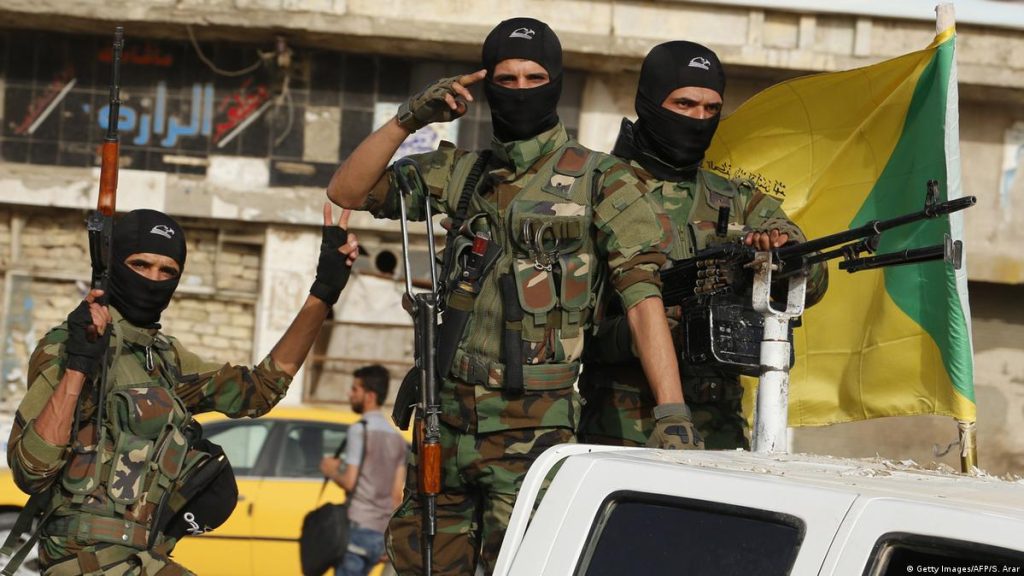
Asharq Al-Awsat published a lengthy investigation into Iran’s continuing war inside Iraq, saying the latest U.S.-Iran war exposed the scale of Tehran-aligned armed factions’ expansion inside the state, and their transformation from armed groups into a political, economic, and security network controlling wide areas of decision-making and resources.
Details
• The investigation tracks scenes from Baghdad after the killing of Iranian Supreme Leader Ali Khamenei, where a clear split appeared among Tehran’s allies: factions that had merged into the state and moved according to the calculations of power, and others that remained in the resistance camp, moving through weapons and the street.
• The report says the war revealed how factions can be inside and outside the government at the same time: through political and parliamentary fronts on one side, and combat groups operating under names such as the Islamic Resistance in Iraq on the other.
• The investigation focuses on the factions’ expansion into farmland south of Baghdad, where wide areas have turned into something resembling new fiefdoms, including investments, facilities, warehouses, and influence routes protected by bureaucratic and security networks.
• The report links land disputes to factional clashes, noting that incidents such as the 2025 storming of the Baghdad Agriculture Directorate in Al-Dora were not merely administrative disputes, but part of a struggle over resources among armed groups.
• The investigation cites sources saying some factions operate as financial vaults for Iran’s Revolutionary Guard, and that conflict erupts among them when interests clash or when one group’s resources grow beyond the role assigned to it.
• The report explains a deeper mechanism for managing Iranian influence: dealing with each Iraqi faction separately, while maintaining special groups inside the factions that are directly connected to the Revolutionary Guard, even if local leaders announce de-escalation or integration into the state.
• The investigation traces the roots of militia integration into state institutions back to Paul Bremer’s 2004 order, then the penetration of ministries and security agencies after 2005, before the war against ISIS gave the Popular Mobilization Forces broad political and social legitimacy.
• According to the report, integration did not discipline the factions or reduce Iranian influence. Instead, it gave them wider space inside ministries, border crossings, contracts, and investments, turning them into a social and economic force, not merely a military formation.
• The investigation notes that the latest elections increased the weight of faction representatives inside parliament and the ruling coalition, making weapons part of the government-formation equation rather than a separate security file.
• The report pauses at the position of Prime Minister Mohammed Shia Al-Sudani within this equation, as he leads an alliance that includes forces and figures linked to the Popular Mobilization Forces and the factions, while Washington tries to push Baghdad to neutralize the PMF from the ruling establishment.
• The investigation’s conclusion is that Iraq is not moving toward a post-militia state, but toward a state that redefines itself by managing the factions’ space inside the political system, rather than eliminating it.
What’s next?
The decisive question after the war is no longer only who owns the weapons in Iraq, but who decides when those weapons move, who funds their networks, and who protects their expansion inside the state.
If Tehran succeeds in protecting this model, the factions will remain part of governance, the economy, and security at the same time. But if Washington applies strong pressure to neutralize the PMF from power, Iraq could enter a new phase of conflict inside the Shiite house itself, between those who want to protect political gains and those who see weapons as the source of all influence.