
The latest:
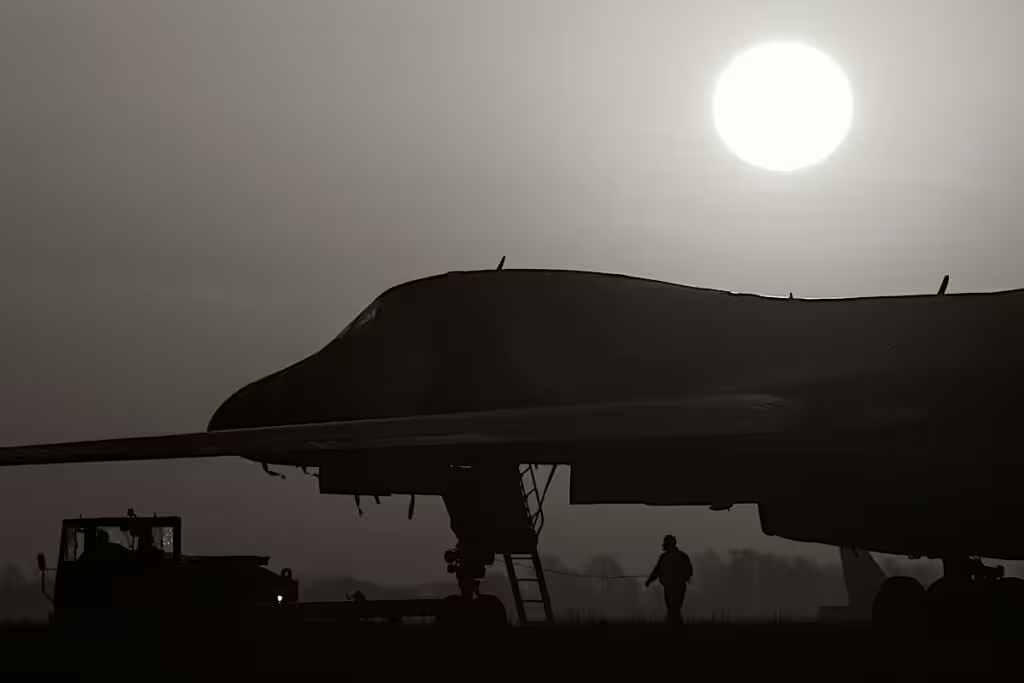
Royal Air Force aircraft are being moved overnight into hangars and hardened shelters to protect them from potential drone threats, The Times and Sky News reported Wednesday without naming sources. Both outlets said plans also exist to install counter-drone netting around warplanes that remain exposed. The reports landed a day after the Ministry of Defence and MI5 warned of a rising Russian sabotage risk.
Details:
- The measure: The Times and Sky News, reporting without naming sources, said aircraft are being shifted at night into hangars and hardened shelters. Neither outlet specified how many bases or aircraft types are covered, or when the practice began.
- Counter-drone netting: Plans are also understood to cover anti-drone nets around jets that stay in the open, including those parked beside runways or at bases lacking adequate protection. Such netting is common across Ukraine, shielding military equipment, critical infrastructure and main roads from Russian drones.
- The MI5 warning: MI5 and the Ministry of Defence warned Tuesday that British companies supplying military equipment to Ukraine face a growing risk of sabotage by Russia. The warning preceded the reports on the RAF’s aircraft-sheltering measures by a single day.
- Iran-linked incidents: Iran is also suspected of planning to target RAF Fairford in Gloucestershire, an air base used by the US Air Force. Five men were arrested near Fairford after reports of suspicious activity, in an incident authorities say may be linked to Iran.
- American moves: President Donald Trump said last month that an Iran-linked threat prompted the withdrawal of US B-1 bombers from Fairford, following a September incident. Earlier this month, US Air Force personnel responded to suspected unauthorised drone activity at RAF Lakenheath, days after refuelling aircraft were relocated there.
- The RAF chief: Air Chief Marshal Sir Harv Smith said the RAF is preparing for a scenario with no safe haven at home, in which forces fight from the UK but must keep moving. Speaking Tuesday evening at the Freeman Air and Space Institute, he stressed the value of practising aircraft dispersal.
- The summer test: Smith said building a new runway over the summer at RAF Brize Norton, the service’s main air transport hub, forced personnel to disperse aircraft from Prestwick in Scotland to Boscombe Down in Wiltshire without pausing. He called it a major test the team passed, and wants more such practice.
- Why dispersal matters: Spreading warplanes across multiple sites makes them a far harder target than concentrating them at a handful of bases. Smith framed the exercise as proof the RAF can take what people once called “eggs in one basket” and distribute them the length of the United Kingdom while continuing to operate.
- The readiness drill: RAF homeland readiness was tested last March in a two-week exercise named Agile Warrior, designed, the service said, to test its ability to defend the UK in an increasingly contested security environment. Air and ground units simulated cyberattacks and incoming missile threats. Few details were disclosed about its findings.
Background:
During the Cold War the RAF, Army and Royal Navy regularly trained for all-out war, maintaining a readiness level that eroded after the Soviet Union collapsed. Decades of cuts have left far fewer operational air bases for dispersal than in the 1980s, though the force retains the ability to use any airfield, including civilian ones, in a national emergency.
Between the lines:
Two separate threat streams are converging on the same British bases: an MI5 warning about Russian sabotage of Ukraine-linked suppliers, and suspected Iran-linked activity that has already pushed US bombers out of Fairford and drawn a drone response at Lakenheath. Sheltering aircraft at night and netting the exposed ones is a home-front measure, aimed at protecting assets on British soil rather than deployed abroad.
What’s next
Watch whether the Ministry of Defence confirms the sheltering measures or the counter-drone netting plan, whether further arrests follow the Fairford case, and whether the RAF repeats the dispersal exercise Smith said he wants more of.