
Key Points
- A pair of lamassu destroyed in Mosul in 2015 is reconstructed digitally for an Abu Dhabi display.
- Larger surviving fragments were scanned at the Mosul Cultural Museum in 2024 using photogrammetry.
- The physical restoration of the museum's lamassu remains unfinished and is left to future conservators.
The latest:
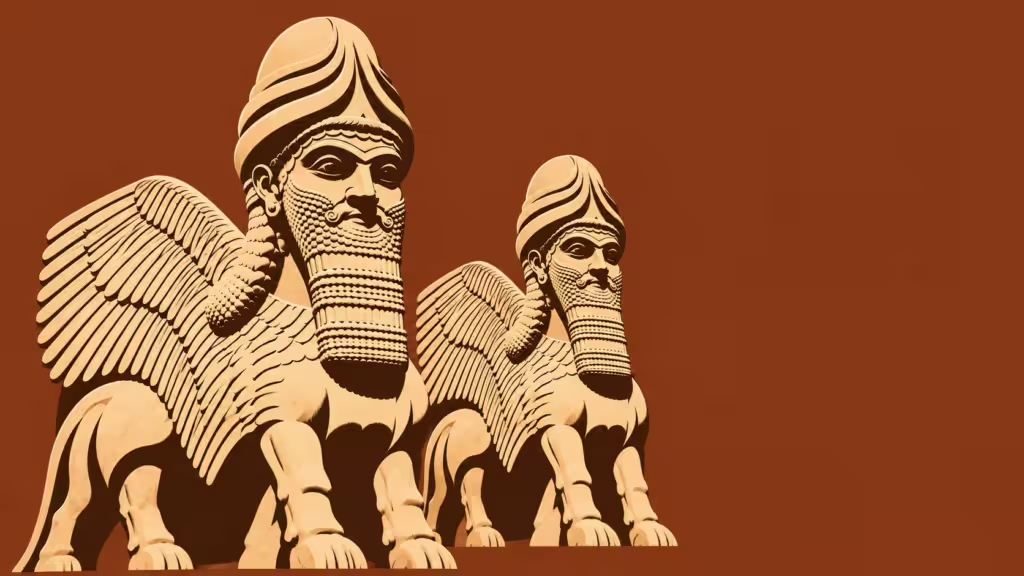
Two winged bulls with human heads, smashed into fragments inside the Mosul Cultural Museum in February 2015, now exist again as a to-scale digital reconstruction presented by the Department of Culture and Tourism – Abu Dhabi. Copies made from scans of the surviving pieces are shown in the exhibition, with the full reconstruction viewable through Snapchat. The reconstruction is described as hypothetical.
Details:
- The objects: Lamassu are massive sculptures of winged bulls with human heads that stood in pairs at the entrances of Neo-Assyrian palaces between the 9th and 7th centuries BCE. The pair held by the Mosul Cultural Museum came from Nimrud and dates to the 9th century BCE.
- The destruction: Both lamassu were smashed into fragments inside the museum’s galleries in February 2015, during the occupation of Mosul. The pieces, rather than the intact sculptures, became the basis for everything that followed.
- The scanning: In 2024, some of the larger fragments were scanned at the museum using photogrammetry. Those scans produced the copies now displayed, making the digital record an intermediate step between the broken stone and the reconstruction on screen.
- How it works: The on-screen experience runs in three stages: the broken pieces are reconnected, the missing volumes are digitally restored, and a color palette is added last. Visitors access the to-scale reconstruction through the Snapchat application on their own device.
- The color question: Researchers know lamassu were painted, but which colors went where remains subject to much debate. The palette here draws on traces of pigment surviving on other Assyrian bas-reliefs, and appears only as a partial layer over the stone to signal how uncertain the reconstruction is.
- The caveat: The museum frames the result as hypothetical rather than definitive, calling it the nature of archaeology: comparing, testing and extrapolating a past that no source ever describes completely. Nothing in the display is presented as a settled account of the sculptures’ original appearance.
- The slower work: What takes seconds on a screen can take years or decades in the real world. A project launched in 2018 is restoring some of the monumental statues destroyed in Mosul in 2015, backed by the International Alliance for the Protection of Heritage, ALIPH.
- The partners: The restoration is implemented by the Musée du Louvre, the Mosul Cultural Museum and the Iraqi State Board of Antiquities and Heritage. Its results are set to reopen to the public and go on display in Mosul from January 2027.
- What’s unfinished: The museum’s own lamassu are not part of that completed work. Restoring them is described as a massive challenge still lying ahead for future conservators, with no timeline attached to it.
Background:
Neo-Assyrian palaces of the 9th to 7th centuries BCE often placed lamassu in pairs at their entrances as guardians. The Mosul pair originated at Nimrud in the 9th century BCE, part of a collection held by the Mosul Cultural Museum until 2015.
Between the lines:
The exhibition draws its force from the gap between two timescales it states openly: a reconstruction assembled in seconds on a phone, against physical conservation measured in years or decades. The partial color layer and the hypothetical framing make the same point about limits, and the admission that the museum’s own lamassu still await future conservators keeps the digital version from standing in for the real thing.
What’s next
January 2027 is the date to watch: the restored monumental statues from the ALIPH-backed project are set to go on public display in Mosul. No timeline has been set for restoring the museum’s own lamassu.