Key Points
- PM Ali al-Zaidi set a Friday deadline for Kataib Hezbollah to leave Jurf al-Sakhar, with forces entering Saturday
- Kataib Hezbollah denies the oil-smuggling accusation and accuses the PM's office of fabricating reports
- Failure of the mediation leaves the weapons agreement inside the Shiite alliance in practical collapse
The latest:
Three days separate Jurf al-Sakhar from an open confrontation, after Prime Minister Ali al-Zaidi held to a Friday deadline for Kataib Hezbollah to withdraw, with security forces set to enter Saturday. Sources close to the Coordination Framework meeting said al-Zaidi rejected every proposal that stopped short of removing the group, then left the room with his allies deadlocked.
Details:
- The meeting: The Coordination Framework convened at the home of Hammam Hammoudi, leader of the Islamic Supreme Council, after roughly a month of paralysis caused by internal disputes. Sources close to the meeting said the Jurf al-Sakhar file became the sharpest point of contention, and efforts to contain it failed.
- The triple threat: A figure close to Framework circles told ontime+ the prime minister warned those present he would either enter Jurf al-Sakhar, go to the media and lay out the full story, or resign. The source said he returned to the resignation threat more than once.
- The alliance’s bind: The source, who asked not to be named, assessed that the threat leaves the alliance facing a double bind: fear of al-Zaidi taking the file public, and its leaders’ refusal to carry responsibility for oil smuggling if they block him from entering the area.
- The official statement: The communique issued after the meeting addressed the economic situation and the hosting of a delegation from Sulaymaniyah, with no reference to the disputes or the weapons file. ontime+ reported earlier that al-Zaidi did not obtain explicit authorization from Framework parties to enter the area.
- The government accusation: Government spokesman Haider al-Aboudi, for the first time since the case surfaced, named Kataib Hezbollah as the party involved in the smuggling and the force holding the ground. He said the armed forces would enter the area and that the withdrawal deadline is not far off.
- The group’s response: Kataib Hezbollah denied the accusation, accused al-Zaidi of breaking his word and his office of circulating fabricated reports, and said the technical committee found no tampering with oil pipelines. It published images of its fighters under the line: “Our weapon is a right and will stay in the hands of our fighters.”
- The circulating figures: According to information in circulation, armed factions in Jurf al-Sakhar earned more than 2 trillion dinars over 5 years, through roughly 105 tankers leaving daily at a rate of 4 an hour, with revenues estimated at about 3.7 million dollars a day since 2021.
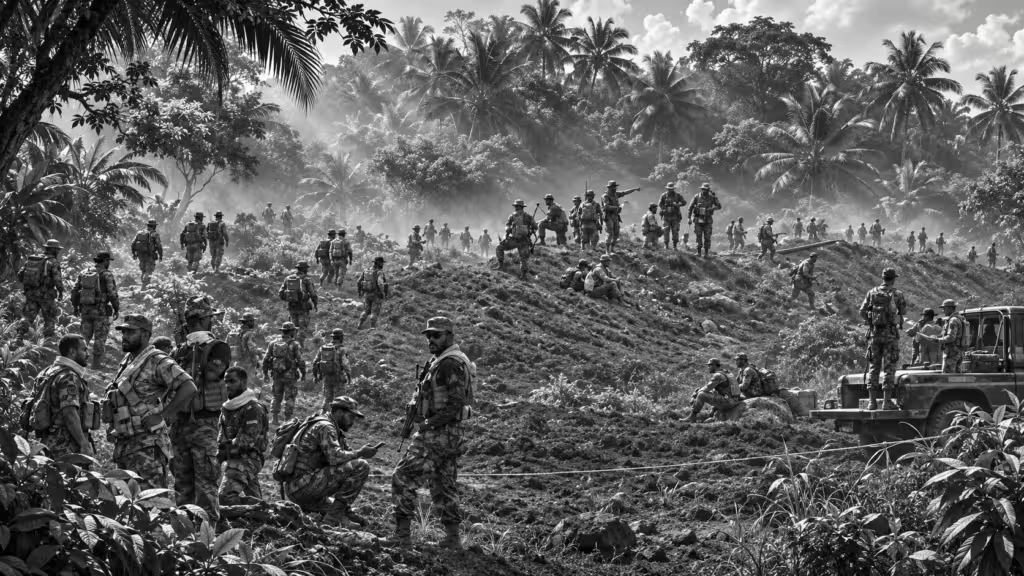
- The cordon: Sources said security forces have encircled the area and are barring entry, with movement limited to those leaving. ontime+ previously reported the use of several sites for refining and smuggling oil, including chemical facilities dating to the era of Saddam Hussein.
- Maliki’s position: The office of State of Law coalition leader Nouri al-Maliki warned in a post on X against the crisis sliding into armed confrontation, called for resolving the problem through understanding and dialogue, and stressed that both sides are brothers and that oil is Iraq’s wealth.
Background:
The Coordination Framework was formed 4 years ago to handle the fallout from the Sadrist movement’s withdrawal from politics. Kataib Hezbollah has controlled Jurf al-Sakhar for more than 10 years.
Between the lines:
An official in the prime minister’s office assessed that the split inside the alliance is total: some forces are unconvinced by the investigation committee’s findings, while others refuse an armed confrontation with a group they see as ready to fight. Some ask where dozens of tankers are headed, given that Jurf al-Sakhar is not a border area. The official judged the weapons agreement has collapsed in practice, leaving two wings — one governing, one opposing from inside.
What’s next
Friday ends al-Zaidi’s deadline for the group’s withdrawal, and Saturday is the date set for security forces to enter. Reports of Quds Force commander Esmail Qaani arriving in Najaf coincide with al-Zaidi’s visit there, suggesting undisclosed talks to contain the crisis.