The latest:
A major Israeli strike on Iran is treated inside the military as a matter of when rather than whether, but security sources say the timing is not urgent at this stage. Intelligence indicating Iran is rebuilding its military capabilities is driving readiness, while a fragile political situation and the state of the home front weigh on any decision on a date.
Details:
- The assessment: Security sources said in recent days that the Israeli military will be forced to launch a large-scale attack on Iran in light of Iranian reconstruction of military infrastructure. The same sources stressed the matter is not urgent at this point, without naming any timeframe or decision date.
- The US signal: US Central Command published footage on Tuesday evening of two aircraft carriers, the USS Theodore Roosevelt and the USS George Washington, sailing in the Arabian Sea. The release was read as a message to Tehran during a continuing exchange of strikes between the United States and Iran.
- The political constraint: A campaign against Iran is viewed within the military as an operation of exceptional weight requiring full public confidence. The home front is considered decisive based on previous rounds, which makes launching such a campaign difficult while the political situation remains precarious.
- The go-it-alone option: An Israeli operation without US involvement is described as the least likely scenario at this stage, particularly given the ongoing US-Iran exchanges. The military is preparing for it anyway, alongside the unresolved question of what the operation’s declared objective would be.
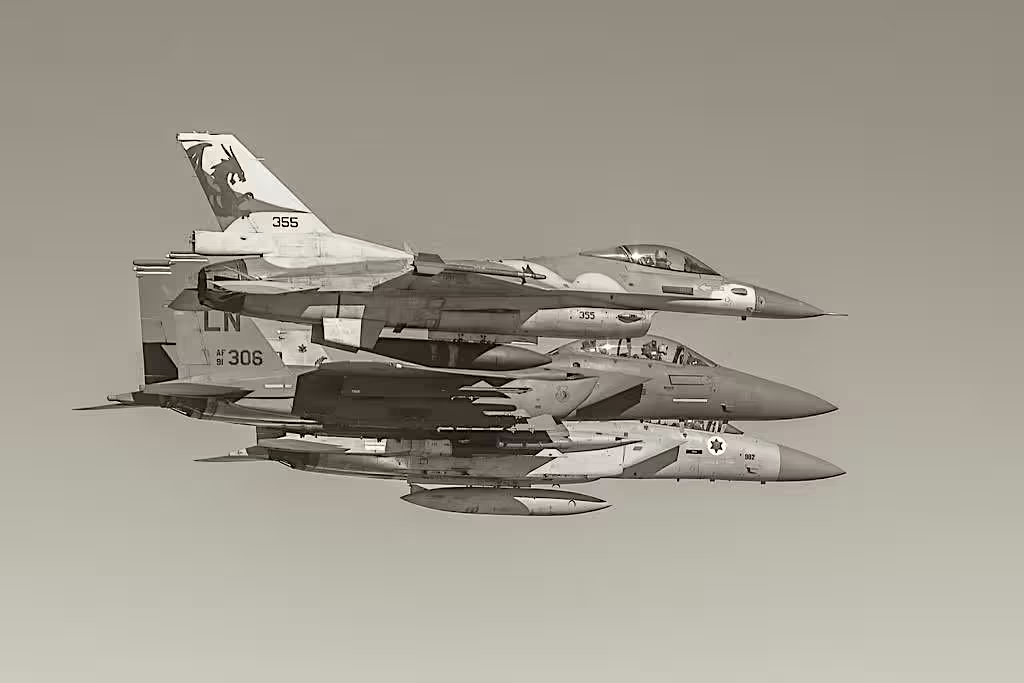
- Joint operations: The Israeli military has begun operation Zir Hari with its American partner, described as close cooperation in which the two armies effectively function as one, with a division of commands and missions. The stated Israeli ambition is to preserve that coordination and move into a joint campaign.
- The nuclear file: During the February 2024 war no nuclear targets were struck, unlike the twelve-day campaign. Multiple reports indicate Iran is fortifying its nuclear arsenal in ways that complicate airstrikes, forcing the defense establishment to redefine its objectives with the political leadership.
- The objectives debate: Officials face a choice between the ambitious aim of toppling the Iranian government and narrower goals that would improve the strategic situation and justify a wide military campaign. Prime Minister Netanyahu has raised regime collapse explicitly on several occasions.
- Force buildup: After three years of fighting on seven fronts, soldiers are receiving less training and the burden on reservists has grown. 2027 is treated internally as a key year for easing that load, a timeline a new Iran round would upend.
- The Hezbollah factor: All assessments indicate renewed fighting against Iran would draw in Hezbollah. Northern Command has clear plans to expand maneuver if fighting resumes, but that scenario requires resources and national resilience from residents of the north.
- Current posture: Military intelligence and the air force are described as being at the highest level of alert, including renewing and expanding attack target banks, drawing operational lessons and improving defensive deployment procedures.
Background:
Western intelligence sources are tracking unrest in Iran, focused on developments in the country’s west. Those sources say the effect of US economic pressure is hard to predict and conditions inside Iran are severe, noting regime collapse resists forecasting and that Syria’s took roughly a decade.
Between the lines:
The military’s position carries an internal tension: it treats the strike as necessary because Iran is rebuilding, yet makes it conditional on political stability, home-front endurance and American participation — none of which it controls. The 2027 reservist timeline and the expectation that Hezbollah would be drawn in both point the same way: the cost of acting is still being measured against the cost of waiting.
What’s next
Watch whether the defense establishment and political leadership settle on a declared objective, further US carrier movements in the Arabian Sea, the trajectory of unrest in western Iran, and any shift in Hezbollah posture on the northern front.