Key Points
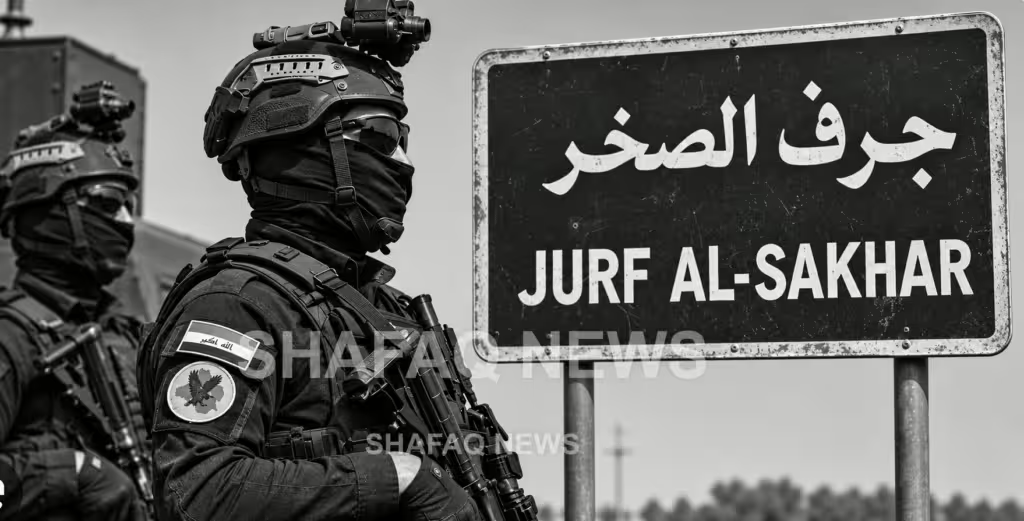
- Iraq's prime minister left a Coordination Framework meeting after refusing to reverse his Jurf al-Sakhr deployment order.
- Factions inside the Framework pressed him to drop plans to send government forces into the area.
- A source told ontime+ armed factions' hold on the district is now directly contested by the state.
The latest:
A Coordination Framework meeting with Iraq’s prime minister broke up in sharp disagreement over Jurf al-Sakhr, a source told ontime+ from Iraq, after he refused to withdraw his order sending government forces into the district. He left the meeting while the dispute was still unresolved. Participants failed to persuade him to abandon the plan to impose state authority there.
Details:
- The meeting: The session opened as a discussion of developments in Jurf al-Sakhr and the question of control over the area, the source told ontime+. Talks quickly narrowed to a single point: the prime minister’s decision to deploy official government forces and to end the armed factions’ continued hold on the district.
- The objection: Parties inside the Shiite Coordination Framework opposed the entry of official forces into Jurf al-Sakhr and tried to convince the prime minister to reverse course, according to the source. Their attempt failed, and the meeting closed without extracting any retreat from him.
- The PM’s position: He held his ground, insisting government forces must enter the area, that state authority must be imposed, and that the district cannot be left under the factions’ control, the source said. That formulation — state authority versus faction control — became the core of the dispute.
- The walkout: The prime minister left the Coordination Framework meeting after the disagreements persisted, the source told ontime+. The session ended with no agreement, and without the participating parties securing the reversal they had sought.
- Faction split: Information reaching ontime+ from Iraq points to a division between Abu Hussein al-Hamidawi and Abu Fadak al-Muhammadawi inside Kataib Hezbollah over withdrawing from Jurf al-Sakhr, a dispute tied to the future of the factions’ armed presence in the area.
- Unclear positions: The details of where each of the two men stands have not emerged, nor whether their disagreement has produced any understanding on a withdrawal mechanism, according to the source. The factions concerned have not settled on final public positions.
- No timeline: No date has been set for carrying out the decision, the source said. Nor are there details on the nature of the military movements attached to it — the size of the deploying force, its command, or its entry route into the district.
- Sourcing: The account reached ontime+ directly from Iraq as private information from a source briefed on the meeting. Separate reporting gathered in the same direction described the same sequence: opening discussion, objection, the prime minister’s refusal, and his departure.
Background:
Jurf al-Sakhr, north of Babil province, has been under armed faction control rather than regular state forces for years, with the area closed off and its displaced residents largely unable to return.
Between the lines:
The dispute is no longer about one district. By framing the order as imposing state authority and refusing to leave the area to the factions, the prime minister put the Coordination Framework in the position of defending faction control directly. The reported split inside Kataib Hezbollah over withdrawal suggests the armed camp itself is not unified on how to answer him.
What’s next
Watch for an announced date or troop movement toward Jurf al-Sakhr, a formal Coordination Framework statement after the failed meeting, and any public position from Kataib Hezbollah on withdrawal.