Key Points
- Water experts say Iranian dam locations closely match areas hit by U.S. and Israeli airstrikes this year.
- Iran has built at least 533 dams, among the highest totals in the region.
- The theory, which experts call speculative, could also explain the 2018 arrests of Iranian conservationists.
The latest:
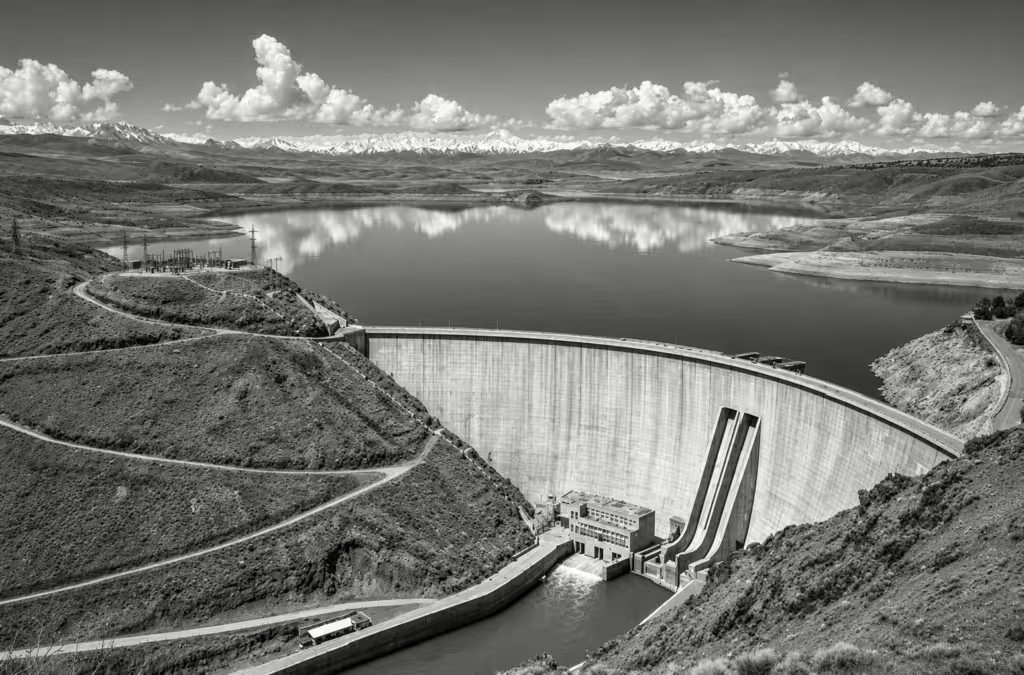
A pattern of airstrikes on concealed Iranian missile sites has pushed water researchers toward a new explanation for one of the country’s long-running mysteries: why Tehran built dams and water transfer projects in regions with no obvious need for them. Seven water and military experts told The New York Times that siting fortified military complexes near a steady supply of water and power would be logical. All of them cautioned the link remains unproven.
Details:
- The pattern: Nima Shokri, a water security expert at the Hamburg University of Technology, told The New York Times his team had mapped at least 533 Iranian dams, among the most in the region. A published map of airstrikes on suspected military sites — a semicircle of dots running north to south — nearly matched his dam map.
- The military logic: Danny Citrinowicz, a former Iran analyst for Israeli military intelligence, said the arrangement gives Tehran operational continuity. He assessed that Iran has a strong incentive to keep its missile complexes off the national grid and has likely invested in redundant infrastructure, including dams and water projects, to serve those facilities.
- The missile cities: Iran describes its underground sites as missile cities: fortified tunnels and chambers dug deep beneath mountains, used to store, deploy and manufacture long-range ballistic missiles and drones. Farzin Nadimi of the Washington Institute estimated at least 30 such sites nationwide, saying few countries besides North Korea maintain a comparable underground network.
- The caveat: Shokri stressed that many Iranian dams serve essential civilian functions — water supply, irrigation and hydropower — in a country that regularly faces shortages, and said any military role should not overshadow those purposes. Given the secrecy around the missile program, the experts described the connection as suggestive rather than established.
- Tehran’s silence: Iran’s Ministry of Foreign Affairs and Ministry of Energy, partly responsible for dam construction, did not respond to requests for comment. Neither did the Islamic Revolutionary Guards Corps, which also plays a role in building dams and whose intelligence arm carried out the 2018 arrests of conservationists.
- The 2018 crackdown: The Guards’ intelligence wing detained dozens of conservationists on espionage charges, accusing them of using cameras meant to monitor endangered species such as the Asiatic cheetah to gather intelligence for the United States and Israel. Kavous Seyed-Emami, a founder of the Persian Wildlife Heritage Foundation, died in state custody.
- The prisoners: Several detainees who spent years in prison said they were tortured and sexually harassed; senior Iranian officials said at the time they were unaware of the allegations and would examine them. Morad Tahbaz, imprisoned more than five years, said one accusation was that “I had trained lizards to spy on military installations.”
- The new suspicion: Some environmentalists now suspect the conservationists accidentally strayed near sensitive military sites. Nik Kowsar, an Iranian water analyst based in Washington, said the Guards may have viewed anyone doing fieldwork there as a security threat. Kaveh Madani, then deputy head of Iran’s environment department, said such groups always worked with government and intelligence permission.
- Yazd and Hormozgan: Amir Aghakouchak of the University of California, Irvine, said March airstrikes near Yazd — followed by reports including in The Financial Times of a major missile facility there — led him to suspect a huge Zagros-to-Yazd water transfer project may have been shaped partly by military considerations.
- The July strike: On July 14, U.S. airstrikes hit the Tarom Protected Area in Hormozgan, killing the family of a local wildlife ranger. The U.S. military said it targeted military infrastructure and coastal defenses. Nadimi said the site sits near where analysts believe Iran built a deep underground missile base, in an area conservationists knew for its Laristan wild sheep.
Between the lines:
Two unexplained Iranian patterns — dams built where no population needed them and conservationists jailed for photographing cheetahs — converge on the same map. Tahbaz said his interrogators were unusually fixated on Hormozgan, the province struck in July. Political analysts at the time read the arrests differently, as a Guards move against a reformist government courting foreign investment.
What’s next
Watch whether Tehran responds to questions about dam siting, whether further strikes fall near mapped water projects, and whether researchers publish a formal overlay of dam locations against documented strike coordinates.