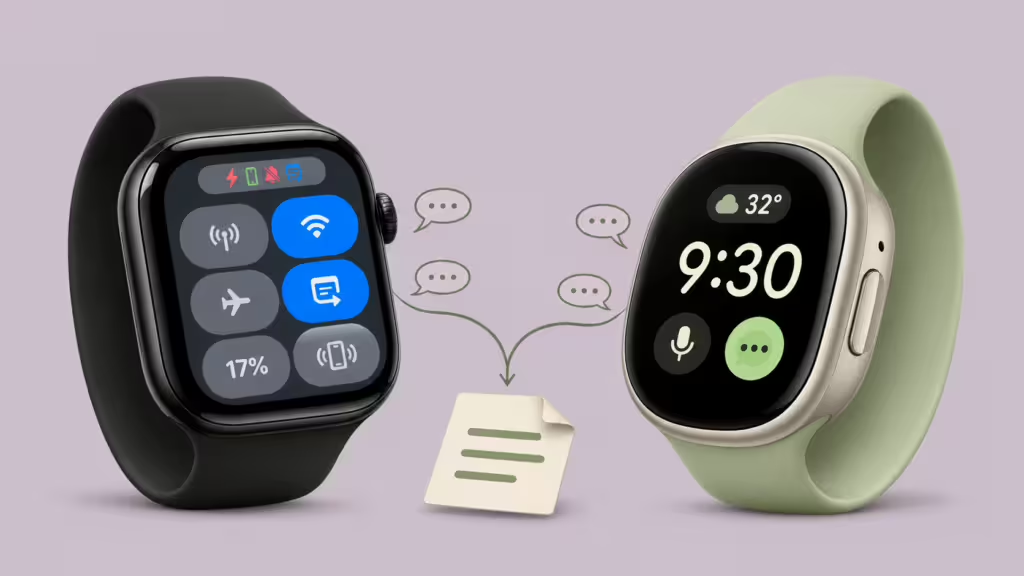
Key Points
- A WSJ reporter wore Apple Watch Series 12 and Amazon's $75 Bee for a week.
- Both devices transcribe ambient speech and return daily summaries of overheard conversations.
- All-party consent states may treat such passive listening as legally regulated recording, a law professor said.
The latest:
Always-on listening has moved from novelty gadgets onto mainstream wrists. Writing in The Wall Street Journal, reporter Nicole Nguyen described wearing a $399 Apple Watch Series 12 running public-beta software alongside Amazon’s $75 Bee Frontier bracelet for a week, and said both devices processed hours of ambient audio into summaries of her day. She reported that people were surprised to learn the devices were recording.
Details:
- The Apple features: Nguyen reported that Apple Watch Series 12 and Ultra 4 add two functions. Live Rewind produces a short transcript of the last 15 seconds of speech when the digital crown is double-pressed, while Siri Recap generates high-level summaries of detected conversations and files them in the Siri app.
- How Apple routes it: According to the report, the watch sends encrypted audio to the paired iPhone, which transcribes it and routes a condensed version to Apple’s Private Cloud Compute servers. The user cannot view the raw transcript, only an outline that appears minutes later. Summaries auto-delete after a week unless saved.
- How Bee works: Bee streams audio to the phone over Bluetooth, then to Bee Private Compute servers for transcription and summarization, Nguyen wrote. It keeps word-for-word transcripts plus suggested to-do lists, and a press-and-hold button saves voice notes.
- Accuracy limits: Both devices were generally accurate but mixed up names and facts, the reporter said. She described Siri Recap output as factual and often devoid of context, citing bullets about cash on hand and tape on an office floor. Bee’s transcript conveyed no tone and missed words.
- The company position: Apple and Amazon say the data is private and that employees cannot access it, Nguyen reported. She called that only partially reassuring, noting a sensitive record still sits on her phone and could surface through a hack, a leak or accidental sharing.
- The indicators: Bee turns on a green light while recording. Live Rewind emits an audible chime even in silent mode, the reporter said, but Siri Recap gives no chime — only a lit icon in the iPhone Control Center. Users can block recording at set times or locations.
- The legal question: California is among several states requiring all-party consent for private conversations. Eric Goldman, a law professor at Santa Clara University, said that as long as a device listens and extracts information, it likely constitutes a legally regulated recording even if only summaries are retained.
- Goldman’s caveat: In one-party consent states no permission is required, the professor noted, but he questioned whether nonconsensual recording is “really the right way to live our lives.” Nguyen said nobody she asked flatly refused, which she attributed to politeness or shifting norms in San Francisco.
- The verdict: Nguyen advised against buying a wearable solely to log one’s life. She said the memory features are worth trying for anyone already upgrading an Apple Watch, and urged Bee owners to remove the device before dinner parties.
Between the lines:
The subtlety is the story. Unlike camera glasses, a watch and a plain bracelet give no strong social signal that recording is happening, and the one device without an audible cue is the one running continuously. Nguyen’s own retreat — switching both off at a birthday party rather than keep asking permission — suggests consent friction, not technical limits, is what currently caps use.
What’s next
Watch whether Apple moves Siri Recap out of public beta into general release, and whether all-party consent states test the professor’s reading that summary-only retention still counts as recording.