The latest:
The US military is positioned to launch strikes on Iran as soon as midterm polls close, The New York Times reported, with three aircraft carriers in the region and additional tankers, transport and surveillance aircraft flowing in. President Donald Trump played it down in a phone interview with the Financial Times, saying he has no immediate plan to attack and that Washington appears to be getting what it wants from Tehran.
Details:
- The military picture: According to The New York Times, months of force build-up and approved plans have left US commanders able to act immediately after the vote, with three carriers deployed. Reinforcements include refueling, cargo and reconnaissance aircraft, a pattern that tracks the preparations that preceded the previous round of strikes.
- Trump’s framing: Trump told the Financial Times nothing is imminent and described the US position with Tehran as excellent. He has said recently that Iran does not want nuclear weapons and is interested in a deal. No breakthrough has been announced in the talks under way between the two sides.
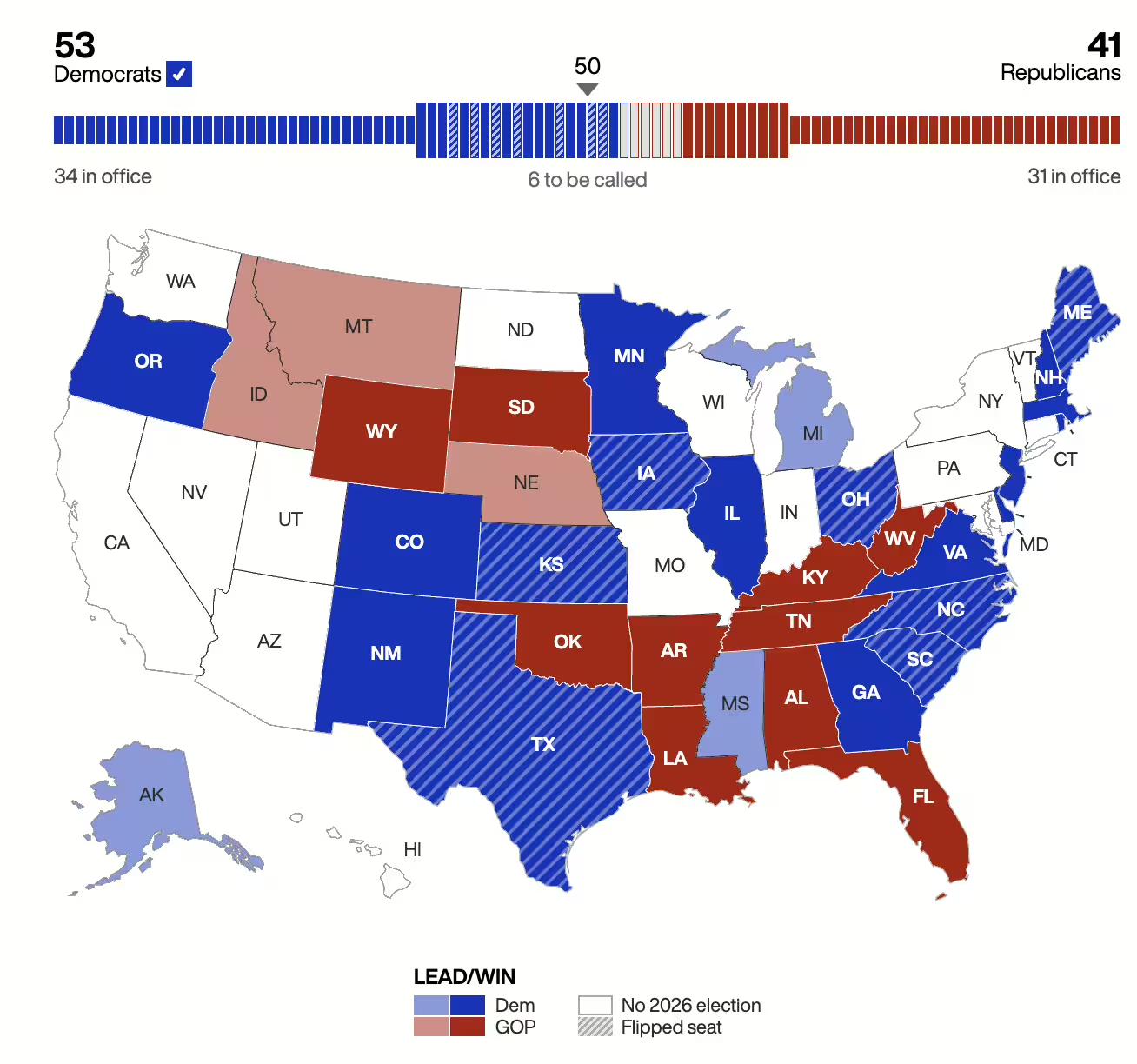
- The congressional math: Democratic control of both chambers would narrow Trump’s room to act, but the new Congress is not sworn in until January 3, and the presidency carries broad foreign and security authority. In June, the Senate passed a war-halt resolution with four Republicans voting in favor.
- Aid cut: Trump announced the suspension of $4 billion in annual US security assistance to Israel by the end of this year, repeating it on X with an America First caption. On Fox News he argued the left was using the figure as a symbol of injustice, though the money is spent on American-made equipment. CNN assessed the decision is tied to the Michigan race, where progressive candidate Abdul El-Sayed is running and Israel became a central issue, judging Trump was shoring up Republican Mike Rogers.
- Chemical weapons warning: The New York Times reported that Israel warned Washington that Iran might use chemical weapons against its adversaries. US figures questioned the intelligence and suggested Netanyahu was deliberately trying to pull Trump into a war, citing his struggle for political survival after failing to secure a path to a coalition.
- Israel’s political clock: Party leaders begin submitting recommendations to the president’s office for who should form the government. Yesh Atid leader Gadi Eisenkot appears set to collect the most and receive the mandate. The change bloc has not specified how it intends to build a majority without the Arab parties or United Torah Judaism.
- Shin Bet clash: Shin Bet chief David Zini is at odds with Attorney General Gali Baharav-Miara, demanding authorization for special measures and the questioning of senior Arab lawmakers without evidence. i24News named Mansour Abbas, Sami Abu Shehadeh and Ahmad Tibi as possible subjects, alongside an unnamed senior figure.
- The fraud dispute: Investigators are examining suspicions that Qatari and Turkish money financed illegitimate influence on voter behavior. Elections committee chief Noam Sohlberg and the Shin Bet both stated there is no suspicion the results were falsified. Baharav-Miara said publicly that “in a state governed by law, citizens and elected officials are not investigated without evidence.”
- Netanyahu’s silence: Netanyahu has not convened the cabinet or the government and has not appeared publicly since the election. The Israeli military is described as at maximum readiness defensively and offensively, with Chief of Staff Eyal Zamir — reported to have opposed striking before the vote — holding consultations.
- Iran’s terms and mediation: An Iranian military spokesman listed Tehran’s demands: ending the war on all fronts including Lebanon and Gaza, full sanctions relief and release of frozen assets, war reparations, sovereignty over the Strait of Hormuz, and a regional security mechanism replacing the US umbrella. Mohsen Rezaei, secretary of Iran’s Supreme National Security Council, called the US response unconvincing, while Qatari spokesman Majed Al-Ansari said efforts continue. Al-Araby Al-Jadeed claimed Iran would announce nuclear concessions alongside a US announcement on frozen assets.
Background:
Trump halted strikes already in motion once before, an outcome few anticipated. The current build-up, paired with reports of active negotiations, closely resembles the sequence that preceded the earlier operation, which began after talks between Washington and Tehran collapsed.
Between the lines:
Two electoral outcomes now sit between Trump and a war he has said is unpopular at home. A Democratic sweep does not block him before January 3, but it raises the political cost. In Tel Aviv, the chemical weapons warning questioned by US officials, the Shin Bet’s push to question Arab lawmakers, and Netanyahu’s public silence read in Washington as pieces of a survival strategy rather than a threat assessment.
What’s next
Watch whether election results are published on schedule despite coalition demands for delay, which leader receives the mandate from the president, and whether a simultaneous Iran-US announcement on concessions and frozen assets materializes.