Key Points
- Foreign Minister Asaad Al Shibani said negotiations are under way on Syrian entry into the Makkah pact.
- The August agreement binds Saudi Arabia, Pakistan and Turkey to treat an attack on one as an attack on all.
- Syrian entry would tie Damascus to a bloc now confronting Houthi strikes on Saudi territory.
The latest:
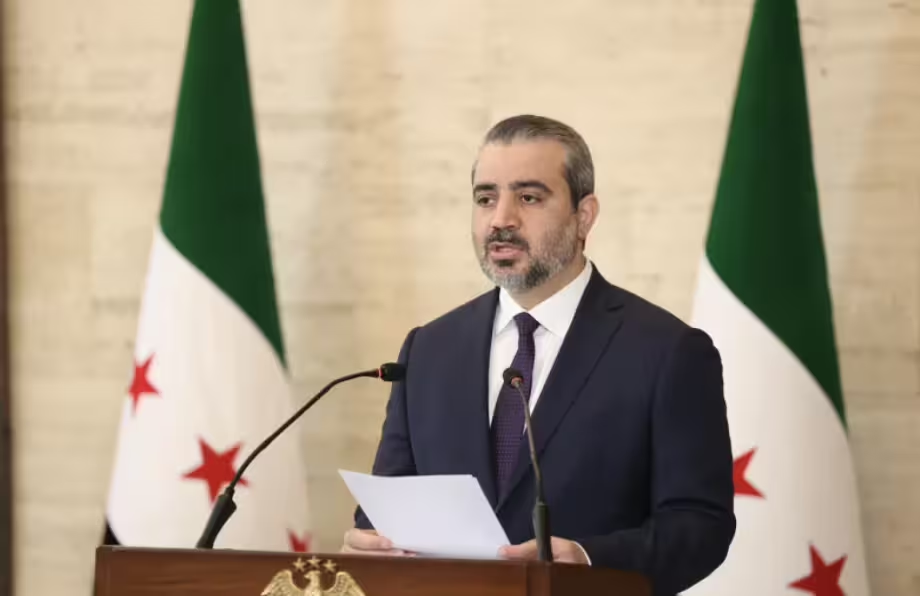
Syria is negotiating its entry into the Makkah Joint Defence Agreement, Foreign Minister Asaad Al Shibani said at the Manama Dialogue in Bahrain on Saturday. He framed membership as secondary to a broader commitment, saying Syria considers Gulf security part of its own and would back any body protecting the region. He called for cooperation in deterrence and defence.
Details:
- The remarks: Al Shibani said there are some negotiations on Makkah pact integration, and that regardless of whether Syria joins that pact or any other, it is part of the security of this region and will stand by any organisation protecting it. He did not say when talks began or at what level they are being held.
- The Turkey link: Al Shibani singled out Syria’s relationship with Turkey as very special, pointing to shared economic and military collaboration. Turkey is one of three signatories alongside Saudi Arabia and Pakistan, making Ankara the most direct channel Damascus has into the bloc it is seeking to join.
- What the pact does: The agreement was signed in August and treats an attack on any member state as an attack on all. It binds Saudi Arabia, Pakistan and Turkey, three states with no previous collective defence arrangement in those terms.
- The Houthi factor: The signing came two months before Iran-backed Houthis launched deadly attacks on several airports across Saudi Arabia. The kingdom has since sought wider international backing for its campaign against the group, though the pact is not currently being used in Yemen, according to experts cited by The National.
- The troops denial: Damascus has repeatedly stressed that Gulf security is tied to its own, while denying reports that Saudi Arabia asked it to supply ground troops to fight the Houthis in Yemen. No figure or request detail was attached to those reports by the Syrian side.
- The Tehran channel: Representatives of the three member states recently travelled to Tehran to de-escalate tensions over fears of renewed war between the United States and Iran. A security source told The National the trip aimed to open a third communication channel beyond existing mediators Pakistan and Qatar.
- The Damascus visit: Syrian President Ahmad Al Shara visited Saudi Arabia earlier this month, placing the pact question in a sequence of direct contacts between the two governments. The agenda of that visit was not detailed.
- Regional framing: Egypt’s Foreign Minister Badr Abdelatty told the same forum that Gulf security is inseparable from the stability of the wider Middle East, a formulation close to the one Al Shibani used in describing Syrian interests.
Background:
The Makkah Joint Defence Agreement is the newest collective defence structure in the region, signed in August by Saudi Arabia, Pakistan and Turkey. Experts cited by The National assess its significance as mainly long term, rather than as an instrument applied to current fighting.
Between the lines:
Al Shibani’s framing lowers the stakes of membership itself: by saying Syria will stand with any body protecting regional security regardless of formal entry, he keeps alignment with Riyadh and Ankara available without committing Damascus to the pact’s attack-on-one clause. That positioning sits alongside Syria’s denial that it was asked for ground troops in Yemen.
What’s next
Whether the three member states expand the pact beyond its original signatories, and whether the Tehran channel opened by their representatives produces any de-escalation between Washington and Iran.