Key Points
- Costa Rica's Rebeca Grynspan topped the Security Council's seventh straw poll with 11 encouraging votes.
- Eight candidates are competing to succeed Antonio Guterres, who leaves office at the end of the year.
- The UN has never been led by a woman in its 81-year history.
The latest:
Rebeca Grynspan of Costa Rica again finished first in the UN Security Council’s seventh straw poll on the next secretary general, drawing 11 encourage votes against 4 discourage and no abstentions, according to preliminary results. Argentina’s Rafael Grossi followed at 9-4-2. The polls are unofficial and anonymous, but they signal how the 15 council members are weighing a crowded field.
Details:
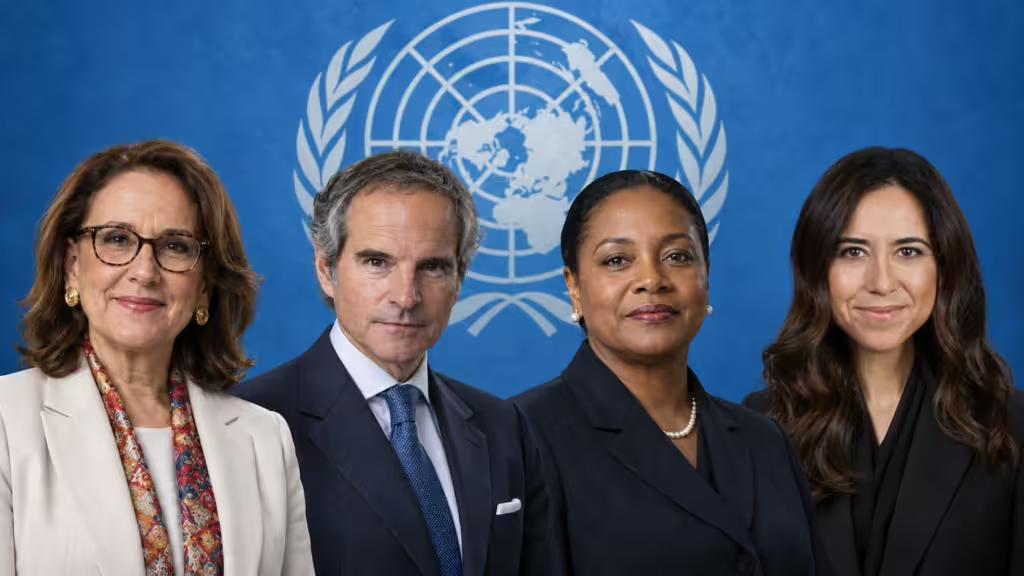
- The results: Grynspan led with 11 encourage, 4 discourage and zero no-opinion votes. Grossi scored 9-4-2, Guyana’s Carolyn Rodrigues-Birkett 8-6-1, and the UAE’s Lana Nusseibeh 7-6-2. The preliminary tallies cover only the four leading names; no figures were released for the remaining candidates.
- The field: Eight candidates have been put forward: Rodrigues-Birkett, Grossi, Grynspan, Nusseibeh, Ecuador’s Ivonne Baki, Chile’s Michelle Bachelet, Ecuador’s Maria Fernanda Espinosa and Uganda’s Olara Otunnu. Several are women, in a race for a post no woman has held since the organisation’s founding.
- The ballot fight: The previous round used colour-coded ballots separating the five permanent members — Britain, China, France, Russia and the US — from the 10 elected members. Council members debated reverting to undifferentiated ballots at an informal meeting on Wednesday, after their session with Nusseibeh.
- Who pushed back: Bahrain, Russia and the United States pressed to keep the coloured ballots for Thursday’s straw poll, a diplomat said, while most council members favoured returning to ballots that do not distinguish between permanent and elected members. The outcome of that dispute was not announced.
- Why colour matters: Colour-coded ballots expose whether a discourage vote comes from a permanent member, which holds a veto over the final recommendation. An undifferentiated count conceals that, leaving candidates and capitals without a clear read on whether a veto-wielding state is blocking them.
- The precedent: Guterres needed six straw polls before the council converged on his name in October 2016. The race has now passed that mark without a front-runner securing a clean sheet, and Grynspan’s repeated first-place finishes have not translated into an assured outcome.
- The timetable: Guterres steps down at the end of the year. No date has been set for an eighth straw poll or for the formal council recommendation that must precede a General Assembly appointment.
- The job: The secretary general serves as the UN’s chief administrative officer and public representative, handling budgeting and planning while acting as a diplomat expected to broker peace and shore up security.
- The inbox: Whoever is selected inherits simultaneous crises: the Iran war, the conflict in Sudan, the Russia-Ukraine war and the Palestinian-Israeli conflict.
Background:
The secretary general is recommended by the Security Council and appointed by the General Assembly. Straw polls are informal soundings used to narrow the field before a formal vote, with members marking each candidate encourage, discourage or no opinion.
Between the lines:
Grynspan’s 4 discourage votes are the number that matters more than her 11 encouragements, because a single permanent member among them is enough to end her candidacy. That is why the fight over coloured ballots mattered to Russia and the US: a differentiated count tells rivals and capitals exactly where a veto sits, and removing the colours keeps that pressure invisible.
What’s next
Watch for an eighth straw poll and whether the council uses coloured or undifferentiated ballots, whether Grynspan’s discourage count moves, and when the council forwards a formal recommendation to the General Assembly.