Key Points
- A Roman Imperial marble torso set a new antiquities auction record at Sotheby's New York.
- Sotheby's Magnum Opus evening sale totaled $63 million and sold every lot offered.
- The result landed while the art world's attention sat with back-to-back European fair weeks.
The latest:
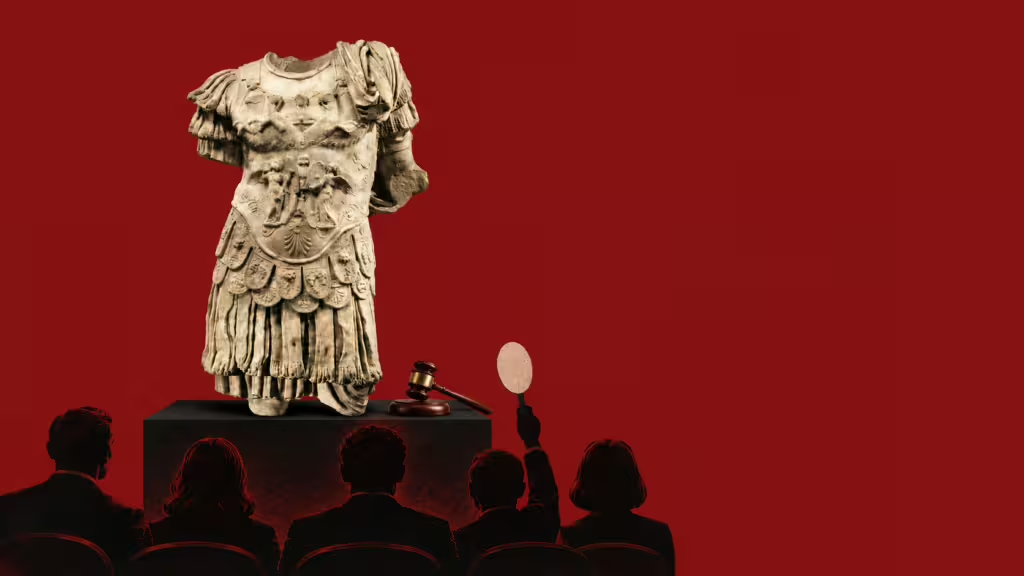
A Roman Imperial marble torso set a new record for antiquities at Sotheby’s in New York, the centerpiece of a $63 million evening auction that sold every lot it offered. The Magnum Opus sale mixed classical sculpture with paintings by Canaletto, Gustav Klimt and Jean-Honoré Fragonard, according to Observer, and opened the house’s Magnum Opus collection sales.
Details:
- The record: The top result went to a Roman Imperial marble torso, which Observer reported set a new auction record for antiquities. The piece was displayed on the bidding screen as the auctioneer fielded bids from a packed saleroom, and it anchored a sale built around classical material rather than contemporary art.
- The total: Sotheby’s Magnum Opus evening auction in New York brought $63 million, according to Observer. The sale was a white-glove night, meaning every lot on offer found a buyer — a result houses cite as evidence of accurate estimates and depth of bidding across an unusually mixed catalogue.
- The catalogue: Beyond the antiquities, the sale offered works by Canaletto, Gustav Klimt and Jean-Honoré Fragonard, Observer reported. Other names attached to the Magnum Opus material include André Derain, Auguste Rodin, Luis Meléndez and Jacob van Ruisdael, spanning Old Master painting, Impressionist-era work and sculpture.
- The framing: Observer described the night as eclectic, with classical treasures sharing the block with European paintings across several centuries. The format departs from the single-category evening sales that dominate the New York calendar, where Old Masters, antiquities and modern work are typically separated into distinct auctions.
- The timing: The auction ran during back-to-back fair weeks in Europe, Observer reported, when much of the trade’s attention and travel budget sits with the continental fair circuit rather than New York salerooms. The house did not publicly address whether the scheduling affected bidder turnout.
- The provenance: Names linked to the Magnum Opus material include collectors and figures such as George A. Rentschler, Heinrich Jacoby, Sir D’Arcy Godolphin Osborne and Johannes von Schwarzenberg, alongside Louis XIV. Provenance of this kind is routinely used by auction houses to support estimates on antiquities and Old Master works.
- The house position: George Wachter, a senior Sotheby’s figure in the Old Masters field, is among those associated with the sale. Sotheby’s has not disclosed a breakdown of how the $63 million total divided between the antiquities, the Old Master paintings and the modern works.
- The market read: White-glove results are rare at evening-sale level and are closely watched as a signal of collector appetite. The record for the Roman torso lands in a category that trades on scarcity and provenance documentation rather than the brand-name demand that drives contemporary sales.
Background:
Magnum Opus is the title Sotheby’s gave to this group of collection sales in New York. The evening auction opened the series, pairing antiquities with European paintings and sculpture rather than splitting them by period or category.
Between the lines:
A white-glove night held against the pull of European fair weeks suggests bidding was concentrated among buyers who commit without being in the room. The antiquities record also points to the weight provenance carries in a category where supply is fixed and documented ownership history — the kind attached to this material — functions as the primary price driver.
What’s next
Watch for Sotheby’s to publish lot-level results confirming the torso’s hammer price, and for the remaining Magnum Opus collection sales to test whether the evening auction’s demand carries into the day sessions.