Key Points
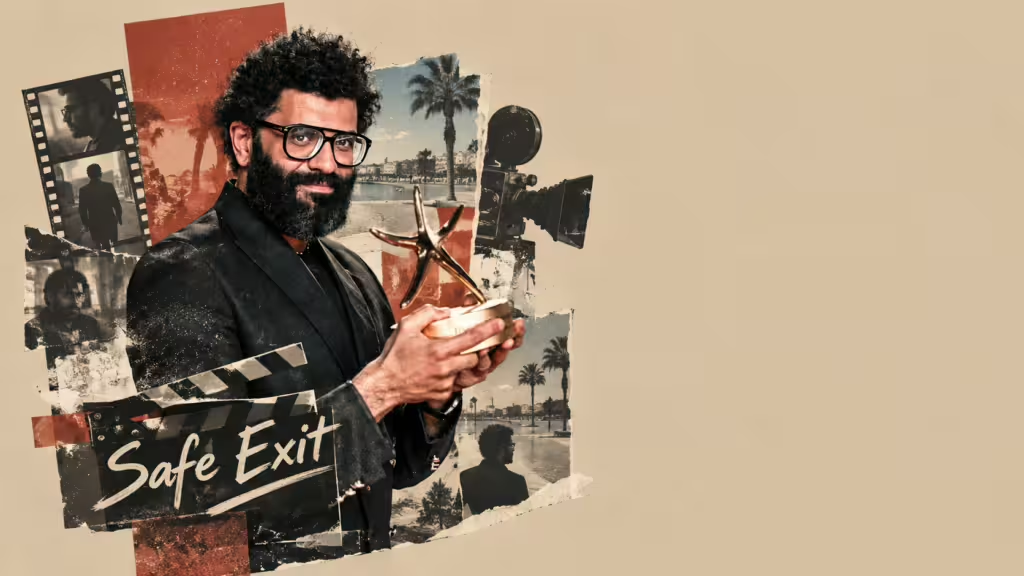
- Mohammed Hammad's 'Safe Exit' won the Golden Star for best narrative feature at El Gouna.
- Ahmed Hassouna, who remains in Gaza, took both documentary prizes for 'Citizen Osama'.
- The festival's industry arm awarded over $350,000, signaling a pivot toward financing and development.
The latest:
A psychological drama about a young Coptic security guard in Cairo took the Golden Star for best narrative feature as Egypt’s El Gouna Film Festival closed its ninth edition Friday after nine days. Mohammed Hammad’s Safe Exit headed a prize list spread across the Middle East and beyond, while a Gaza-set documentary swept two of the night’s awards.
Details:
- The top prize: Safe Exit follows a young Coptic security guard in Cairo confronting trauma rooted in religious violence. Director Mohammed Hammad took the Golden Star for best narrative feature on the closing night of the ninth edition, which ran nine days of screenings and industry activity.
- The double win: Ahmed Hassouna’s Citizen Osama, following a Gaza photojournalist balancing his work with family life during the war, won both the Golden Star for documentary and the award for best Arab documentary. Hassouna remains in Gaza, a fact organizers treated as a reminder of conditions facing regional filmmakers.
- The other winners: Anders Davidsen’s Stolen Memories, about an 18-year-old questioning his past after finding childhood photographs, won best short film. Rakan Mayasi’s Bekaa Valley-set Yesterday the Eye Didn’t Sleep was named best Arab narrative, and Marie Rose Ousta’s One Day Born took best Arab short.
- The acting awards: Jordan’s Rakeen Saad won best actress for Zaid Abu Hamdan’s Boomah, and Jovan Ginic took best actor for Miroslav Terzic’s 3 Weeks After. Ousta’s winning short centers on an 11-year-old boy living under the constant threat of warplanes in Lebanon.
- The money: More than 320 projects applied to CineGouna Funding, according to Variety, with 19 selected projects receiving over $350,000 across 40 awards. Participants held more than 140 one-on-one meetings with companies, institutions and international festivals during the industry program.
- The industry push: CineGouna co-founder and executive director Amr Mansi said the festival wants the industry to be its hero. The platform now spans Funding, Forum, Market and Emerge, with two additions this year: Egyptian Voices for local filmmakers and an inaugural Series lab for Arab television projects.
- The TV bottleneck: Veteran Egyptian screenwriter and producer Mariam Naoum, who led the six-week Series lab, told Variety the region has “great, great talents” but only three or four platforms. Six projects pitched seeking partners. Producer Haitham Dabbour said fewer platforms make buyers more cautious, and director Mariam Abou Ouf said the business is nearing deadlock.
- Displaced filmmakers: The first Safe Harbour MENA, launched with the International Film Festival Rotterdam and the International Emerging Film Talent Association, brought four filmmakers displaced within the region into training, project development and industry networking, framed around professional connections rather than a platform alone.
- Beyond the resort: Cinema on Wheels will tour three shorts from this year’s lineup on free screenings through Hurghada, Minya, Qena, Luxor and Aswan, concluding in Cairo with audience discussions. Artistic director Andrew Mohsen said the festival keeps exploring ways to extend its reach beyond its dates and town.
Between the lines:
The prize list and the industry agenda pointed the same direction. Two of the night’s top awards went to films made under war and displacement, while the festival’s newest programs were built around financing, development labs and professional networks rather than screenings. Producers’ warnings about a shrinking buyer pool suggest the funding and the bottleneck are being addressed in the same room.
What’s next
Whether the six Series lab projects secure platform deals, and whether the 19 CineGouna-funded projects reach production. The Cinema on Wheels tour runs through Hurghada, Minya, Qena, Luxor and Aswan before closing in Cairo.