Key Points
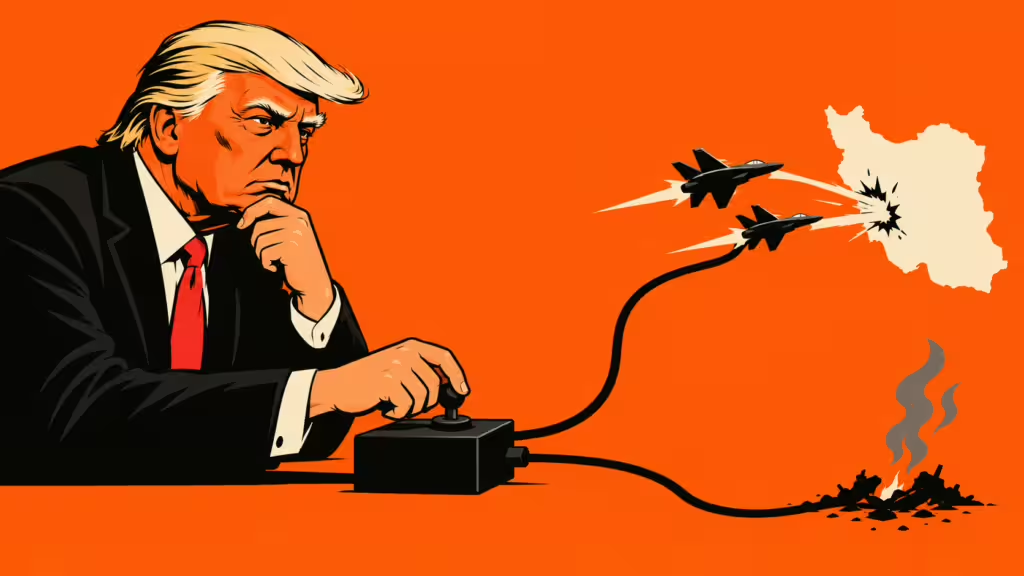
- Trump said Washington can end the war with Iran quickly but is weighing whether to force a conclusion.
- The White House ruled out any strike on Iran before the November 3 midterm elections.
- Mediators are pushing to revive talks as Washington sends a second carrier to the region.
The latest:
The United States could end its war with Iran very quickly, President Donald Trump told reporters at the White House on Friday, before posing the question of whether Washington should finish the conflict or let it wind down on its own. He also said American forces could take control of all of Iran’s oil and were already moving oil through the Strait of Hormuz.
Details:
- The remarks: Trump framed the choice as one between settling the conflict outright and allowing it to fade gradually, saying the military outcome was within reach either way. He did not set out any timetable, conditions or decision point for choosing between the two courses.
- The oil claim: Trump told reporters the United States could seize all of Iran’s oil, adding that Washington was already extracting whatever oil it wanted through the Strait of Hormuz, the shipping corridor that carries a large share of global crude exports. He gave no volumes, no locations and no operational detail.
- The one-year warning: The Financial Times quoted Mike Waltz, the US ambassador to the United Nations, as saying the war with Iran could run another year. Waltz said he hoped Tehran would return to the negotiating table before that point, according to the newspaper.
- The election line: White House spokeswoman Anna Kelly said the United States would not attack Iran “at any time before the midterm elections” scheduled for November 3. Trump had previously announced the same commitment, tying restraint directly to the congressional vote.
- The Sunday threat: The Wall Street Journal reported that Trump warned on Sunday that the United States and Israel would finish the mission soon unless Tehran changed its behavior quickly. That warning sits alongside the pledge not to strike before the midterms, leaving the post-election period as the open window.
- The diplomacy: Middle East mediators are intensifying efforts to restart negotiations with Iran out of concern that fighting could resume. The parties involved in those contacts have not been identified publicly, and no date or venue for a resumption of talks has been announced.
- The military build-up: The United States is moving an additional aircraft carrier into the region, according to Reuters, while indications point to Israel preparing plans for possible fresh strikes on Iran. Neither the carrier’s arrival date nor the scope of the Israeli planning has been disclosed.
- The pattern: Trump has repeatedly raised the prospect of striking Iran before pulling back and seeking a deal, most recently in late July. That sequence frames how allies and adversaries read Friday’s language about ending the war quickly.
Between the lines:
Two timelines are now in open tension. Kelly’s pledge of no attack before November 3 and Waltz’s estimate that the war could last another year describe very different horizons, while Trump’s Sunday warning that the mission would be finished soon points to action once the electoral constraint lapses. The late-July episode suggests the threat may again precede a bid for a deal.
What’s next
Watch November 3, when the stated restraint expires, any announcement of a venue or date for resumed talks, the additional carrier’s arrival in the region, and further statements from Waltz on the negotiating track.