Key Points
- Whoop announced a clinical research partnership with Abu Dhabi's Department of Health this week.
- The deal follows a $75 million Mubadala anchor investment in Whoop's $575 million Series G round.
- Abu Dhabi is positioning wearables and clinical data as infrastructure for a predictive-care health economy.
The latest:
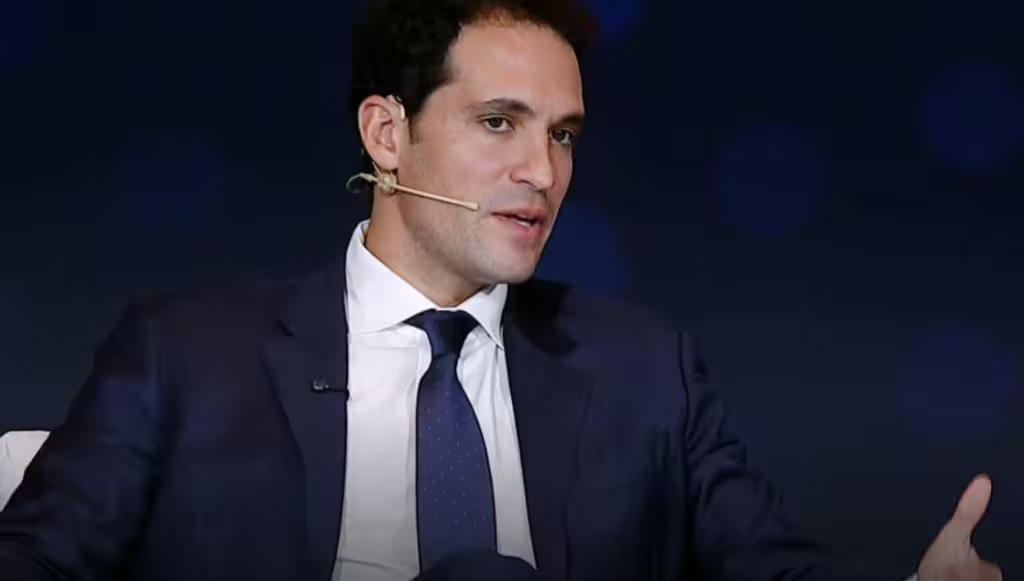
A clinical research partnership with Abu Dhabi’s Department of Health will fund work on prevention, sleep, cardiovascular health and ageing, Whoop announced this week. Founder and chief executive Will Ahmed, speaking at the Abu Dhabi Future Health Summit, said the Gulf has become one of the Boston-based company’s most important markets, with membership up more than 85 per cent in the past year.
Details:
- The agreement: Whoop said the Department of Health partnership would finance clinical research targeting prevention, sleep, cardiovascular health and ageing. Ahmed described the aim as driving measurable health outcomes rather than monitoring alone. Neither side disclosed the value of the research agreement or a timeline for first results.
- The growth numbers: Ahmed said Whoop is up roughly 15 times in the GCC over the last three years, with regional membership growing more than 85 per cent in the past year. The company has separately put GCC year-on-year growth at more than 75 per cent.
- The Mubadala money: On May 7, Whoop and Mubadala Investment Company announced a strategic partnership anchored by a $75 million investment, framed around proactive health and preventative healthcare innovation in the UAE. That came inside Whoop’s $575 million Series G, which valued the company at $10.1 billion and was led by Collaborative Fund.
- What Whoop committed to: Under terms disclosed by both sides, Whoop agreed to open a dedicated Abu Dhabi office, expand its Advanced Labs blood-testing product, roll out full Arabic localisation, and launch the Whoop-Mubadala Health Research Initiative, a longitudinal programme spanning diagnostics, genomics, prevention and behavioural optimisation.
- The Arabic rollout: Full Arabic localisation launched this month alongside a GCC-wide campaign, the company said. The feature had been one of the commitments attached to the Mubadala partnership announced in May. Whoop says it has now raised about $1 billion in total capital, with 2PointZero Group also in the Series G.
- The commercial build-out: Whoop said Gulf expansion would be paired with retail distribution and sponsorships of the UAE Team Emirates-XRG cycling squad and Al Nassr football club. Through Whoop Qatar, it plans its first performance research and development lab outside Boston later in 2026.
- The Abu Dhabi case: An EY survey cited by Abu Dhabi officials found only 43 per cent of respondents follow a structured fitness plan, while 61 per cent had used a wearable in the past year and 87 per cent reported a positive experience using AI for health decisions — a gap officials believe wearables plus clinical integration can close.
- On the timing: Ahmed acknowledged that closing a large Gulf investment shortly after the Iran war began was complicated, saying he showed up because he had been doing so for the past decade. He argued that removing bureaucracy lets governments push care from reactive to proactive.
- The product thesis: Ahmed said continuous monitoring can read signals a user cannot feel, and that those insights can lower weight and blood pressure. He said Whoop’s 14-year strategy — validate with elite athletes, then move mainstream — is now playing out in the Gulf.
Background:
Whoop makes wearable trackers measuring sleep, strain and recovery, built first around elite athletes before targeting general consumers. Abu Dhabi has been assembling longevity and preventative-health assets through state-linked vehicles including Mubadala, with the Future Health Summit serving as the emirate’s showcase for those deals.
Between the lines:
The Department of Health deal converts a commercial investment into a public-health relationship. Mubadala’s $75 million bought equity and an office; the research partnership hands Whoop clinical validation and access to a regulator that writes health policy. Ahmed’s own framing — removing bureaucracy so care becomes proactive — points to why a small market with centralised decision-making is worth 15-fold growth claims and a first lab outside Boston.
What’s next
Watch for the opening of Whoop Qatar’s performance research and development lab, promised later in 2026, and for the first published output from the Whoop-Mubadala Health Research Initiative and the Department of Health programme.