The latest:
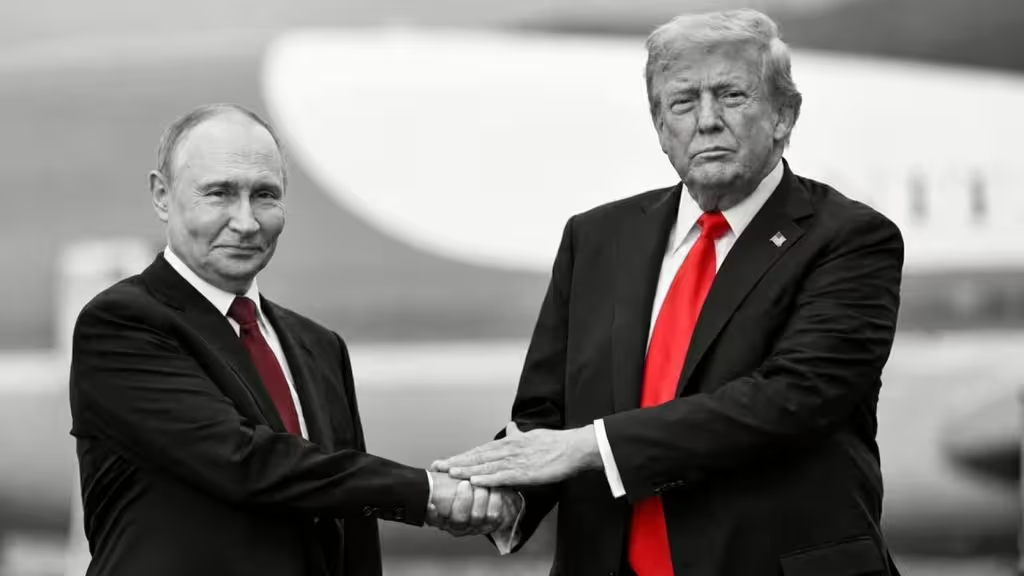
A day after waiving the sanctions and tariffs targeting Russian exports, President Donald Trump told reporters he has not yet announced a final decision on the matter. Secretary of State Marco Rubio said officials want more time to assess the situation, and that Trump will take up to 60 days to weigh what the measures would mean for the global and American economies, according to Reuters.
Details:
- The order: Trump signed an executive order Friday waiving major sanctions and tariffs under the legislation known as the Graham Act, which he signed last month at the request of lawmakers seeking to pressure Moscow over its war in Ukraine, Reuters reported.
- What was due: The measures, including tariffs on Russian goods and sanctions on countries purchasing Russian oil and gas, were scheduled to take effect next week. Friday’s order did not specify how long the waiver would last, though Rubio said Trump opted for a 60-day review.
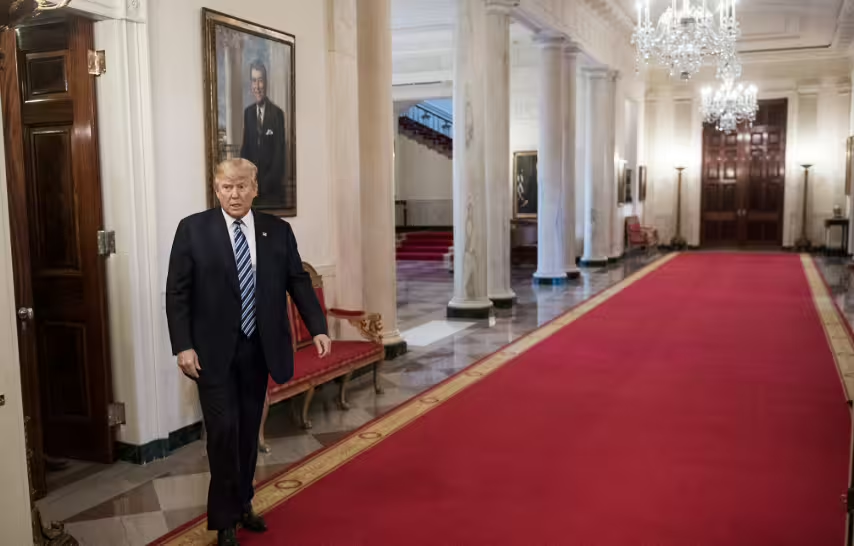
- Trump’s framing: Speaking to reporters at his Mar-a-Lago club in Palm Beach, Florida, the president said: “A lot of you don’t know my decision yet, but we’ll figure it out, and you’ll figure it out too.”
- The India problem: Rubio noted the Graham Act calls not only for sanctions on Russia but tariffs on goods from countries importing Russian energy. He pointed to India, a significant American partner that has diversified its energy sources but still relies heavily on Russian oil.
- Political timing: The exemption comes weeks before November’s midterm elections, with Trump under pressure over rising energy prices during the war with Iran that has disrupted global oil supplies, according to Reuters.
- Kyiv’s objection: Ukrainian President Volodymyr Zelenskiy criticized Friday’s executive order, warning it would embolden Russian President Vladimir Putin and prolong the war.
- Republican dissent: Senator Darlene Graham, a South Carolina Republican whose late brother Lindsey Graham championed the legislation bearing his name, said she disagrees with the decision and will raise it when Trump campaigns for her next week, adding that she trusts neither Putin nor Russia.
- The diesel deal: Rubio also defended a separate US agreement with Russia to increase diesel supplies to global markets, aimed at easing fuel prices. Trump said Russia would initially supply the United States with more than 300,000 metric tons of diesel, followed by shipments in November and beyond.
- Rubio’s defense: The secretary of state argued the diesel would be sold one way or another, and the only variable is how much the United States receives. He said the deal and the waiver both reflect the difficulty of managing the Middle East and Ukraine conflicts disrupting energy supplies.
Background:
The Graham Act, signed last month, was pushed by lawmakers seeking leverage over Moscow on Ukraine. It pairs direct sanctions on Russia with secondary tariffs on countries importing Russian energy — the mechanism that now implicates partners such as India.
Between the lines:
The 60-day review window runs past the November midterms, and the administration’s own stated rationale ties the pause to energy prices. Rubio framed the waiver and the diesel agreement as a single response to overlapping conflicts, placing near-term fuel costs above the pressure campaign on Moscow that the Graham Act was written to deliver — the trade-off Zelenskiy and Senator Graham both objected to.
What’s next
Watch whether the measures suspended before their scheduled start next week are revived at the end of the 60-day review, whether the first 300,000 metric tons of Russian diesel arrive, and Trump’s campaign stop with Senator Graham.