The latest:
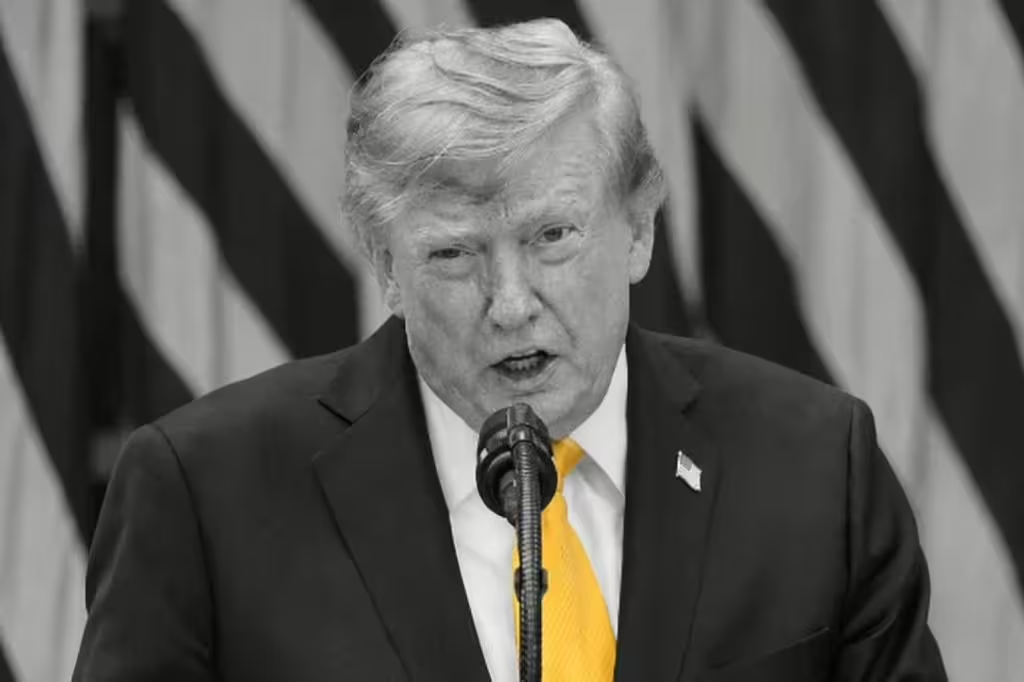
Israel has provided significant assistance to Saudi Arabia in its operations against the Houthis, US President Donald Trump told reporters, adding that Riyadh has been offered further help and should take it. Asked whether the Abraham Accords were back in play, Trump said he believed they were, possibly more than at any previous point, citing Saudi satisfaction with Israeli and American backing.
Details:
- The assistance: Israeli help to Saudi Arabia has so far centered on intelligence collection on targets, according to people familiar with the file. Trump said Israel had helped the Saudis a great deal and that additional Israeli offers were on the table, saying he thought Riyadh should accept them.
- The air-defense question: The Saudis are expected to seek a defensive system comparable to Israel’s, and Israel is not expected to consider such a request unless Riyadh joins the Abraham Accords, according to people familiar with the discussions. No timeline for any such request has been made public.
- The basis is unclear: What Trump’s assessment on the Accords rests on has not been spelled out. He named no channel, mediator or stage of negotiation, and no Saudi official response to his remarks has been announced.
- The Saudi condition: Riyadh’s stated requirement is unchanged: the launch of a genuine political process leading to a sovereign Palestinian state. Sources said relations will not be normalized with Israel before that condition is accepted.
- The personal factor: Crown Prince Mohammed bin Salman does not trust Prime Minister Benjamin Netanyahu, sources familiar with the details said, and as long as Netanyahu remains in office progress on normalization is hard to envisage. Saudi Arabia, like other Arab states, is watching Israel’s elections in hope of political change.
- The battlefield: Recent weeks have brought a sharp escalation in fighting between Saudi Arabia and the Houthis. Riyadh does not normally disclose damage from Houthi attacks, publishes very limited documentation, warns residents against filming the damage, and confines coalition statements to successful interceptions.
- The economic hit: Houthi strikes closed King Khalid International Airport, a main gateway for visitors, investors and businesspeople, damaging Saudi aviation. Effects of further attacks on other Saudi airports and strategic hubs are also surfacing, following Saturday’s major attack at the Riyadh airport.
- The Houthi calculation: Farea al-Muslimi of Chatham House told the Financial Times the strikes on Saudi airports aimed to inflict maximum damage on the kingdom’s economic infrastructure and reputation. He said: “Saudi Arabia has a lot to lose, and they have nothing.”
- Disputed impact: An article in Qatar’s Al-Araby Al-Jadeed said the Houthis are targeting the nerve of the Saudi economy, threatening energy, aviation, tourism and foreign direct investment, and pointed to disruption of Saudi oil flows. Its author argued the uncertainty is temporary and will fade once attacks stop.
Background:
Vision 2030, Mohammed bin Salman’s plan to turn the kingdom into a global economic, logistics and technology power, is the frame for Riyadh’s economic exposure. Saudi Arabia faces serious short- and long-term economic challenges that the plan depends on containing.
Between the lines:
Trump’s framing links two tracks Riyadh has kept apart: battlefield cooperation against the Houthis and political normalization. The reported condition on air defense makes that linkage explicit, turning a security need created by the airport strikes into leverage on the Accords. But the stated Saudi precondition on Palestinian statehood and the distrust of Netanyahu reported by sources both remain in place, which is why Trump’s assessment rests on no disclosed channel.
What’s next
The Future Investment Initiative summit is scheduled for October 26–29 in Riyadh, and the current security situation is complicating it. Watch attendance by international officials, investors and bankers, and whether King Khalid International Airport resumes normal operations.