The latest:
Taiz has been encircled since early October after Houthi fighters seized stretches of the 200-kilometre road south to Aden, including the towns of Al-Turbah and Al-Misrakh, Reuters reported. Government forces backed by Saudi-led air strikes are trying to reopen the route but were still losing ground around the city in mid-October. Relief agencies report shortages of fuel, food, medicine and clean water.
Details:
- The displacement figures: Zoe Brennan, spokeswoman for the UN migration agency, told reporters in Geneva that 233,077 people have been displaced in the latest round of fighting, including 121,530 in Taiz province. Government sources separately put the number forced from their homes at 80,000. Katya Jurich, head of programmes at the International Organization for Migration in Aden, estimated the city’s population at about 600,000.
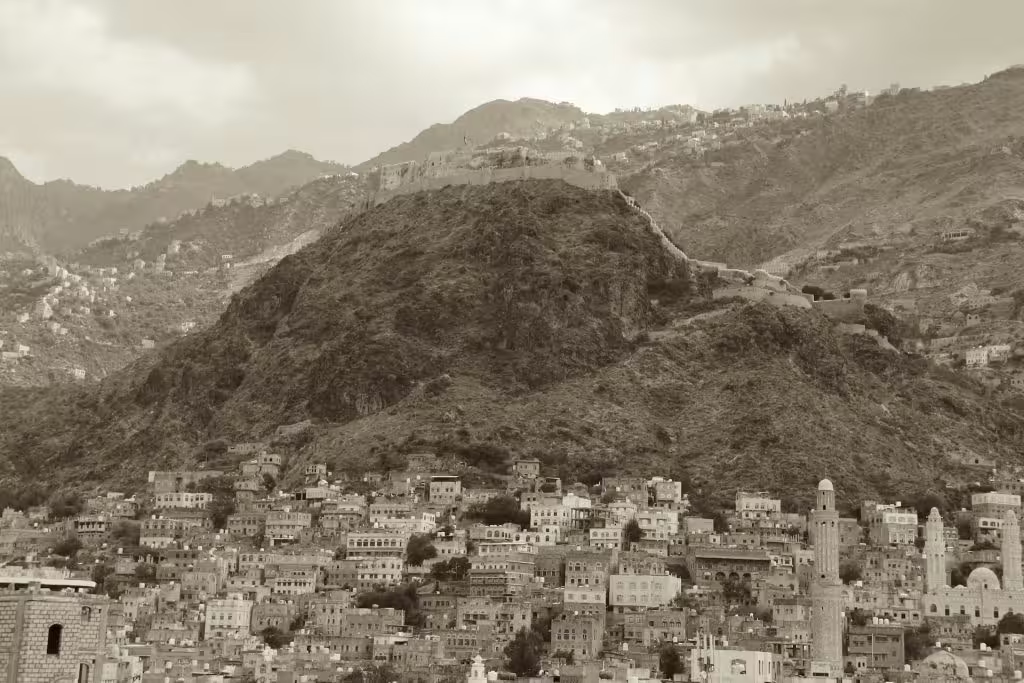
- The siege line: Houthi forces hold territory north, east and west of Taiz, while government troops control the city and its immediate surroundings including Jabal Sabr, the high mountain rising to the south. The advance came through land south of Jabal Sabr along the Aden road, which crosses rugged hills where fighting moves slowly.
- Why the city matters: Taiz is the last major urban stronghold of anti-Houthi forces in Yemen’s southern highlands, the hills overlooking both Aden, seat of the internationally recognised government, and the coastal plain around the Bab al-Mandab strait. Its fall would make it far harder for government forces to sustain their counter-offensive near the strait.
- The health warning: World Health Organization spokesman Tarik Jasarevic said 12 hospitals have roughly four days of fuel left, with shortages of oxygen and medicine, and that road closures are blocking deliveries as fighting reaches the districts housing the main referral hospitals. The World Food Programme said in mid-October the city’s wheat flour stocks were nearly exhausted.
- Inside the markets: Residents told Reuters that basic goods are scarce and prices have surged since the Aden road was cut. Resident Wathiq Mahyoub described fuel running out and rubbish piling in the streets, saying the Houthis refused to open the crossing even for waste disposal. Ahmed al-Jalal, who manages displacement camps in Al-Mudhaffar district, said families are sheltering in unfinished buildings and shops.
- The government’s account: Yemen’s armed forces said they have carried out more than 17,000 air and ground strikes on Houthi positions since launching Operation Yemen Dawn, with the heaviest fighting in Taiz and Lahj provinces, Asharq Al-Awsat reported. The military claimed more than 1,250 air strikes in a single day, around 700 Houthi fighters neutralised and over 150 vehicles destroyed.
- The missile strikes: Local authorities in Marib said Houthi forces fired nine ballistic missiles and seven other projectiles at residential districts one evening. Public Health Minister Qassem Buhaiba said the death toll from strikes on the Maashiq presidential palace and the Buraiqa area of Aden rose to five, with 16 wounded. The Saudi-led coalition has listed dozens of recent Houthi attacks on Saudi infrastructure.
- The political position: Rashad al-Alimi, chairman of Yemen’s Presidential Leadership Council, said the operation will continue, describing its goal as rebuilding state institutions and extending state authority over all Yemeni territory including the capital Sanaa. He did not set a timeframe for the campaign.
- The sectarian divide: The Houthis follow the Zaidi branch of Shia Islam, while Taiz is majority Sunni. The city was a focal point of the 2011 Arab Spring uprisings that unseated former president Ali Abdullah Saleh, and has long been treated as a centre of opposition to the Iran-aligned group.
Background:
Yemen’s war began in 2014 when the Houthis seized Sanaa, pushing the government south to Aden. A Saudi-led intervention the following year produced a bloody stalemate until a 2022 truce, which held until fighting resumed this year.
Between the lines:
Taiz endured months of street fighting, sniper fire and a prolonged siege between 2015 and 2017 before government forces pushed the Houthis out. The combination of that local opposition history, the Sunni-Zaidi divide and the group’s insistence on taking the city points toward either a drawn-out blockade or a long and bloody urban battle rather than a quick collapse.
What’s next
Watch whether government forces reopen the Aden road and retake Al-Turbah and Al-Misrakh, how long the 12 hospitals’ fuel reserves last, and whether Houthi strikes on Aden and Saudi infrastructure continue.
Sources: