The latest:
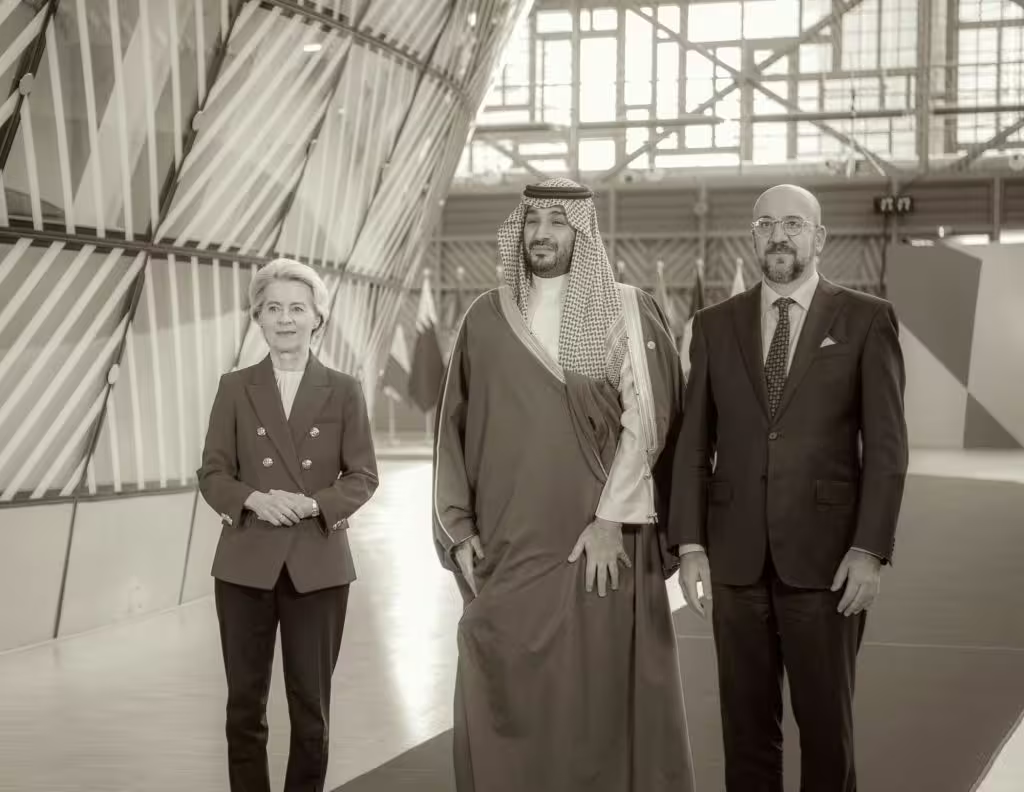
The European Union has postponed its summit with Gulf states that was due in Saudi Arabia on October 24, offering no explanation beyond a pledge to announce a new date in due course. EU foreign policy chief Kaja Kallas told reporters in Brussels that discussions were still under way. The bloc had partly intended the summit as a show of solidarity with Gulf capitals during the war.
Details:
- The security backdrop: The postponement follows weeks of Houthi attacks on Saudi territory, including a major strike Saturday on King Khalid International Airport in Riyadh, the main gateway for investors, business travelers and visiting officials. Operations there have been suspended for several days, with airlines halting flights.
- Sports fallout: The Six Kings Slam exhibition tennis event, scheduled in Riyadh from October 21 to 24, was pushed to December 27-30, 2026. The FIFAe esports finals, due to open in Jeddah on October 16, were also postponed over regional developments and logistical obstacles tied to team and player participation.
- Culture and youth: The Misk Foundation, an organization close to the crown prince, will not hold the 2026 Misk Global Forum set for November 11-12 in Riyadh, citing organizational and logistical challenges. The Red Sea Film Festival’s 2026 edition slipped to late 2027, and this year’s MDLBeast music festival was canceled.
- Not all from the war: Several of these decisions cannot be attributed solely to the attacks, and some reflect broader organizational, financial and security considerations predating the latest escalation. The Saudi Grand Prix, reported off the calendar this year, had already been moved from April to November before the recent strikes.
- What still happened: The World Petroleum Congress opened Sunday in Saudi Arabia and ran through the week, but the chief executives of ExxonMobil, TotalEnergies, Shell and BP canceled their attendance over the security situation. The Future Investment Initiative, set for October 26-29, remains on the published schedule.
- Riyadh’s message: At a cabinet meeting chaired by Crown Prince Mohammed bin Salman on Tuesday, officials praised the resumed oil flow through the East-West pipeline, reported in September to have been hit by drones launched from Iraqi territory. Energy Minister Abdulaziz bin Salman said the kingdom fears nothing and will overcome any challenge.
- The damage policy: Saudi Arabia does not usually disclose details of damage from the attacks. Published documentation is minimal, residents are repeatedly warned against recording damage, and coalition statements are limited to reporting successful interceptions.
- The Houthi calculation: Farea al-Muslimi of Chatham House told the Financial Times that strikes on Saudi airports aimed to inflict maximum harm on the kingdom’s economic infrastructure and reputation. He argued Saudi Arabia has much to lose while the Houthis do not, making the economy their most effective target.
- The economic numbers: Yoel Guzansky, head of the Gulf program at the Institute for National Security Studies, told Ynet that IMF projections point to a Saudi GDP contraction of close to 4% in 2026. He assessed that the kingdom needs capital, investment and expertise that the current war is driving away.
- A dissenting read: An article in Qatar’s Al-Araby Al-Jadeed described the Houthis as targeting energy, aviation, tourism and foreign direct investment, but argued the resulting uncertainty is temporary and would dissipate once the attacks and the war on Iran stop.
Background:
Hosting global summits, tournaments and festivals is a declared pillar of Saudi Arabia’s economic and tourism strategy under Vision 2030, which aims to turn the kingdom into an economic, logistics and technology hub. Riyadh has poured large investments into the sports and events sector.
Between the lines:
The postponements cost more than ticket revenue. Guzansky assessed that the kingdom’s image as a state able to maintain stability has been damaged, and that several Vision 2030 items have been canceled, some overambitious from the start. He described the moment as one of the gravest crises Saudi Arabia has faced, citing simultaneous threats from Iraq and Yemen. The absent oil majors’ chief executives and the empty summit slot make that assessment visible on the calendar itself.
What’s next
Watch whether the Future Investment Initiative proceeds on October 26-29 and which international speakers show up, when King Khalid International Airport resumes normal operations, and whether the EU and the Gulf Cooperation Council name a new summit date.