Key Points
- Conflict Armament Research says the Houthis imported Chinese components to build an Iranian-designed medium-range ballistic missile.
- The weapon's roughly 1,200-mile range would place all of Saudi Arabia and Israel within reach.
- It would mark a shift from Iranian resupply toward Houthi-run production of precision weapons.
The latest:
Houthi militants are attempting to manufacture their own version of Iran’s Kheibar Shekan precision-guided ballistic missile using components shipped in by a Chinese supplier, according to a Conflict Armament Research report seen by The Wall Street Journal before publication. The group assessed the resulting weapon would have a range of roughly 1,200 miles. That would put all of Saudi Arabia and Israel within striking distance.
Details:
- The findings: Conflict Armament Research, which documents weapons supply chains in conflict zones, based its report on information provided by Yemeni authorities in July, after officials interdicted two shipments last year. The missile equipment was concealed among other goods, the report said, and photographs of the key components were published with it.
- The components: The seized items included custom-made metal missile parts, sections of the motor and airframe, stabilizing fins, and parts of a solid-propellant rocket motor from the Kheibar Shekan series, according to the report. Yemeni authorities also seized tools, testing equipment and ablative material that shields a missile from flight heat.
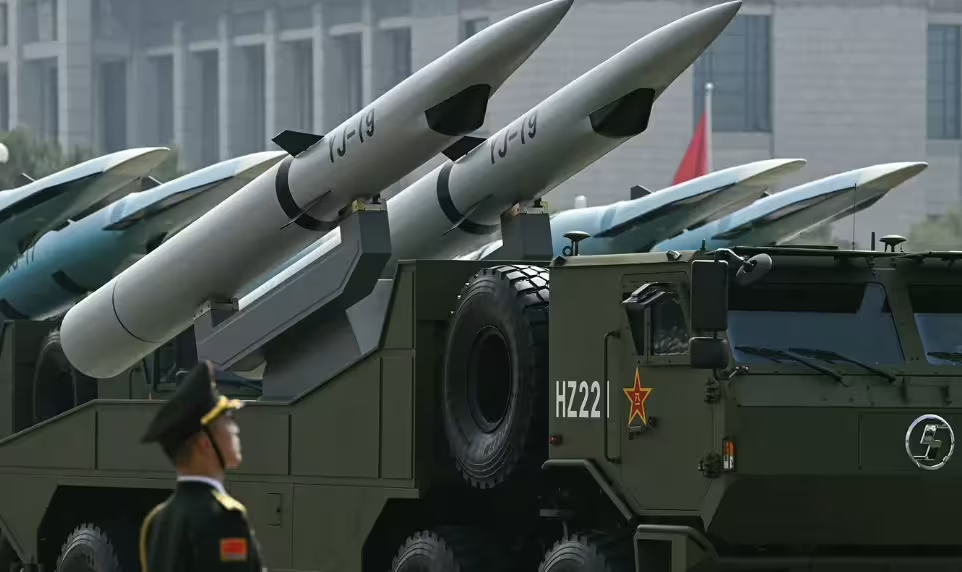
- The weapon: The Kheibar Shekan, a cheap and mobile precision missile first displayed in Tehran in 2022, is considered more effective than other Iranian systems because it can maneuver around air defenses. In some variants, analysts and officials say, the warhead detaches in the final phase and adjusts course at 6,000 miles an hour.
- The uncertainty: Fabian Hinz, senior analyst at Conflict Armament, said imports of that kind could mean the Houthis are already manufacturing, or that they are trying without success. He said the group’s weapons facilities are so well camouflaged that how far production has advanced remains unclear.
- The China link: Chinese companies are now the largest source of seized goods bound for the Houthis, according to U.N. reports and data compiled by arms experts, and most of the group’s U.S.-sanctioned drone-parts suppliers are based in China. Beijing says it is respecting the U.N. arms embargo on the Yemeni faction.
- The supplier: Conflict Armament was shown shipping documentation identifying a Chinese precision-metal producer that advertises itself as a specialist in custom aerospace parts. The report did not name the company. The U.S. last year accused a Chinese firm of helping the Houthis stage attacks on American vessels in the Red Sea.
- The expert read: Michael Knights of Horizon Engage said the appearance of Chinese components in Houthi ballistic missiles indicates Beijing has “neither the will nor the means to control the final destination of its dual-use technologies.” Some imported items were dual-use goods; others were parts designed specifically for missile use.
- The trajectory: Mohammed al-Basha, founder of the Washington-based Basha Report, said the Houthis have grown more autonomous after years of dependence on Iran and Hezbollah, citing domestic manufacturing using artificial intelligence for drone and missile software, diversified supply chains and ties to smugglers and international procurement networks.
- The precedent: Henry Thompson, a former expert on the U.N. Yemen sanctions panel, said evidence shows the Houthis have imported solid-fuel ballistic missile components from China for at least two years. He assessed medium-range missiles would let them strike deep into Saudi Arabia with heavier payloads than cruise missiles or drones.
- The backdrop: The Houthis have intensified attacks on Saudi Arabia in recent weeks seeking to break a Riyadh-led blockade. Those strikes, alongside Iranian attacks on commercial vessels in the Strait of Hormuz, have pushed oil prices higher. Trump posted on Tuesday that the Houthis were behaving very badly.
Background:
The Houthis are a U.S.-designated terrorist organization subject to a United Nations arms embargo. Tehran had long shipped missiles to the group for reassembly and use. Iran deployed the Kheibar Shekan against American bases with some success during last spring’s war with the U.S., the Journal previously reported.
Between the lines:
Two findings point the same way: custom-machined parts for a Kheibar Shekan motor and airframe, and earlier 2024 documentation of similar machined parts for the shorter-range Sadr. Together they suggest the Houthis are buying what a factory needs rather than what a launcher needs — a procurement pattern consistent with production, though Conflict Armament itself cannot confirm output.
What’s next
Watch whether Beijing responds to the dual-use findings, whether Yemeni authorities interdict further shipments, and whether any Houthi strike on Saudi Arabia demonstrates medium-range reach consistent with the 1,200-mile estimate.