The latest:
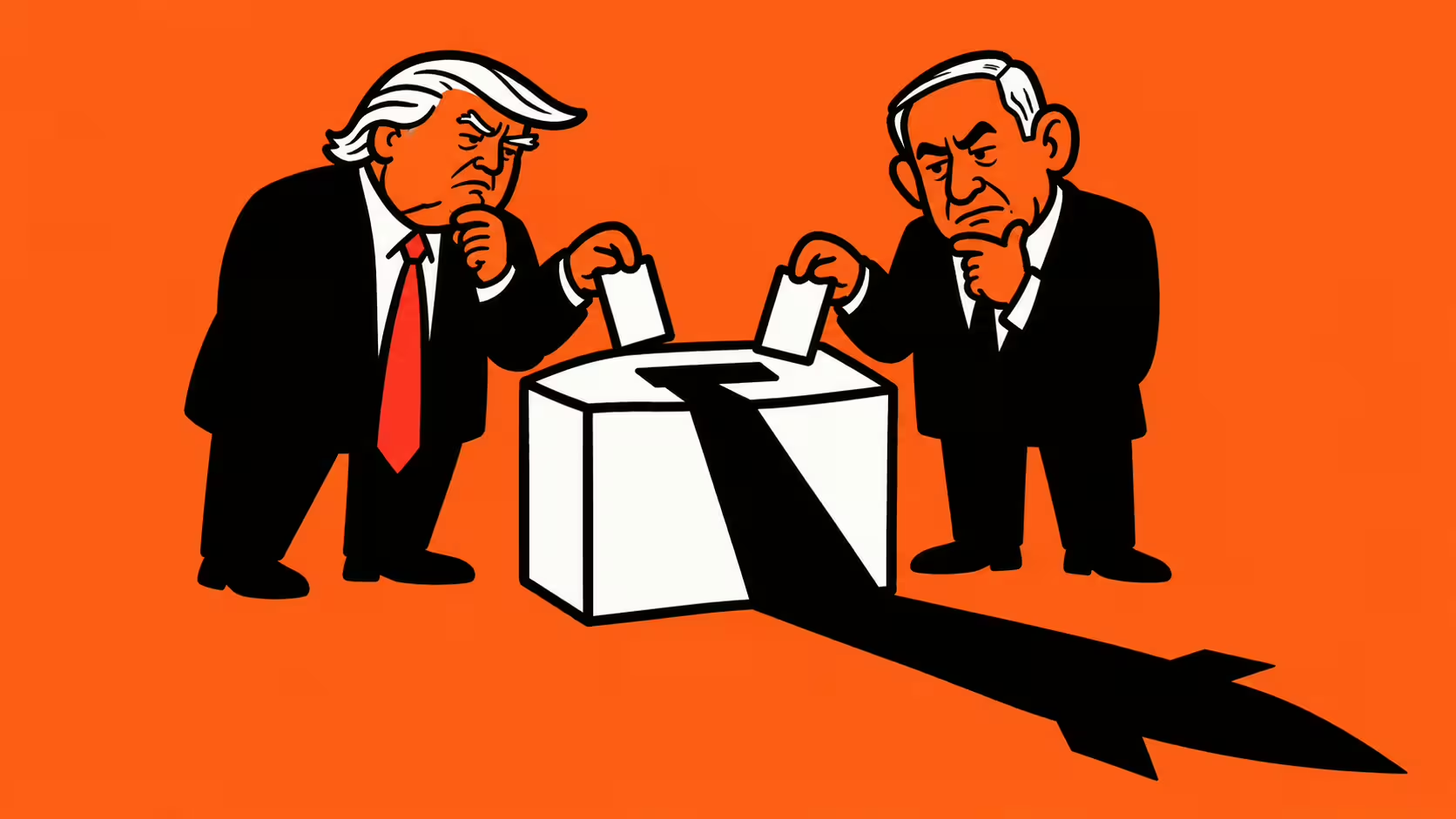
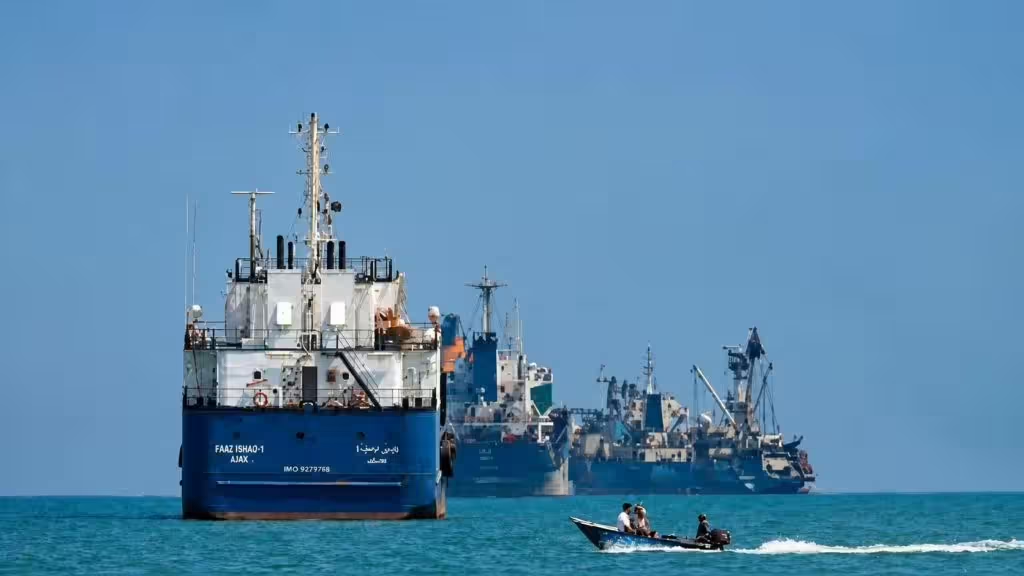
Iran has shifted the type and tempo of its attacks on vessels near the Strait of Hormuz over roughly the past 10 days, two senior Iranian officials told Reuters, describing a strategy approved at the highest levels of the leadership. One stated aim is to keep global oil prices elevated and influence the November 3 congressional midterms.
Details:
- The stated goal: One Iranian official said the purpose is to frustrate efforts by the United States and its allies to drive down global oil prices. The second said Tehran will not let President Donald Trump lower prices before the vote, describing the standoff as a game of chess played against Washington’s timetable.
- The spotter tactic: A US military official, speaking on condition of anonymity, said that after American strikes destroyed much of Iran’s radar capability, the Revolutionary Guard began using unarmed spotters in small boats to identify targets, including US naval vessels, and relay the information back.
- The dhow incident: The same official said US forces discovered last week that Iranian spotters were operating from a sailing vessel and transmitting targeting data to the Guard. American forces confronted the boat, ordered those aboard to leave, then destroyed it. No one was injured.
- The attack count: Twelve ships were attacked between October 5 and 11, including six on Sunday alone, according to the UK Maritime Trade Operations. On Tuesday a tanker and a container ship were hit by unidentified projectiles, among the most intense stretches since the war began.
- Geographic spread: The Iranian officials said the new strategy extends operations beyond Hormuz into the Gulf of Oman and farther waters. Maritime security analyses of incidents reported to UKMTO indicate vessels were targeted off Qatar and the UAE in recent days, and near Sohar anchorage in Oman.
- Traffic and flows: The US-led Joint Maritime Information Center put US-facilitated transits at about 29 ships daily over the latest 72 hours, against a historical average near 138. Kpler data show 2.9 million barrels crossing on October 11, the lowest daily volume this month, after September averaged roughly 15.5 million barrels daily.
- The threat level: In its latest report Sunday, the Joint Maritime Information Center kept the threat to commercial shipping in the strait at severe, its second-highest level, citing continuing Guard attacks, attempted attacks and harassment including drone overflights, targeted surveillance and occasional VHF radio contact.
- Iran’s own exports: Kpler data show no Iranian crude or condensate was loaded onto tankers throughout September under the US naval blockade, leaving Tehran increasingly dependent on its ability to threaten neighbouring producers’ cargoes to retain leverage over Washington.
- The analysts’ reading: Charlie Brown of United Against Nuclear Iran told Iran International that each unanswered strike likely encourages the next. Historian Shahram Kholdi assessed Tehran may be engineering an October surprise, warning the approach could backfire if it mistakes temporary American restraint for unwillingness to respond.
- No comment: The Pentagon and Iran’s foreign ministry did not immediately respond to requests for comment. The two Iranian officials declined to provide details of the new strategy beyond saying it was fully coordinated across the ruling system.
Background:
Tehran has sought to control Hormuz since the United States and Israel struck Iran on February 28, restricting a waterway that carried about a fifth of global oil and LNG trade before the war. Washington has maintained a naval blockade of Iranian ports.
Between the lines:
Two of Iran’s levers point in opposite directions. With no crude loaded in September, Tehran’s own exports are no longer a bargaining chip, leaving disruption of neighbouring producers’ cargoes as the remaining source of pressure. That logic explains the widening toward Qatar, the UAE and Oman, and the risk Kholdi flagged: a strike causing heavy casualties or hitting US military assets would test the restraint Trump has promised only through November 3.
What’s next
Trump said Tuesday a decision on Iran would come very soon, while repeating that strikes will not resume before the November 3 vote. Watch daily Hormuz transit volumes, the Joint Maritime Information Center threat level, and Brent after Tuesday’s settlement.