Key Points
- The IMF forecasts 3.1% global growth this year and 3.4% in 2027, with inflation rising.
- Oil-importing, low-income countries without competitive tech sectors face the sharpest squeeze, the fund said.
- Gulf producers face double-digit output drops in 2026, with recovery projected only next year.
The latest:
Prolonged conflict, elevated energy prices and rapid technological disruption are deepening the divide between economic winners and losers, the International Monetary Fund said Tuesday in its World Economic Outlook, released in Bangkok. The fund projects global growth of 3.1% this year and 3.4% in 2027 — stable but lackluster. Inflation is expected to climb to 4.7% this year before easing to 4.1%.
Details:
- The headline numbers: The IMF put global growth at 3.1% this year and 3.4% in 2027, with consumer price inflation rising to 4.7% before slowing to 4.1%. The fund said that global average conceals a reallocation of growth across economies rather than a uniform slowdown.
- The chief economist: Silvana Tenreyro, the fund’s chief economist, said a prolonged Middle East conflict could add to inflation pressures and slow growth. She added that the global economy has proved resilient, but that resilience is now reaching its limits.
- Who gets hurt: Countries dependent on oil imports and lacking competitive technology sectors face what the fund called an increased risk that recent shocks widen income gaps between and within countries. Poorer nations will be hit hardest because they cannot compete with wealthier states for scarce energy supplies.
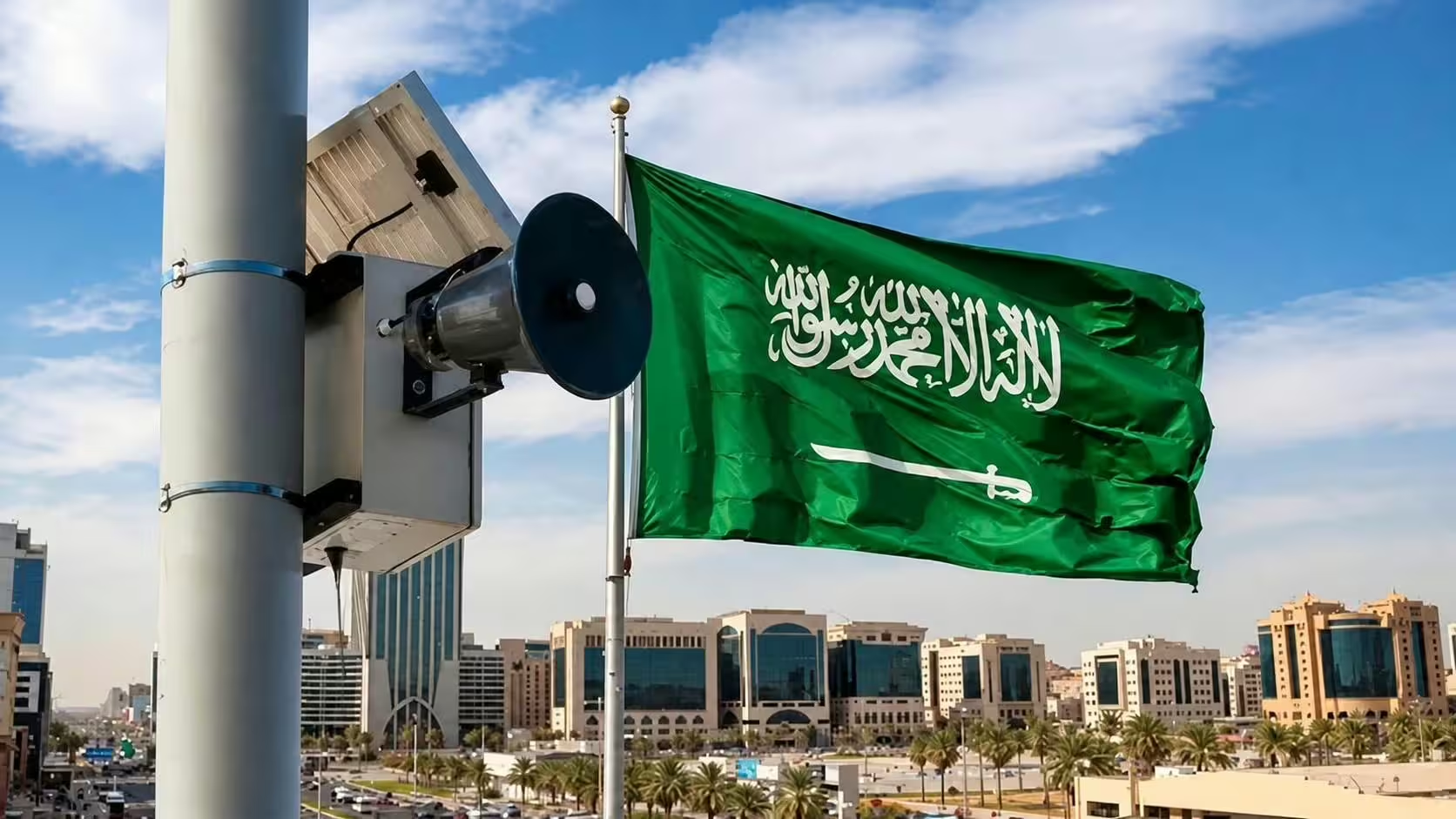
- The Gulf hit: Bahrain, Iraq, Kuwait and Qatar have all been struck by the interruption of their oil and gas trade and are expected to post double-digit drops in output this year, the fund said. It projects they recover those losses in 2027. Saudi Arabia’s more diversified economy is estimated to contract 3.3% before expanding 7.9%, a forecast completed before the recent attacks and not revised for them.
- The advanced economies: The United States is forecast to grow 2.3% this year and next. Euro area growth is expected to reach only half that rate, while Britain is projected at 1.3% this year and slightly less in the following year. France was among the few euro area economies downgraded from the fund’s previous report.
- Asia’s split: China’s growth is expected to slow to 4.5% as it manages higher energy costs, a weak property sector and soft domestic consumption. India is among the fastest-growing major economies at a projected 7%, while other Southeast Asian states gain from data center and technology investment.
- The policy warning: The IMF acknowledged governments will face pressure to cushion households and businesses from higher prices, but its economists warned against overspending given soaring debt and high borrowing costs. They recommended relief that is temporary and narrowly targeted.
- The World Bank view: Ajay Banga, the World Bank president, said every country has suddenly concluded that energy security is national security. He pointed to roughly 1.2 billion young people in emerging economies reaching working age over the next 12 to 15 years, with jobs unavailable for most of them.
- Other pressure points: The fund and officials cited the war in Ukraine, President Trump’s tariffs and the breakdown of cooperative international economic arrangements. Intense heat and drought disrupted supply chains this summer, and cyberattacks hit French supermarkets this week, raising temperatures in refrigerators and freezers.
Background:
The outlook landed as finance ministers and central bankers gathered in Bangkok for the annual meetings of the IMF and the World Bank. In France, violent protests over deteriorating schools and underpaid teachers are rooted in heavy public debt, high borrowing costs, elevated fuel prices and political discontent.
Between the lines:
The fund’s own framing points to a two-track world: economies with diversified output and technology exposure, such as India and parts of Southeast Asia, absorb the energy shock, while oil importers without those sectors fall behind. Banga’s argument that private investment must drive emerging markets sits uneasily beside the IMF’s warning against fiscal expansion.
What’s next
Watch whether the IMF revises its Saudi forecast to reflect the recent attacks, and whether Gulf output recovers on the projected 2027 timeline. The fund estimated another year before Persian Gulf conditions return to prewar levels.