Key Points
- Netanyahu urged Trump in several calls to relaunch joint strikes on Iranian military and nuclear targets.
- Trump has since said no attack will happen before the U.S. midterms; both militaries stay ready.
- Renewed war could delay Israel's Oct. 27 vote and reshape the American campaign.
The latest:
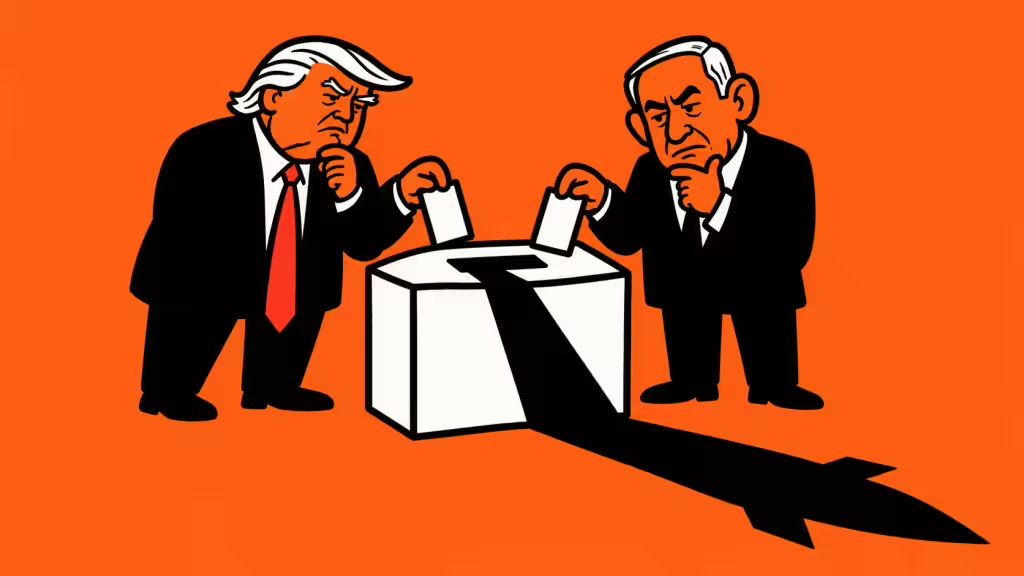
Netanyahu has pushed Trump in a series of calls over the past two weeks to resume major combat operations against Iran before the Israeli and U.S. elections, two U.S. officials, an Israeli official and a fourth source told Axios. Netanyahu cited Israeli intelligence pointing to Iranian steps to rebuild its nuclear program. The calls preceded Trump’s public statement ruling out strikes before the midterms.
Details:
- The proposal: The sources said Netanyahu and Trump discussed a joint U.S.-Israeli operation hitting both military and nuclear targets inside Iran. Netanyahu told Trump he was alarmed by what Israel believes is an Iranian effort to reconstitute every component of its nuclear program.
- The specific worry: Israel is especially concerned Iran may be operating Pickaxe Mountain as a uranium enrichment site, the sources said. Trump’s senior cabinet members met for hours at Camp David on Oct. 2 to weigh next steps in the war and the option of resuming strikes.
- Trump’s posture: An Israeli official said Trump initially leaned toward resuming attacks before growing more hesitant, while a U.S. official described him as going back and forth. One U.S. official characterized Trump’s response to Netanyahu as telling him to get ready without committing to anything.
- The denials: A White House official called it false that Trump and Netanyahu discussed resuming the war, stating the president has said there will be no attack on Iran at any time before the midterms. Netanyahu’s office said the prime minister stays in regular contact with Trump and does not comment on their conversations.
- The split: Defense Secretary Pete Hegseth and U.S. Central Command leadership are the strongest backers of renewed strikes, a source familiar with the discussions said. Most of Trump’s other advisers prefer sustaining economic sanctions, arguing the squeeze is producing results.
- The military channel: Israeli military chief Lt. Gen. Eyal Zamir spoke last week with Joint Chiefs Chairman Gen. Dan Caine about resuming full-scale fighting within three weeks, a source briefed on the call said. Caine’s spokesman, Joe Holstead, declined to comment.
- The election risk: Zamir warned that restarting the war in that window could force a postponement of the Israeli elections, since Iran would likely retaliate with hundreds of ballistic missiles. A strike before the vote could also be read as a political move by Netanyahu, eroding trust in a military seen as apolitical.
- Competing accounts: In recent meetings with his security and intelligence chiefs, Netanyahu claimed it was Trump who raised the idea of hitting Iran before the elections and asked whether Israel would join, an Israeli official said. A U.S. official said the White House is aware Netanyahu believes his strength lies in being a wartime prime minister.
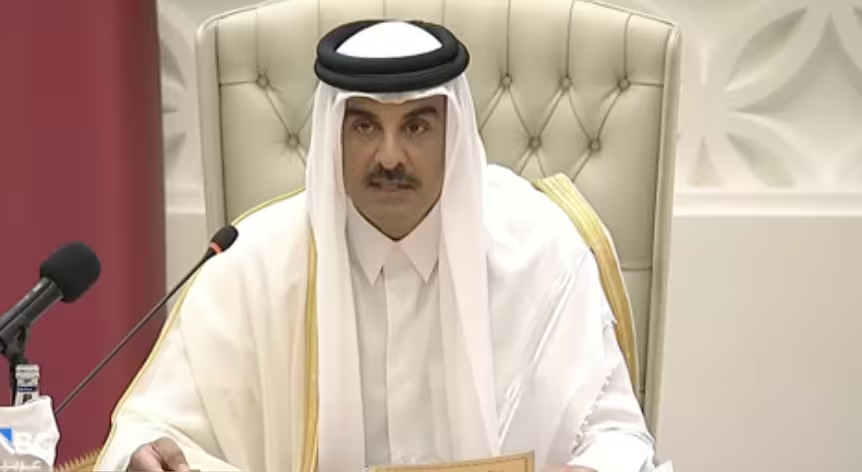
- The diplomacy: Qatari mediators are still awaiting an Iranian response to the latest U.S. counterproposal to end the war, which includes demands for nuclear concessions. A U.S. official described the talks as neither dead nor alive, with Washington betting Tehran will relent.
- Trump’s line: The president told reporters Tuesday that Iran is a failed country and that a decision on Iran will come very soon. Both militaries remain on alert and are completing preparations in case he reverses course, the sources said.
Between the lines:
Both sides have reasons to stall. Iranian retaliation that delays Israel’s Oct. 27 vote would hand Netanyahu’s rivals a grievance, while a new Middle East war a week before the midterms could remind American voters of an unpopular conflict. The advisers urging sanctions over strikes are arguing, in effect, that time costs Trump less than bombs do.
What’s next
Watch Iran’s answer to the U.S. counterproposal through Qatari mediators, Israel’s Oct. 27 election date, the U.S. midterms a week later, and whether Trump’s promised decision lands before either vote.