Key Points
- Houthi military spokesman declared Aramco facilities a legitimate target on Tuesday, warning employees to move away.
- The threat followed a Saudi-led coalition order for civilians to leave a Sanaa oil site.
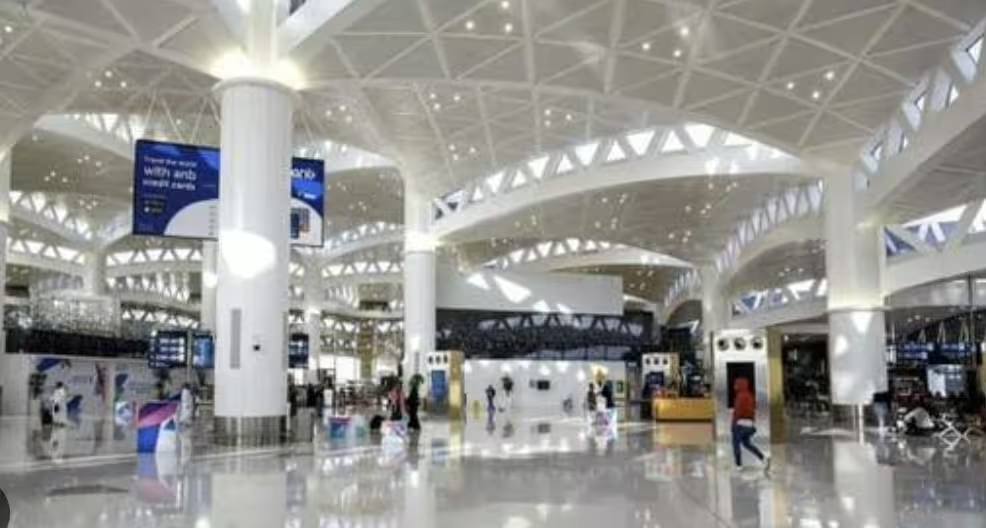
- Saturday's Houthi missile strike on Riyadh's airport killed at least 13 and wounded 300.
The latest:
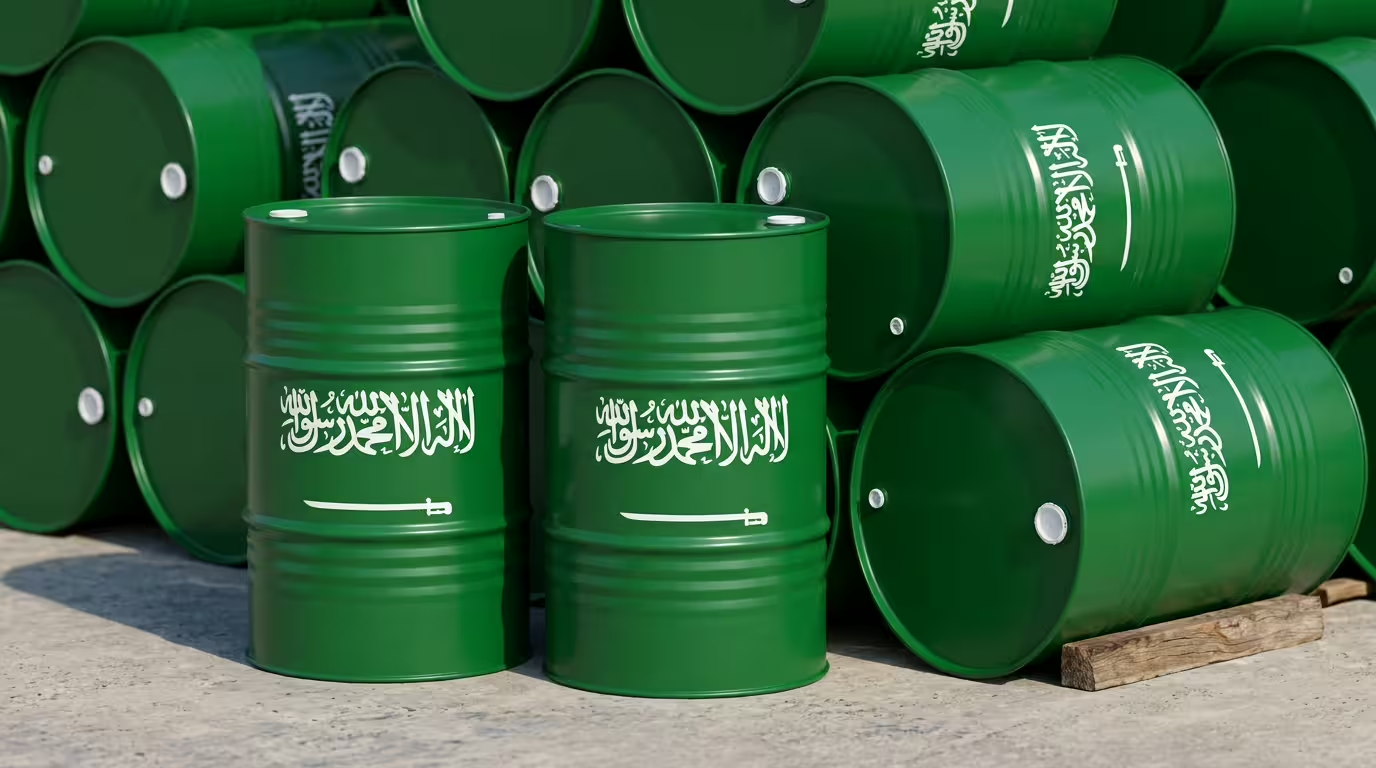
Aramco facilities were declared a legitimate military target by Yemen’s Iran-backed Houthi militia on Tuesday, according to The New York Times, in a warning issued shortly after Saudi authorities ordered civilians away from an oil site in Houthi-controlled Sanaa. The two sides have been exchanging deadly strikes for days, after Houthi missiles hit Riyadh’s main airport on Saturday.
Details:
- The threat: Yahya Saree, a military spokesman for the Houthis, posted the warning on X, urging all employees and citizens near any Aramco facility to evacuate it and move away, describing it as “a legitimate target for our forces.” No timeframe or specific site was named in the warning.
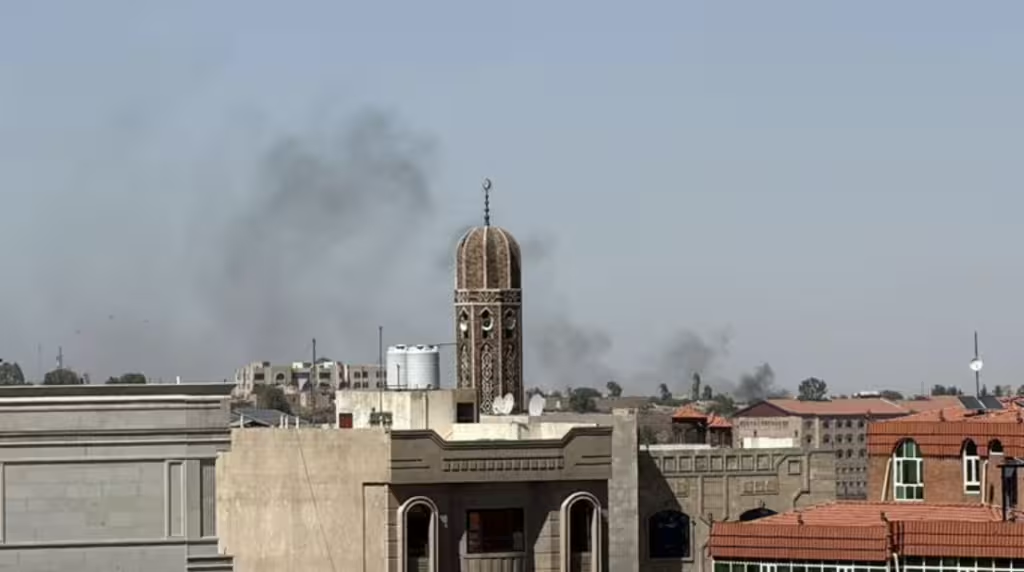
- The Saudi notice: Maj. Gen. Turki al-Maliki, spokesman for the Saudi-led military coalition fighting the Houthis in Yemen, told civilians on social media to leave al-Sabaha Central Station, an oil site in Houthi-controlled Sanaa. The Houthi threat came shortly afterward.
- Riyadh attack: Houthi missiles struck King Khalid International Airport in Riyadh on Saturday, killing at least 13 people and wounding more than 300, according to The New York Times. It was described as the deadliest attack on a Gulf Arab country since the start of the U.S.-Israeli war with Iran.
- Not a first: The Houthis have hit Aramco facilities before, giving the latest warning a track record behind it. The group has also repeatedly targeted Saudi oil infrastructure and tankers in the Red Sea since tensions between the two sides escalated in July.
- The backer: Iran is identified as the Houthis’ primary backer, and the Riyadh airport strike was framed against the timeline of the U.S.-Israeli war with Tehran. That places the Saudi-Houthi exchange inside a wider regional confrontation rather than a bilateral one.
- Pattern of warnings: Both sides issued their evacuation notices through social media posts by named military spokesmen rather than formal statements, a sequence in which each warning was directed at civilians near energy infrastructure held by the other side.
- The target set: Aramco is Saudi Arabia’s state oil giant and the core of the kingdom’s export economy, making its facilities the highest-value infrastructure the Houthis have named. Al-Sabaha Central Station sits inside the Houthi-held capital, exposing civilians in Sanaa to the same logic.
- Casualty toll: The Riyadh figures of at least 13 dead and more than 300 wounded are the only casualty numbers attached to the current exchange. No toll was reported from strikes inside Yemen over the same period.
- Also: Exchange marks the sharpest Saudi-Houthi escalation since July, with Gulf energy infrastructure again exposed.
Background:
Saudi Arabia leads a military coalition fighting the Houthis in Yemen. Tensions between the two sides escalated in July, after which the Houthis frequently targeted Saudi oil infrastructure and commercial tankers in the Red Sea.
Between the lines:
The reciprocal evacuation notices read less as humanitarian warnings than as declarations of intent: each side named a specific energy site before striking range was tested. With the Houthis having hit Aramco previously and Riyadh’s airport already struck on Saturday, the threat carries demonstrated capability behind it. Energy infrastructure, not military bases, is where both sides are now choosing to apply pressure.
What’s next
Watch whether any Aramco facility is struck in the coming days, whether Saudi forces act on the al-Sabaha warning, and whether Red Sea tanker traffic or Saudi export operations are adjusted in response.