Key Points
- Tehran says restricting, not closing, Hormuz is a strategic duty of its armed forces
- Riyadh's main airport closed until Oct. 17 after attacks Houthis claimed killed 14
- Iran reviewing latest US proposal as mediated messages continue between the two capitals
The latest:
Iran’s strategy for the Strait of Hormuz is to manage and restrict maritime traffic rather than close it outright, Yahya Rahim Safavi, a senior military adviser to Iran’s supreme leader, said Monday at a defense research conference. Safavi said traffic curbs become a duty when the waterway carries military equipment threatening Iran’s national security. He put the strait’s share of global oil and energy flows above 20 percent.
Details:
- The argument: Safavi rejected suggestions that pipelines and alternative routes had reduced the strait’s importance, calling it a strategic chokepoint. He said global dependence on the waterway remains structural despite efforts to shift to other routes, and framed restriction as a right of the armed forces rather than an escalation.
- The one quote: Safavi said that when the waterway is used to transport military equipment that directly threatens Iran’s national security, “managing and restricting traffic is not only a right, but a strategic duty of our armed forces.” He did not describe how any such restriction would be enforced.
- Diplomacy: Iran’s Foreign Ministry spokesman said Monday that Tehran was reviewing Washington’s latest proposal, and that messages between the two countries were still moving through mediators. He did not identify the mediators, outline the proposal’s contents, or give a timeline for an Iranian response.
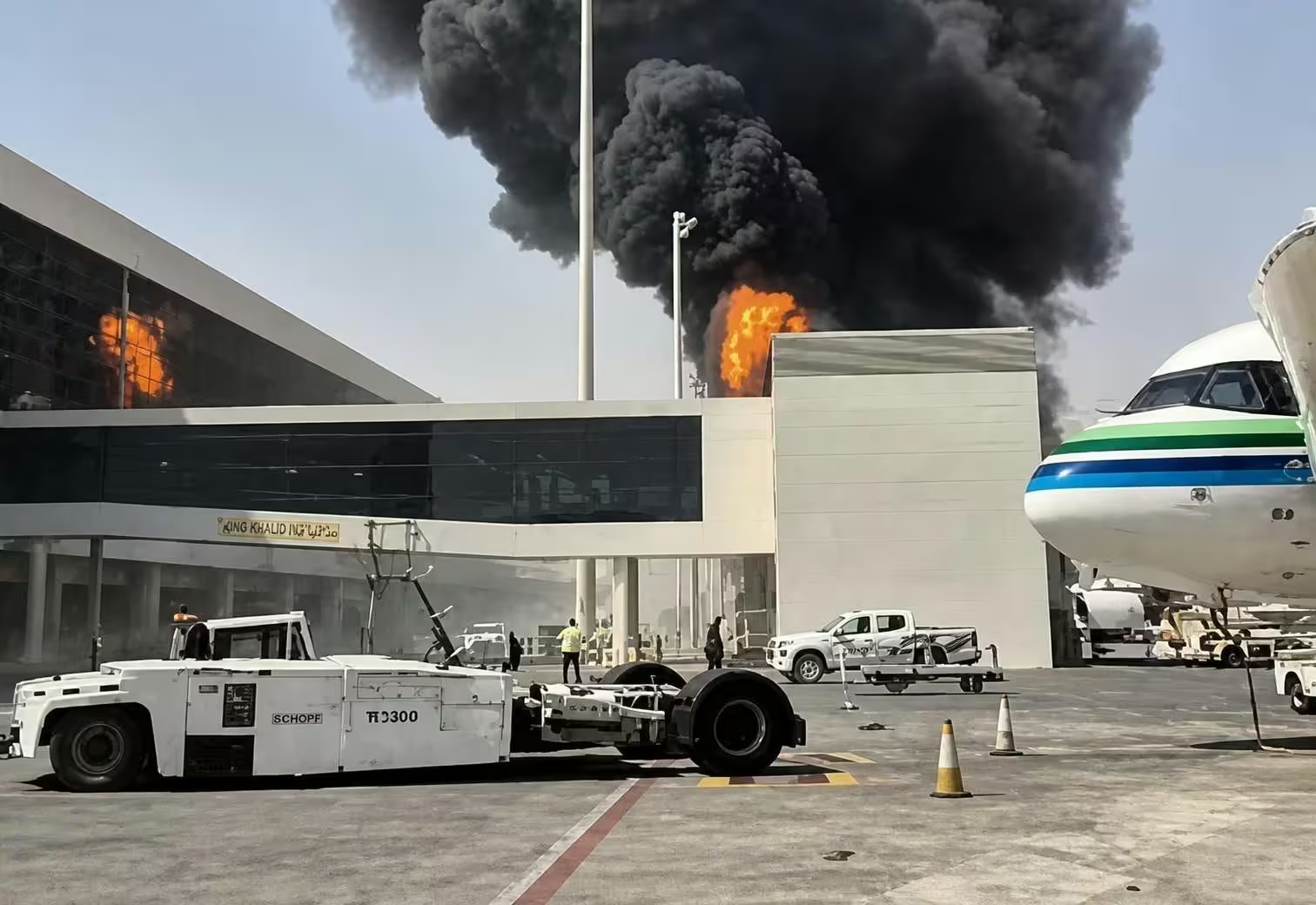
- Saudi attacks: Saudi Arabia said Monday it was facing a new barrage of incoming fire, without specifying which areas were targeted. Saturday’s missile strike on an airport departure terminal killed 13 people and wounded more than 300, an attack Yemen’s Houthis claimed. Saudi authorities said a Sunday projectile hit Terminal 4, killing one and wounding 11.
- Aviation fallout: King Khalid International Airport in Riyadh will stay closed until Oct. 17, according to a notice to airmen. Reuters reported Monday, citing aviation analytics firm Cirium, that about 60% of scheduled flights at the airport were expected to be cancelled after the weekend attacks.
- Defense agenda: Iranian defense minister nominee Mehrdad Akhlaghi set out 16 priorities for the ministry on Monday, among them rebuilding industrial infrastructure, integrating emerging technologies into defense systems and strengthening air defenses. The remaining priorities and the timeline for his confirmation were not detailed.
- Infrastructure warning: Mohsen Rezaei, secretary of Iran’s Supreme National Security Council, warned that regional data cables, data centers and artificial intelligence facilities could be in the line of fire if war breaks out again, state media reported Monday. He did not name specific countries or sites.
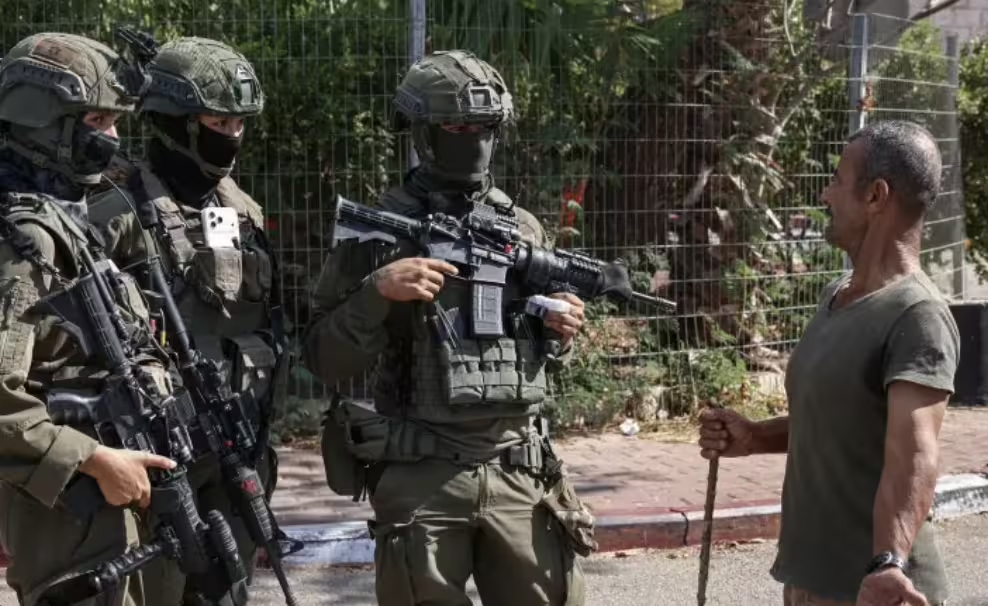
- Iraq strike: A drone struck an Iranian Kurdish opposition camp in Koya, east of Erbil in Iraq’s Kurdistan Region, on Monday, Reuters reported citing two security sources. There were no immediate reports of casualties, and no party claimed responsibility.
Background:
The Strait of Hormuz is the outlet for a large share of Gulf crude exports. Tehran has repeatedly raised the prospect of disrupting it during confrontations with Washington, but has not closed it.
Between the lines:
Safavi’s distinction between restricting and closing Hormuz keeps leverage on the table without triggering the response a full closure would invite. It lands the same day the Foreign Ministry confirmed it is reviewing a US proposal through mediators, and as Rezaei widens the list of potential targets beyond energy to data and AI infrastructure.
What’s next
Riyadh’s airport is scheduled to reopen Oct. 17. Watch for Tehran’s formal answer on the US proposal, confirmation of Akhlaghi as defense minister, and whether further projectiles reach Saudi territory.