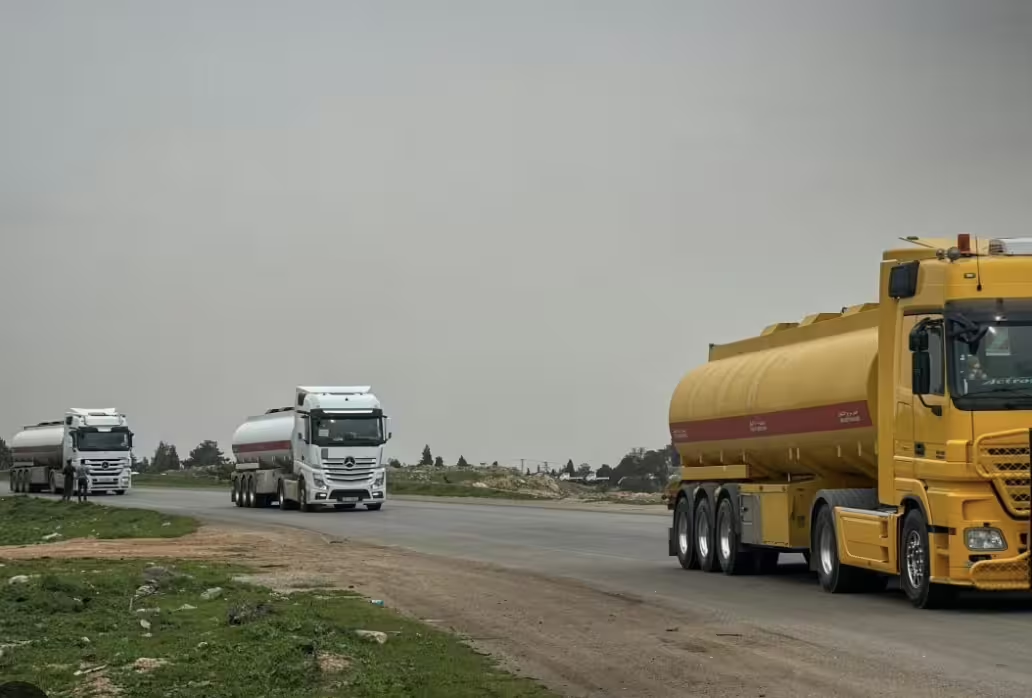
1- At least three European refiners say Aramco will deliver full contracted crude volumes in November.
2- Aramco skipped allocations to several European buyers in October after an attack on the East-West pipeline.
3- Restored flows ease a tight European market that had scrambled for replacement barrels.
The latest:
Saudi Aramco has told European refiners they will receive their full contracted crude volumes in November, after the kingdom’s main cross-country pipeline resumed operations following attacks, according to Bloomberg. The reversal gives relief to buyers who had been forced to hunt for alternative barrels. At least three European refiners confirmed the allocations, people familiar with the matter said.
Details:
• The allocations: At least three European refining companies said they will receive their full crude entitlements from the Saudi state oil producer next month, according to people familiar with the matter cited by Bloomberg. Those people asked not to be identified because the information is not public.
• The reversal: Aramco had told European refiners last month that it would not allocate them crude volumes for October, Bloomberg reported at the time. That decision followed an attack on the East-West pipeline, the main line carrying crude across the kingdom toward Red Sea export terminals.
• The pipeline: The resumption of operations on the main cross-country pipeline is what underpins the November allocations, according to Bloomberg. The outage had been the direct trigger for the October shortfall that left several European buyers without their contracted barrels.
• Market impact: Restoring the supply would ease pressure in a European market suffering from tight availability, Bloomberg reported. The pipeline disruption had pushed refiners to rush into the spot market in search of replacement crude, competing for cargoes at short notice.
• The scale: Saudi Arabia typically exports between 700,000 and 800,000 barrels per day of crude to Europe. That volume frames what was at stake for refiners during the October allocation gap and what returns to the market in November.
• No comment: Saudi Aramco did not immediately respond to a request for comment, according to Bloomberg. The company has not publicly confirmed the November allocations, and the refiners named in the reporting were not identified.
• The warning: Aramco’s chief executive has said the margin of safety in global oil supplies is alarmingly thin, a position that sits alongside the disruption to the kingdom’s own export infrastructure.
• What is undisclosed: Neither the full extent of the damage to the East-West pipeline nor the date operations resumed has been detailed publicly. The number of European refiners left without October allocations was also not specified.
• Also: Saudi Arabia typically ships 700,000 to 800,000 barrels per day of crude to Europe.
Background:
The East-West pipeline carries crude from Saudi Arabia’s eastern oil fields across the kingdom to the Red Sea, allowing exports to Europe without transiting the Strait of Hormuz. An attack on the line last month interrupted that route and triggered the October allocation shortfall.
Between the lines:
The episode shows how a single piece of infrastructure determines European supply security. With Saudi Arabia normally sending 700,000 to 800,000 barrels per day to the continent, the October gap forced refiners into the spot market at the same time Aramco’s own leadership was describing global supply buffers as dangerously thin. Restoring full allocations within a month limits the damage, but it also demonstrates how quickly the route can be cut.
What’s next
Watch whether November cargoes load on schedule, whether Aramco extends full allocations into December, and whether the company issues any public statement on pipeline repairs or export capacity.