Key Points
- Iraq expects first truck convoys carrying crude to reach Syria by mid-October, a Syrian state oil executive said.
- Baghdad's exports have been disrupted by Strait of Hormuz flare-ups during the eight-month Iran war.
- The overland route gives Iraq a Mediterranean outlet while deepening Baghdad-Damascus energy ties Washington has encouraged.
The latest:
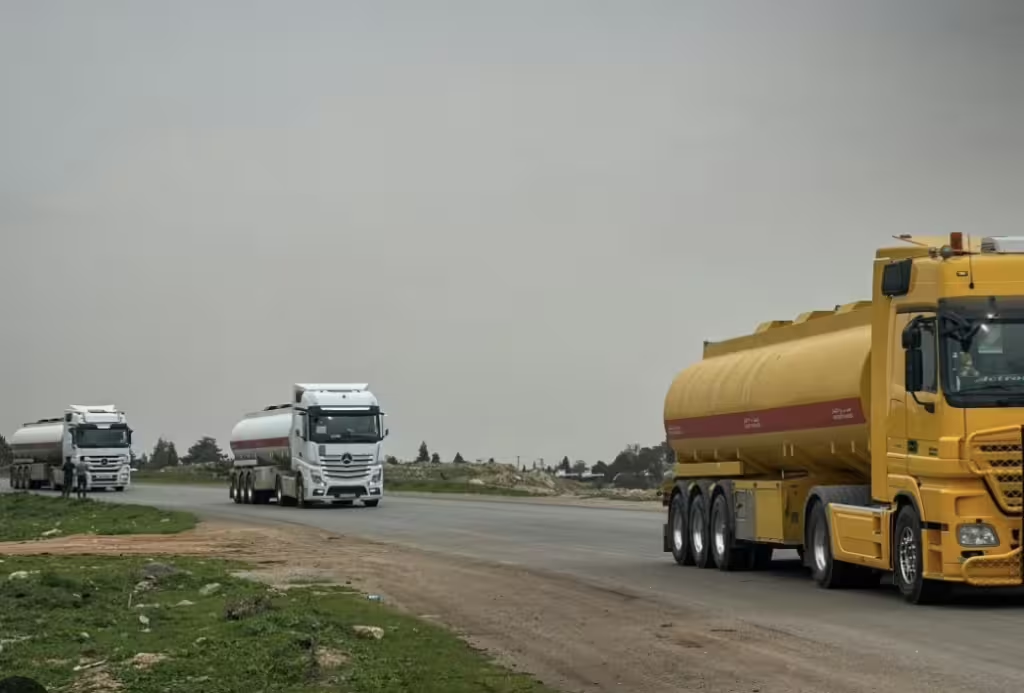
Iraqi crude is set to move overland to a Mediterranean port by lorry starting in mid-October, under a route Syria has agreed to provide, Bloomberg reported Friday. Yousef Qiblawy, chief executive of state-owned Syrian Petroleum, said the agreement between Baghdad and Damascus is almost complete and that exports should begin as soon as possible.
Details:
- The arrangement: Iraq requested assistance from Syrian authorities to move crude products by lorry to a Mediterranean port, Bloomberg reported, citing Qiblawy, who said the first chain of trucks is expected to arrive by mid-October. He gave no final signing date, no export volumes, no pricing terms and did not name the receiving port.
- The quote: Qiblawy told Bloomberg that Iraqi oil exports are expected to “start as soon as possible”, describing the deal between the two governments as almost done.
- What came before: The plan follows energy coordination in late September, when Iraq began importing petrol through Syria. An Iraqi Oil Ministry official told The National a first cargo of 32,000 tonnes of petrol was being unloaded at the Baniyas refinery for onward transport to Iraq by lorry.
- The fuel oil precedent: Syria became the main route for Iraqi fuel oil exports in April, partially offsetting shipment disruption caused by the war in Iran. At least 2.1 million tonnes of Iraqi fuel oil have moved by lorry to Baniyas since then, according to the report.
- Why it matters to Baghdad: Iraq, Opec’s second-largest producer, draws at least 90 per cent of its revenue from oil. Roughly 3.3 million barrels a day crossed the Strait of Hormuz from its southern Basra terminals before the war, leaving the bulk of state income exposed to a single waterway.
- The chokepoint: About a fifth of the world’s energy exports passed through the Strait of Hormuz before the war, and it remains a flashpoint in the eight-month conflict. Iraq has faced one of its most serious economic and security situations since fighting broke out in February.
- The flow data: The seven-day moving average for Gulf crude exports stood at 18.3 million barrels per day on September 30, against an average 18 million bpd in the 12 months before the war, according to ship-tracking firm Kpler. The figures cover Hormuz, the Red Sea and other methods.
- The shipping shift: Last Sunday, the state-owned Iraqi Oil Tankers Company moved two million barrels of its own crude beyond the Strait of Hormuz for the first time in decades. Director general Ali Qais said the aim is to shift part of exports away from the free-on-board Basra model toward better pricing.
- The refining gap: Despite its scale as a crude producer, Iraq faces petrol shortages tied to refinery problems and the management of its energy infrastructure. Qais said the tanker company is also in talks to buy specialised crude tankers and compete with regional peers.
- The Washington angle: The agreements mark a deepening of Baghdad-Damascus ties as the United States pushes for closer relations between the two countries, according to the report. Neither government has detailed the commercial terms or the duration of the transit arrangements.
Between the lines:
Trucking crude is slower and costlier than tanker shipping, so the mid-October convoys read less as a commercial upgrade than as insurance: Iraq is building a second outlet for a revenue stream that is 90 per cent of the budget and almost entirely routed through one strait. The Baniyas fuel oil and petrol flows show the corridor already works in both directions.
What’s next
Watch whether the first truck convoys reach Syria by mid-October and whether Baghdad and Damascus formally sign the agreement. Also watch Kpler’s Gulf export averages and any move by the Iraqi Oil Tankers Company to purchase its own tankers.
Sources: