Key Points
- UAE prosecutors say a Flydubai co-pilot tried to crash flight FZ1073 into Tel Aviv's Ben Gurion Airport.
- The Omani national, 29, confessed to a plot inspired by the September 11, 2001 attacks, prosecutors said.
- Airline screening cleared him months earlier, raising questions about how aviation vetting missed a radicalised pilot.
The latest:
A Flydubai co-pilot attacked his captain with an emergency axe and tried to seize the controls to crash a passenger jet into Ben Gurion Airport, UAE Attorney General Hamad Al Shamsi said on Friday. The investigation into the September 30 incident on flight FZ1073 from Dubai concluded the 29-year-old Omani national was carrying out a premeditated terrorist plot intended to cause mass casualties.
Details:
- The confession: Al Shamsi said the suspect admitted he was inspired by the September 11, 2001 attacks and chose a career in aviation specifically to carry out a similar operation. He confessed to acting alone, a claim prosecutors say they are still testing through recordings, technical reports and checks for accomplices.
- The radicalisation: Investigators traced his radicalisation to 2017, while he was studying in Melbourne, Australia, where prosecutors said he was exposed to extremist literature and online material glorifying terrorist groups and suicide attacks. The Attorney General did not say when authorities first became aware of that period.
- The Melbourne contacts: Al Shamsi said the suspect attended a mosque affiliated with the Royal Melbourne Institute of Technology, where he allegedly met people connected to a centre run by a Lebanese man identified only as “Abu Hamza”, described by prosecutors as having links to the Muslim Brotherhood.
- The preparation: According to the findings, he readied himself psychologically and physically by intensifying his consumption of material promoting terrorism and training in boxing under a private coach. Prosecutors said he also used two earlier flights to Tel Aviv to scout the route and the airport.
- The career path: The suspect flew for Oman Air between 2020 and 2024, then briefly for Royal Air Maroc in 2025, before joining Flydubai in January 2026 — roughly eight months before the attempted attack on the Tel Aviv route.
- The vetting: Prosecutors examined how Flydubai recruited him and found he met the professional and security requirements, holding a valid pilot’s licence, supplying a certificate of good conduct and completing the mandated checks. None of those procedures surfaced any sign of extremist views or intent.
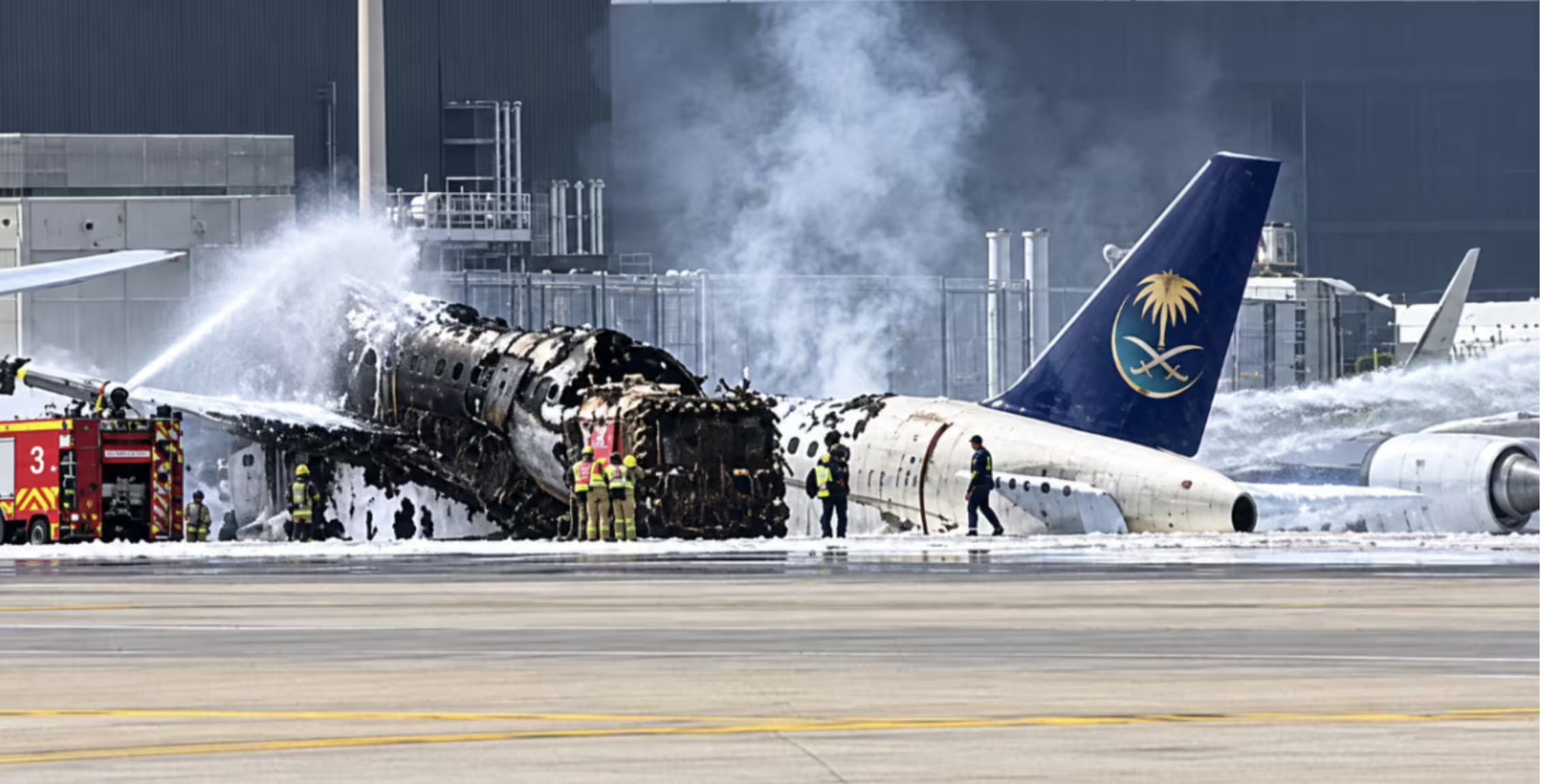
- How he was stopped: On September 30 he struck the captain with an emergency axe inside the cockpit. A pilot travelling as a passenger on the return leg noticed the cockpit door behaving unusually, forced entry and, helped by crew and passengers, restrained him and pulled the injured captain clear.
- The diversion: The aircraft was diverted and landed safely at Tabuk Airport in Saudi Arabia. Prosecutors did not state how many people were on board or detail the captain’s current condition.
- The evidence: The Public Prosecution took statements from the captain, the return-flight pilot, his co-pilot and crew members. A forensic medical report found the captain’s injuries concentrated on the head and consistent with the timing of the incident, matching the accounts of the suspect, the captain and witnesses.
Background:
Ben Gurion Airport is Israel’s main international gateway. Flydubai began scheduled Dubai–Tel Aviv service after the 2020 normalisation agreement between the UAE and Israel, making the route one of the most politically sensitive in the Gulf carrier’s network.
Between the lines:
The vetting finding is the part with consequences beyond this case: prosecutors describe a pilot who passed every required check — licence, good-conduct certificate, security screening — while a radicalisation they date to 2017 went undetected across three airlines in three countries. Two reconnaissance flights on the same route also passed without flagging anything.
What’s next
Prosecutors are reviewing cockpit recordings and technical reports and continuing to test the claim that he acted alone. Any referral to trial, and whether other airlines or Australian authorities open parallel reviews, are the next signals.
Source: