Key Points
- Three Saudi citizens were killed in two Houthi attacks on King Khalid International Airport, aviation authority says.
- Saudi-led coalition says it intercepted three ballistic missiles fired towards Riyadh and Khamis Mushait late Thursday.
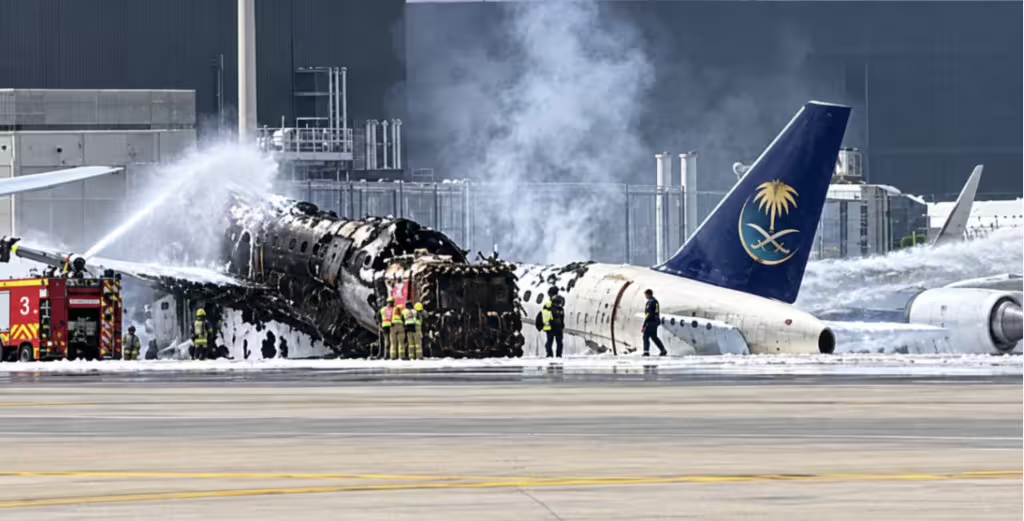
- The strikes extend the Yemen war into Saudi Arabia's busiest civilian aviation hub, hitting a passenger aircraft.
The latest:
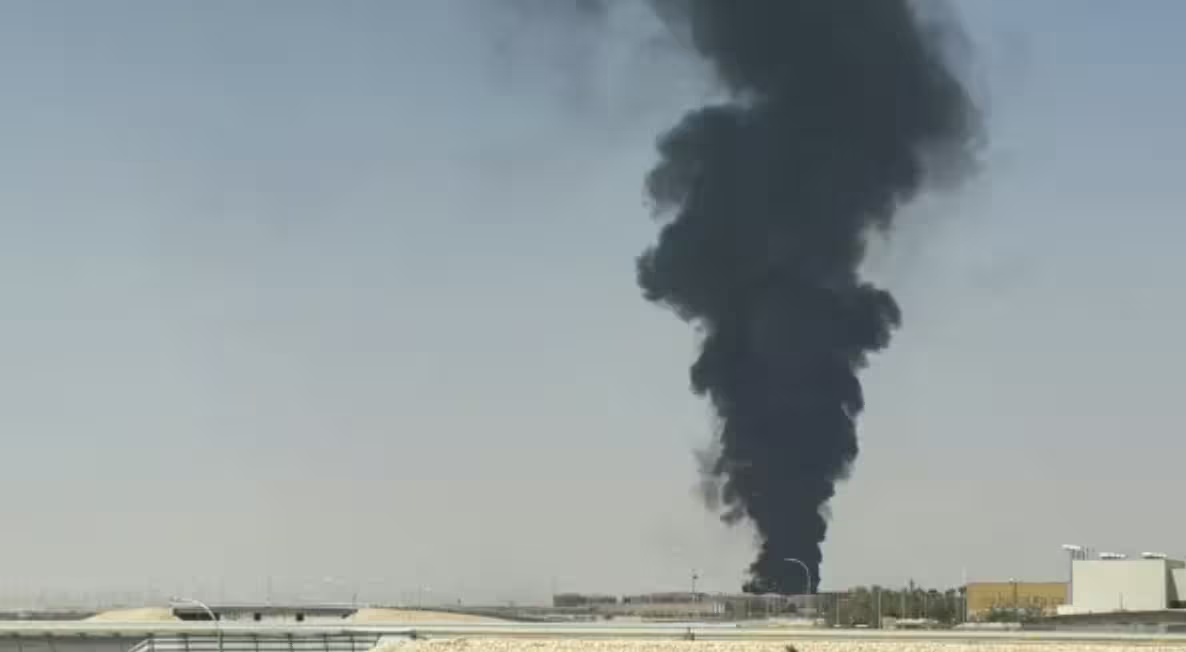
Three Saudi citizens were killed in two attacks on King Khalid International Airport in Riyadh, the kingdom’s General Authority of Civil Aviation said on Friday, blaming the Houthis. The Thursday attacks targeted a Saudi Arabian Airlines aircraft and airport facilities. A number of people were wounded, with injuries ranging from mild to severe, and were taken to hospital.
Details:
- The targets: GACA said the two attacks struck a Saudi Arabian Airlines plane and airport facilities at King Khalid International, the main gateway to the Saudi capital. The authority did not say whether the aircraft was carrying passengers, nor did it describe the extent of damage to terminal buildings.
- The casualties: Beyond the three dead, GACA said a number of people suffered injuries ranging from mild to severe and were transferred to hospital. The statement did not specify how many were wounded, their nationalities, or whether any were airline or airport staff.
- Missile interceptions: Saudi Arabia said late Thursday it intercepted and destroyed ballistic missiles allegedly fired by the Houthis. Coalition spokesman Turki Al Maliki said two were heading towards Riyadh and a third towards Khamis Mushait, a city in the south close to the Yemeni border.
- The attribution: The coalition described the missiles as allegedly launched by Yemen’s Houthis, and GACA attributed the airport attacks to the group. No claim of responsibility from the Houthis was announced alongside the Saudi statements, and the kingdom did not detail the weapon type used against the airport.
- Khamenei on AI: Iran’s supreme leader Ayatollah Mojtaba Khamenei called for greater investment in artificial intelligence to strengthen security forces. In a message marking National Police Week, he said Iran needed stronger personnel, equipment and software, citing “the purposeful use of artificial intelligence in data analysis” as central to police capability.
- Iran’s accusation: Khamenei accused the United States and Israel of deliberately targeting police commanders and personnel. He said the attacks had failed to undermine the ability of security forces to carry out their missions, and praised them for maintaining order despite repeated US and Israeli strikes.
- Wider front: Elsewhere in the region, an Israeli soldier was killed and three wounded in southern Lebanon. Massive explosions were reported in the southern Strait of Hormuz, and an IRGC navy official said Iran is targeting ships in the waterway every night.
- Market reaction: Oil prices retreated after US President Donald Trump ruled out attacks on Iran before the midterm elections, a signal traders read as lowering the near-term risk of a direct American strike on Iranian territory.
Background:
King Khalid International Airport serves Riyadh and is the kingdom’s main northern aviation hub, far from the Yemeni border. The Saudi-led coalition has fought the Houthis in Yemen, with the group repeatedly firing ballistic missiles and drones towards Saudi cities.
Between the lines:
Two strands are visible in the same day’s reporting: attacks reaching a civilian airport deep inside Saudi Arabia, and Khamenei publicly framing Iran’s security forces as under direct US and Israeli attack while demanding technological upgrades. Khamenei’s insistence that the strikes failed to degrade police capability is itself an acknowledgement that commanders have been hit.
What’s next
Watch for a Houthi claim of responsibility, a Saudi casualty count and damage assessment at King Khalid International, any disruption to Saudi Arabian Airlines schedules, and further reports of ship targeting in the Strait of Hormuz.