Key Points
- Houthis hit Aden airport with missiles and drones as fighting with Saudi-backed forces escalates
- Riyadh has asked Damascus to deploy forces against the Houthis, a US official told Reuters
- Syrian involvement would break Damascus policy of staying out of the US-Iran conflict
The latest:
Ballistic missiles and explosive-laden drones struck Aden’s international airport on Wednesday, Yemen’s Transport Ministry said, with one missile landing near the runway minutes before a Cairo flight was due to arrive. Hours later, Reuters reported that Saudi Arabia had asked Syria to send troops to fight the Iran-aligned group, a request Damascus is weighing against its policy of avoiding regional wars.
Details:
- The Saudi request: A US official and a Syrian military official briefed on the matter told Reuters that Riyadh asked Damascus to deploy forces against the Houthis. Options range from defensive aid protecting the kingdom from missile and drone attacks to an offensive deployment supporting Saudi-backed Yemeni troops on the ground.
- Damascus response: A Syrian diplomat said Syria stood firmly with Saudi Arabia against Houthi attacks, but that the government’s priority was domestic recovery from the civil war. Any military cooperation would run exclusively through official channels under existing bilateral agreements, the diplomat said. No decision has been announced.
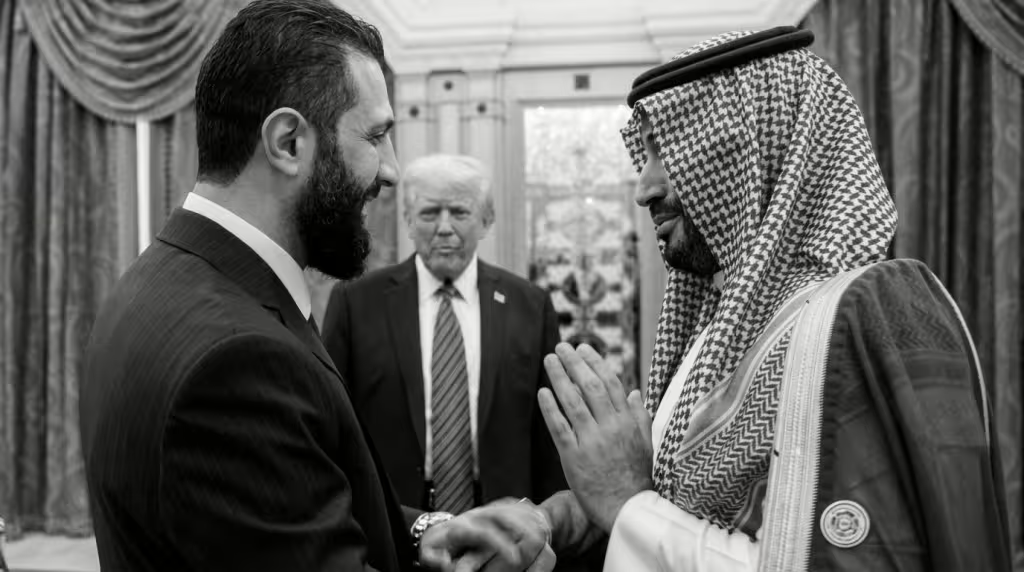
- The Riyadh visit: Syrian President Ahmed al-Sharaa met Crown Prince Mohammed bin Salman in Riyadh on Tuesday and discussed possible Syrian military assistance, the US official said. Syrian state media footage showed Saudi Defence Minister Khalid bin Salman, who has overseen the Yemen file, escorting Sharaa back to his plane.
- Why Damascus hesitates: The Syrian state is still assembling an army from former rebel militias and containing tensions with minorities including Alawites. A war against the Houthis, adherents of another Shi’ite offshoot, could carry divisive religious undertones that Damascus and its Western partners want to avoid, the US official said.
- The precedent: Syria previously rejected a US request to help fight Hezbollah in Lebanon. Involvement against the Houthis could also be read as hostile by Iran, Hezbollah and Iraqi militias, groups the former rebels now governing Damascus fought during the civil war.
- The incentive: Sharaa is keen to show support for a crown prince who helped him gain international legitimacy, including by brokering a May 2025 meeting with US President Donald Trump. Saudi Arabia has provided financial assistance to Syria, and a show of support could increase it, the US official said.
- The battlefield: Fighting is concentrated in Dhubab district overlooking Bab el-Mandeb, with pro-government forces pushing into hills east of the coastal plain, Yemeni military and government sources said. The government claimed Monday it had reached Mocha, a claim military officials on the ground and analysts called premature.
- Saudi casualties: Saudi civil aviation authorities said one person was killed and eight wounded in an attack on Riyadh’s King Khalid International Airport, and two killed and 28 wounded at Abha airport facilities. Houthi military spokesperson Yahya Saree said the group targeted King Khalid with several drones.
- Allied support: The Saudi-led coalition said it intercepted a Houthi ballistic missile north of Riyadh and was tracking the launch platform over Houthi-held Sanaa. Turkey is sending mainly defensive and technical support, two officials said, after Ankara and Pakistan pledged collective defence under their new alliance.
- Humanitarian toll: More than 200,000 people have been displaced since the latest fighting began, the International Organization for Migration said Wednesday, with Director General Amy Pope calling for more funding for food and shelter. The UN says three in four families in parts of Yemen are going hungry.
Background:
The Houthis seized Sanaa in 2014, prompting a Saudi-led intervention. The coalition accuses Iran of arming, training and funding the group; the Houthis deny being an Iranian proxy and say they build their own weapons. Tehran rejects the allegations. Bab el-Mandeb has gained weight as US-Iran fighting restricted the Strait of Hormuz.
Between the lines:
Analyst H.A. Hellyer of the Royal United Services Institute told Reuters a small Syrian defensive deployment plus anti-drone technical support would be powerfully symbolic, but that Syrian boots on the ground is a different proposition Damascus would avoid. That reading matches the diplomat’s framing, which stressed official channels and domestic priorities without ruling cooperation out.
What’s next
Whether the Yemeni government counteroffensive near Mocha and Dhubab holds, any Syrian decision announced through the bilateral channels Damascus named, and further Houthi strikes on Saudi airports or Aden.