The latest:
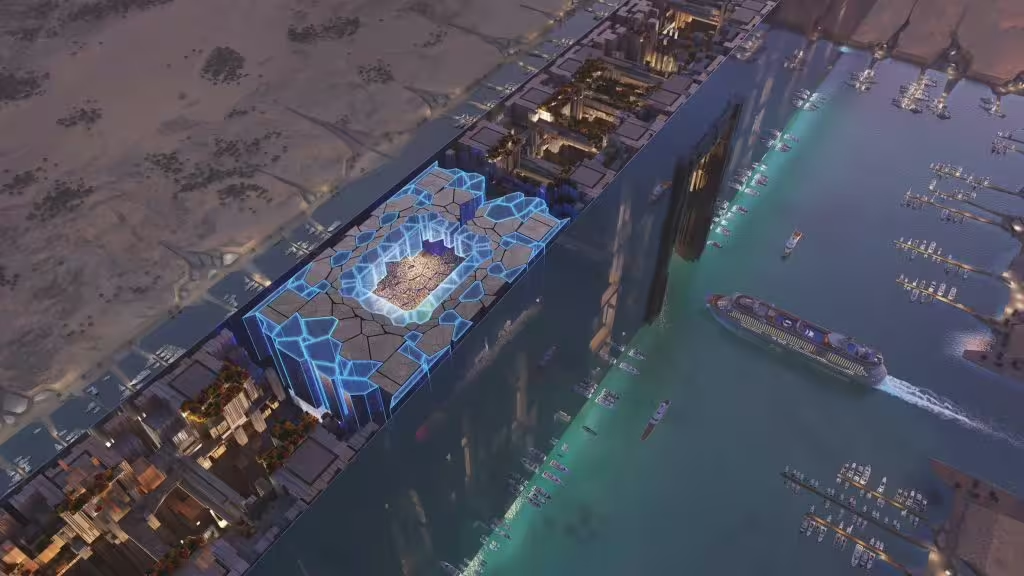
Construction plans for the Neom stadium, one of the most ambitious venues promised for the 2034 World Cup, have been suspended indefinitely, two people familiar with the matter told Reuters. The venue was to be suspended inside The Line, the 160-kilometre glass-and-steel development at the heart of Neom. Saudi Arabia’s World Cup organising body did not address questions about the stadium.
Details:
- The project: The stadium was designed to hang above the ground inside The Line, a linear city marketed by Riyadh as stretching 170 kilometres, 200 metres wide, with two 500-metre towers, no cars or roads, and a zero-emissions rail link running on renewable power.
- The cost: MEED Projects, a Dubai-based construction-market data platform whose analysts track regional tenders, put the stadium’s expected cost at $2.5 billion for roughly 46,000 seats. Its data gives no completion date for the venue.
- The wider program: Saudi Arabia is building or renovating 15 stadiums across five cities plus dozens of training facilities, a portfolio MEED Projects valued at about $22.7 billion. Remaining venues are at varying stages and are expected to be finished between 2026 and 2033.
- The official line: Public Investment Fund governor Yasir al-Rumayyan said in April that The Line was no longer a priority and was not needed before 2030, the original delivery date for its first phase. He denied that any projects had been cancelled.
- The silence: Neom and the Saudi government communications office did not respond to requests for comment. The sports ministry referred questions to the Supreme Committee for the 2034 World Cup, which said event-linked construction was making tangible progress and published images of other stadiums under way, without addressing Neom’s stadium or its costs.
- The retreat: Reuters reported in January that work had stopped on The Mukaab, the skyscraper at the centre of Riyadh’s New Murabba, and reported last year that the PIF was shifting from costly megaprojects toward ventures with nearer-term returns. A third source said scattered venue placement complicates delivery, compounded by the downsizing of host developments.
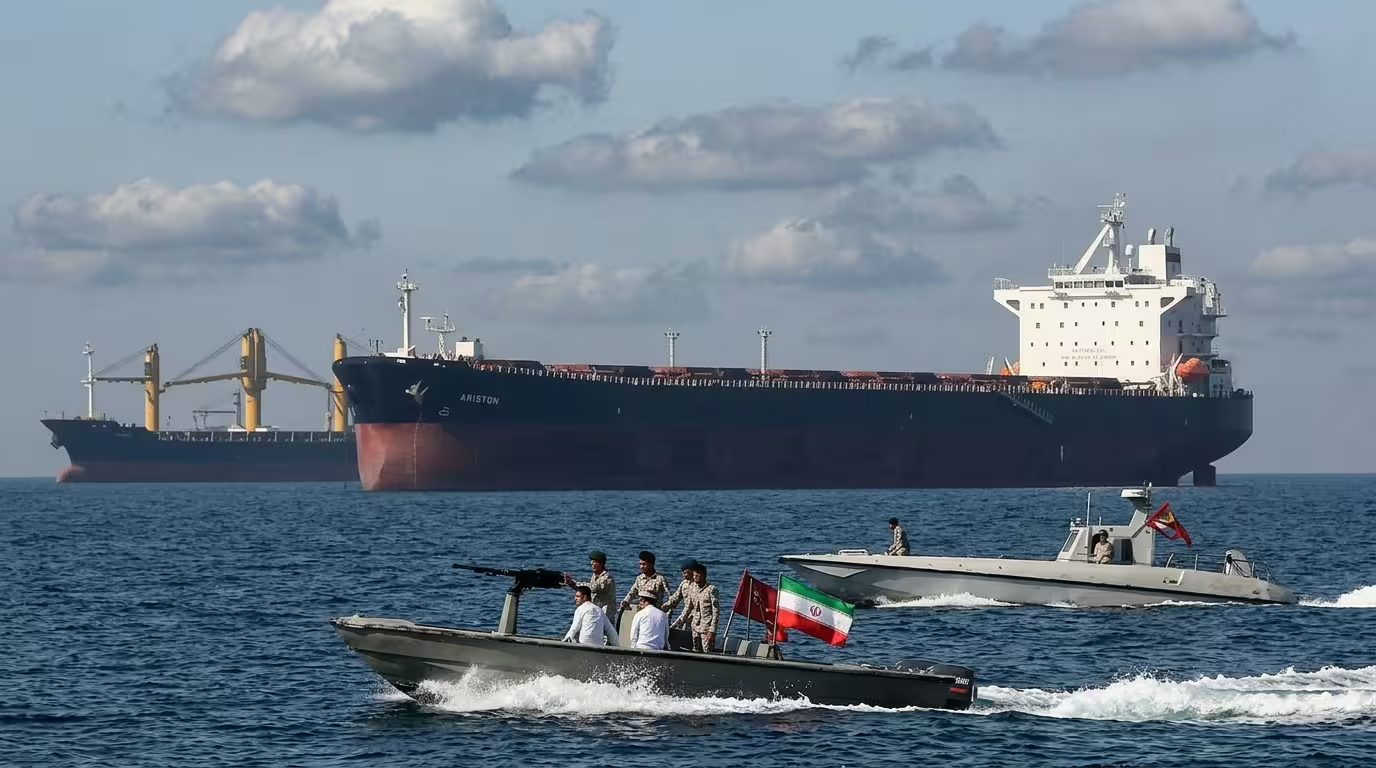
- The fiscal strain: The finance ministry said last week it expects this year’s budget deficit to widen beyond earlier estimates, with real GDP contracting 3.6% after a drop in oil activity. The kingdom is also under pressure from the Iran war, which disrupted energy exports and damaged critical infrastructure.
- The architects: Cambridge University architect and architectural historian James Campbell told The Independent the design never made sense in urban-planning or financial terms, calling it economically unviable and arguing the optimal city form is a tight circle. He said most architects share that view and described the project as “just a big shiny wall.”
- The exits: The Independent reported that several firms withdrew, led by Morphosis, which produced the initial designs, after budget constraints and reports of human-rights abuses at the site. The newspaper said it contacted most companies involved, and Neom itself, and received no reply.
- Still moving: Aramco Stadium in Khobar is due for completion by the end of this year and will host its first match in January, with tickets already on sale. A fourth source said work on other planned venues is proceeding.
Background:
Neom was launched around a decade ago as a cornerstone of Vision 2030, Crown Prince Mohammed bin Salman’s plan to diversify the economy away from oil. The 2034 tournament will be the first 48-team World Cup staged in a single country.
Between the lines:
The suspension fits the pattern Reuters described last year: a sovereign fund rotating away from showpiece construction toward faster returns. A Saudi official at an investment forum in November acknowledged heavy and hurried spending, a deficit, and the need to reorder priorities. With GDP contracting and the deficit widening, the venues still advancing are the conventional ones, not those tied to the shrinking megaprojects.
What’s next
Watch the January opening match at Aramco Stadium in Khobar, any Supreme Committee update naming a replacement venue, and the finance ministry’s next deficit revision.