Key Points
- Trump told Time he may intensify bombing of Iran after November's midterm elections absent a satisfactory deal.
- He rejected Iran's latest proposal to end a war that began February 28 and has cost over $25 billion.
- The interview exposed munitions shortages, falling poll numbers and a souring relationship with Benjamin Netanyahu.
The latest:
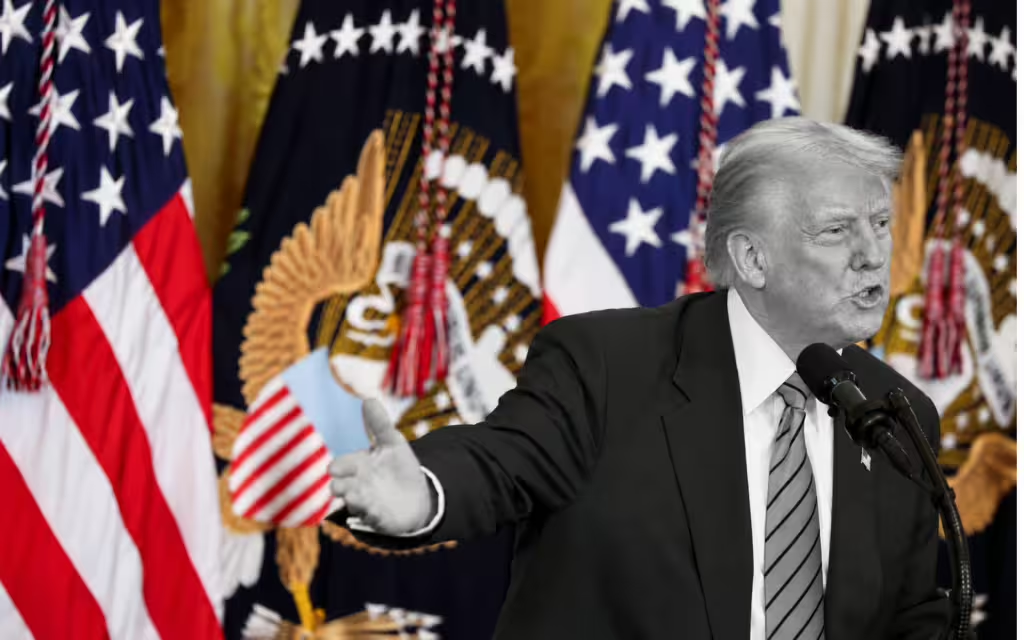
Escalated US bombing of Iran after the November midterms is on the table if no satisfactory agreement is reached, President Donald Trump said in a Time interview conducted at the White House on September 28 and published Thursday. He said Washington has spent six months rebuilding weapons and munitions stockpiles, and ruled out accepting now what he refused a year ago in negotiations with Tehran.
Details:
- The threat: Asked by Time whether he would intensify strikes after the midterms, Trump answered that it was possible. He framed the war as necessary to stop Iran acquiring a nuclear weapon, said peace with Tehran was never achievable, and argued that destroying Iran is what produced peace for the world.
- The rejected offer: Trump confirmed he turned down Iran’s latest proposal to end the war. In a separate development reported earlier, he rejected an Iranian offer to reopen the Strait of Hormuz and resume talks toward a final agreement. He did not outline what terms he would accept.
- Off schedule: By Trump’s own timeline, Time reported, the war should already be over, with a new government in Tehran and its nuclear program curbed. None of that has happened. The magazine cited a late-April White House meeting Trump convened with Defense Secretary Pete Hegseth and military officials to review the war.
- The munitions report: Trump learned of the ammunition shortfall from a New York Times report, based on a war department inspector general assessment, saying US forces were short of certain munitions after firing more than 1,200 Patriot interceptors, and were pulling assets from Asia and Europe to compensate.
- The Hegseth clash: Two officials briefed on the exchange told Time that Trump handed Hegseth a printout and demanded an explanation, and that Hegseth called the report fake news, insisting reporters had stripped facts of context to make the administration look bad. A Hegseth spokesman denied the conversation took place.
- The production push: Trump acknowledged the war had drained part of US stockpiles, saying some munitions types are slightly lower than others. He said he struck deals with defense contractors including Raytheon and Lockheed Martin, describing four, five or six plants being built for Patriot and THAAD production.
- The costs: Thirteen US service members had been killed and about 400 wounded by the April meeting, rising to 19 killed and more than 800 wounded by late September, Time reported. Gasoline prices are up more than 40% since the war began on February 28, and costs have passed $25 billion.
- The Netanyahu rift: A senior administration official told Time the relationship has grown more strained, saying Netanyahu pushed Trump toward war with Tehran then obstructed his efforts to end it, including by striking Lebanon after Trump asked him not to.
- The non-endorsement: Trump declined to back Netanyahu’s reelection as Israelis prepare to vote in late October for the first time since the October 7 attacks. Asked whether he could work better with former chief of staff Gadi Eisenkot, Netanyahu’s leading rival, Trump said he had not heard bad things about him.
- Anger at allies: Trump voiced frustration with allies that refused to help confront Iran, from European powers and South Korea to Canada, Time reported. A close aide said much of that anger was aimed at Canada. A senior adviser said Trump dislikes protecting countries that give too little in return.
Between the lines:
The war’s political cost now tracks its military cost. Casualties nearly doubled between April and late September, fuel prices are up more than 40%, and Time reported the conflict is bleeding into the midterm campaign — which makes Trump’s own framing notable: escalation is deferred until after voters have spoken, not before.
What’s next
Israel’s late-October election, with Trump withholding an endorsement of Netanyahu; the November US midterms, which Trump set as the threshold for possible escalation; and whether Raytheon and Lockheed Martin production lines come online.