Key Points
- Iran's foreign minister privately floated restoring inspector access to bombed nuclear sites in exchange for sanctions relief.
- Inflation near 90% and a US naval blockade have cut Iranian crude loadings to zero last month.
- The signal suggests economic pain is reshaping Tehran's position in deadlocked talks with Washington.
The latest:
Iran is willing to let nuclear inspectors back into its bombed facilities if sanctions are eased, Foreign Minister Abbas Araghchi suggested in private United Nations meetings, according to diplomats familiar with the discussions. The offer, raised with European and Middle Eastern counterparts during the General Assembly in New York, could open a path through peace talks with Washington that have so far produced nothing.
Details:
- The venue: Araghchi raised the idea in meetings with European and Middle Eastern diplomats while in New York for the annual General Assembly, which ended earlier this week, the people said. They asked not to be identified discussing private deliberations.
- The economic read: Araghchi gave little away about the state of Iran’s economy under sanctions and the US naval blockade outside the Strait of Hormuz, diplomats said. But the inspector offer itself signals the extent of the country’s economic pain, according to those diplomats.
- The numbers: Inflation in Iran is running at almost 90% year over year, and the rial has weakened 30% against the dollar as sanctions bite. Iran loaded no crude oil onto tankers last month, according to preliminary data based on satellite images.
- The snapback push: Araghchi also pressed European officials to reverse a UN decision from last year reimposing broad sanctions on Iran, four of the people said. The snapback, set in motion last September, is a particular sore spot for Tehran, and European officials have refused to undo it.
- Pezeshkian on record: President Masoud Pezeshkian told CBS’s Face the Nation last week that Iran was willing to allow inspectors back in. “That is absolutely correct,” he said. What had not been known publicly is that his foreign minister pressed the same idea privately in New York.
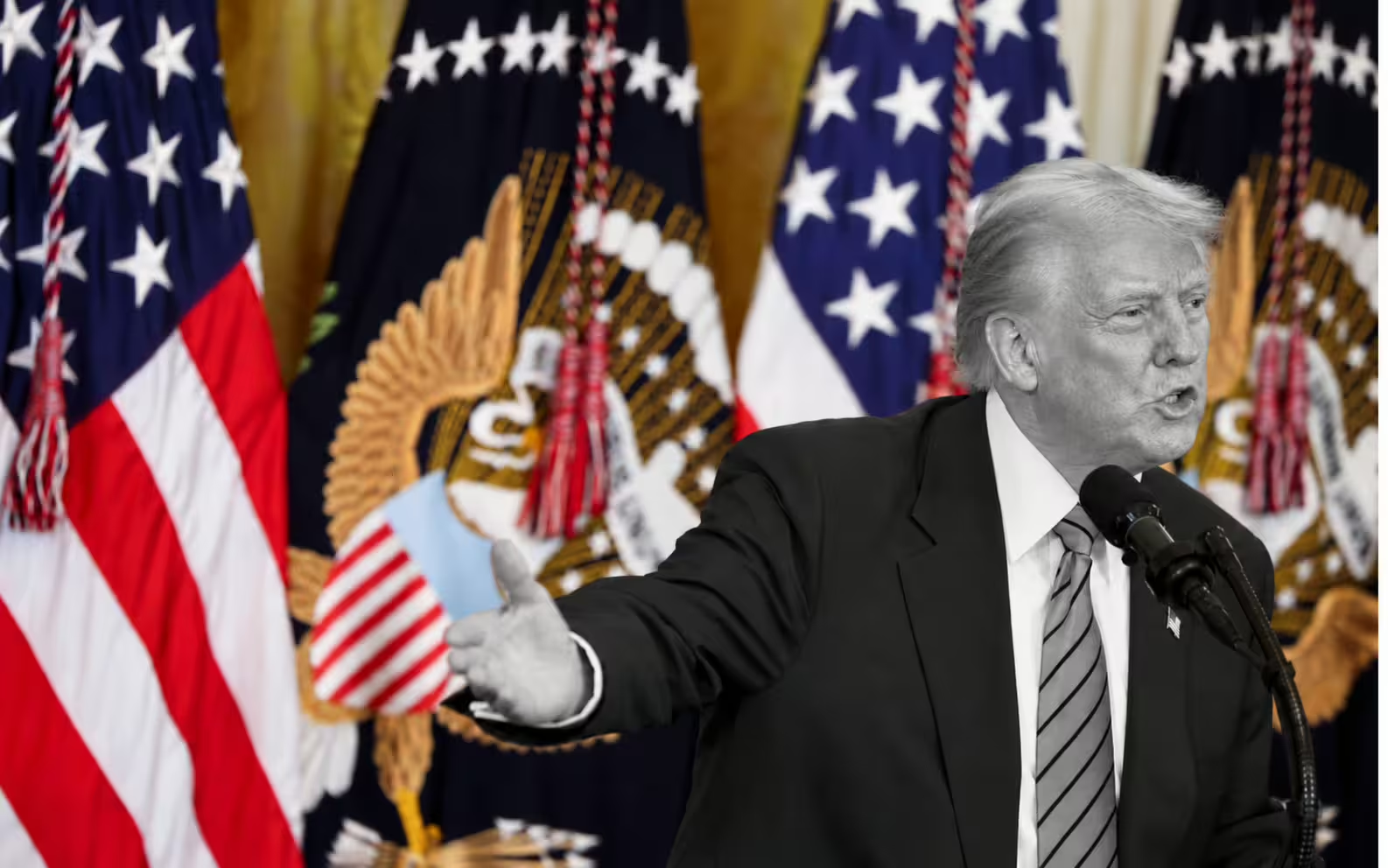
- Trump’s denial: President Donald Trump this week denied reports he was willing to offer sanctions relief and the release of frozen funds in return for Iranian nuclear concessions. Washington has told mediators it wants firm commitments on reopening the Strait alongside those concessions.
- The blockade: The US has largely stopped military attacks on Iranian assets and is relying on the naval blockade instead. The collapse in loadings indicates Iran is less willing or able to test the blockade of its Persian Gulf ports, though people familiar said Tehran has high tolerance for such distress.
- The failed MOU: The US claimed Iran had agreed to let inspectors return under a June memorandum of understanding that later collapsed. Iranian officials rejected that claim at the time, and no such provision appeared in the text. Democrats and some Republicans attacked the deal as conceding too much financially.
- Hormuz standoff: Tehran said it offered to reopen the Strait of Hormuz within seven days if Washington made certain concessions, but Trump said he rejected the proposal. Iranian leaders have previously insisted the US must lift the blockade and remove sanctions before more ships pass.
- Trump’s fuel problem: US gasoline and diesel prices remain high even as more non-Iranian tankers move through the Strait, a liability for Trump and Republicans a month before November midterm elections. Washington has approached several countries about releasing strategic fuel reserves.
Background:
Peace talks between Washington and Tehran have failed to produce a deal, and Iranian officials have concluded no agreement is possible before the midterms, Bloomberg reported last week. The two sides made little progress during talks in New York.
Between the lines:
The gap between what Tehran says publicly and what it floats privately is narrowing on inspections but widening on sequencing. Iran wants sanctions lifted before Hormuz reopens; Washington wants Strait commitments plus nuclear concessions first. With zero crude loaded last month, near-90% inflation and a 30% currency slide, the pressure is asymmetric — but diplomats caution Tehran absorbs economic pain well.
What’s next
Watch whether European governments move on the snapback they have refused to reverse, whether crude loadings stay at zero in coming data, and whether Washington taps strategic fuel reserves before the November midterms.