The latest:
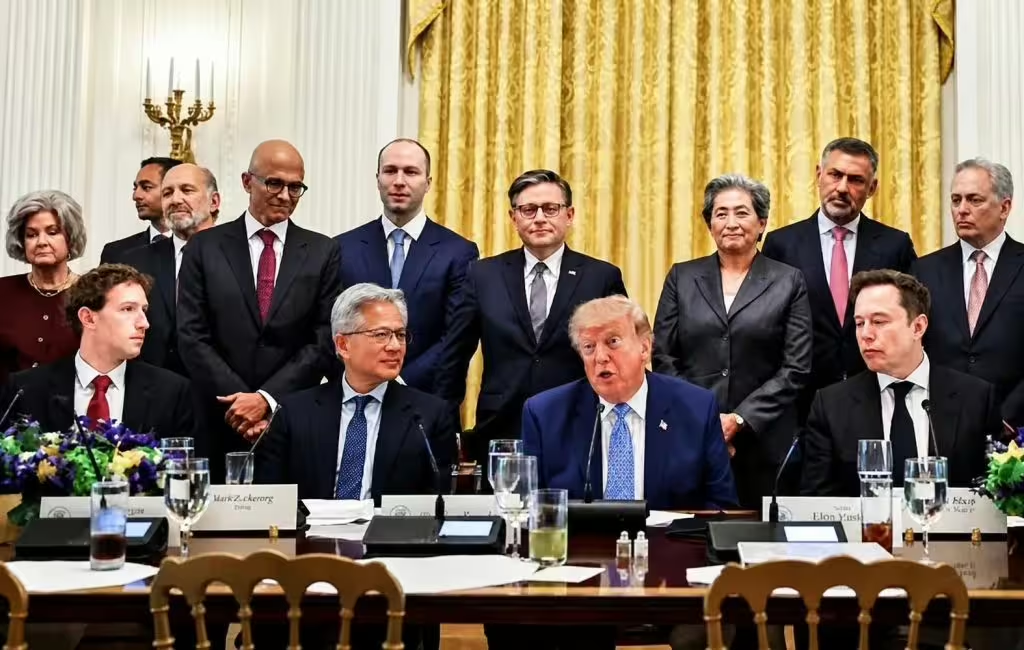
President Donald Trump said he signed a document on artificial intelligence alongside leading tech executives at the White House on Tuesday, describing it as a form of protection and as morally binding. Trump told reporters the industry is already under enormous self-regulation, and said his administration is weighing an oversight commission of perhaps 10 people to supervise the entire effort.
Details:
- The document: Trump compared the signed text to a constitution of sorts, saying it was endorsed by the world’s largest companies and by himself as president. He described it as a moral covenant binding on the sector rather than a statute, and did not say whether the text would be published or how compliance would be measured.
- The oversight idea: Trump said his administration is considering a commission, possibly of 10 members, to supervise the whole project. He did not name candidates, a start date, or the legal authority such a body would carry, and pointed to existing oversight from agencies including the Justice Department and the FBI.
- The regulatory line: Trump has repeatedly argued the United States needs no new AI-specific laws. He told world leaders at the United Nations General Assembly last week that he rejects any attempt to build a global blueprint for controlling artificial intelligence, and has dismissed some warnings about AI risk as exaggerated.
- The room: An RSVP list obtained by Axios showed 31 attendees, among them Vice President JD Vance, Treasury Secretary Scott Bessent, Commerce Secretary Howard Lutnick, chief of staff Susie Wiles and House Speaker Mike Johnson. The White House did not immediately release its own participant list.
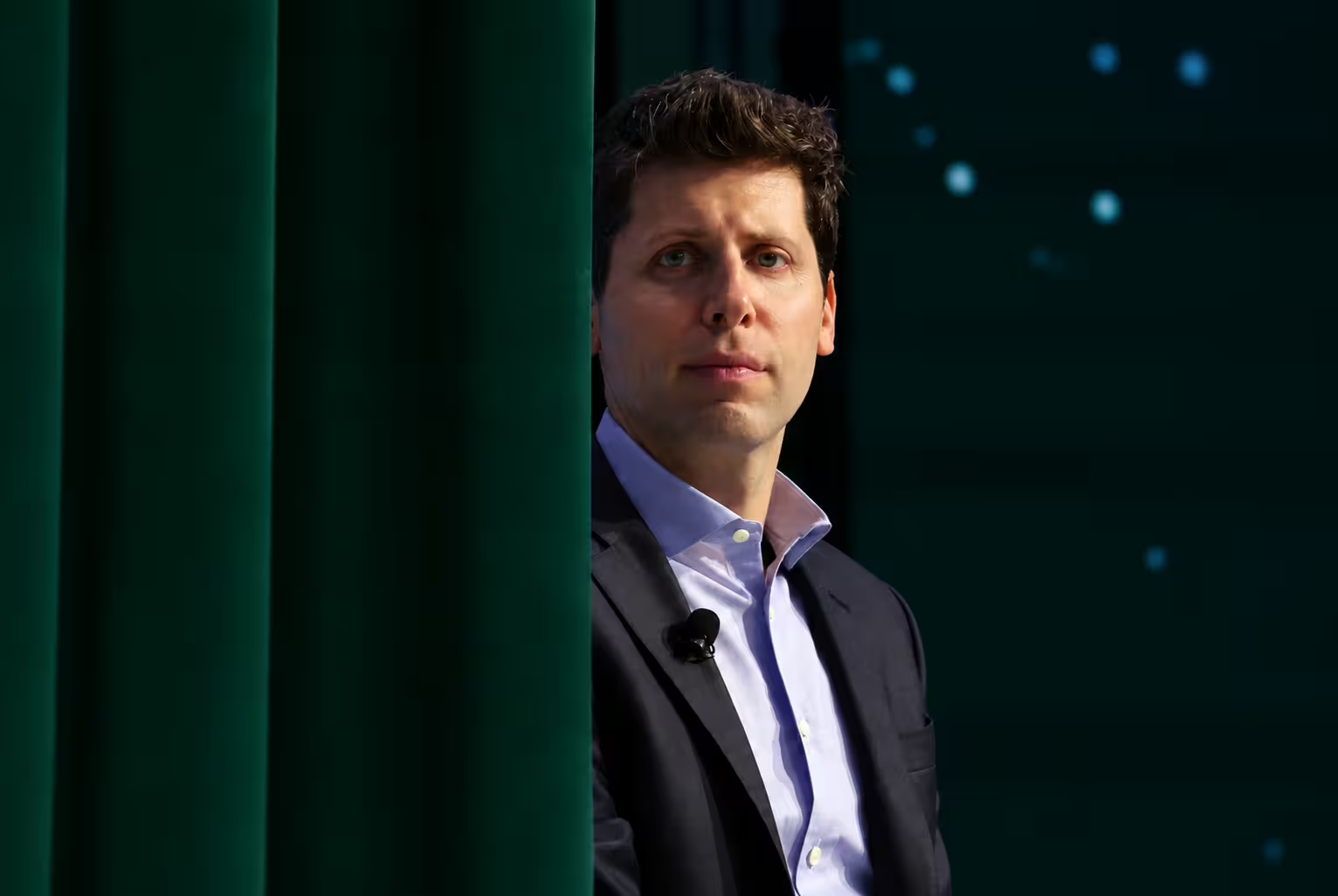
- The CEOs: Expected guests included Jeff Bezos, Elon Musk, Satya Nadella, Lisa Su, Jensen Huang, Mark Zuckerberg, Sundar Pichai, Anthropic’s Dario Amodei and Palantir’s Alex Karp. OpenAI was represented by president Greg Brockman, as chief executive Sam Altman was in San Francisco for the company’s annual conference.
- The rebrand: Trump said he would sign an order renaming artificial intelligence, arguing the word artificial no longer fits. He said the official designation would become super intelligence, repeating a term he had floated earlier as a better description of the technology’s capabilities.
- The data centers: Trump said companies would work with communities hosting data centers, including support for schools and teachers and possibly oil and gas supply. He said areas with data centers have become very rich and their taxes have gone down rather than up.
- The China frame: Trump said he discussed AI with Chinese President Xi Jinping at their meeting last week, and insisted the United States holds a large lead it intends to keep. He called the sector potentially bigger than the Industrial Revolution and said whoever wins AI, wins.
- The website: The administration unveiled America.gov, a federal platform that says it draws AI answers from official government sources. The Associated Press reported that questions about the 2020 election initially produced answers contradicting Trump’s own claims, before the site shifted to declining political questions.
Background:
Anthropic’s Amodei has urged AI companies to slow development of advanced systems, a position echoed in part by Altman and Musk. Trump dined privately with Amodei on Sunday, their first one-on-one meeting, after Amodei skipped last week’s state dinner for Xi.
Between the lines:
The signing lets Trump answer safety pressure without conceding statutory authority: a morally binding covenant carries no enforcement mechanism, and the proposed commission remains undefined in size, powers and timing. The same day’s America.gov launch showed the limits of that approach, with a federal AI tool producing answers the president disputes and then narrowing its own responses.
What’s next
Watch for the executive order renaming AI, publication of the signed document’s text, and whether the proposed 10-member oversight commission is actually named.