Key Points
- Iran warned regional infrastructure would not remain safe unless its security and oil exports were guaranteed.
- The threat comes amid indirect US-Iran talks on a ceasefire and phased reopening of Hormuz.
- Disruption could hit global energy prices, shipping insurance, supply chains and inflation.
The latest
Iran has issued one of its strongest warnings over Gulf energy infrastructure, with Parliament Speaker and chief negotiator Mohammad Bagher Ghalibaf declaring that no regional infrastructure would remain safe if Tehran’s security and ability to export oil were not guaranteed. Speaking on state television Tuesday, he said that if Iran could not sell oil, no one else in the region would either.
Details
- Talks framework: Indirect negotiations between Washington and Tehran are continuing over a possible ceasefire and reopening the Strait of Hormuz. Iran has proposed reopening the waterway in phases within a wider package covering an end to hostilities, sanctions relief and renewed nuclear discussions. Washington has rejected some Iranian conditions but says negotiations remain possible.
- Export linkage: Ghalibaf’s remarks restated Tehran’s position since the war began: Iran will not accept its energy exports being blocked while neighbouring Gulf producers continue shipping oil. Earlier this month, he said further attacks on Iranian assets could make regional energy facilities, including US oil and gas interests, targets.
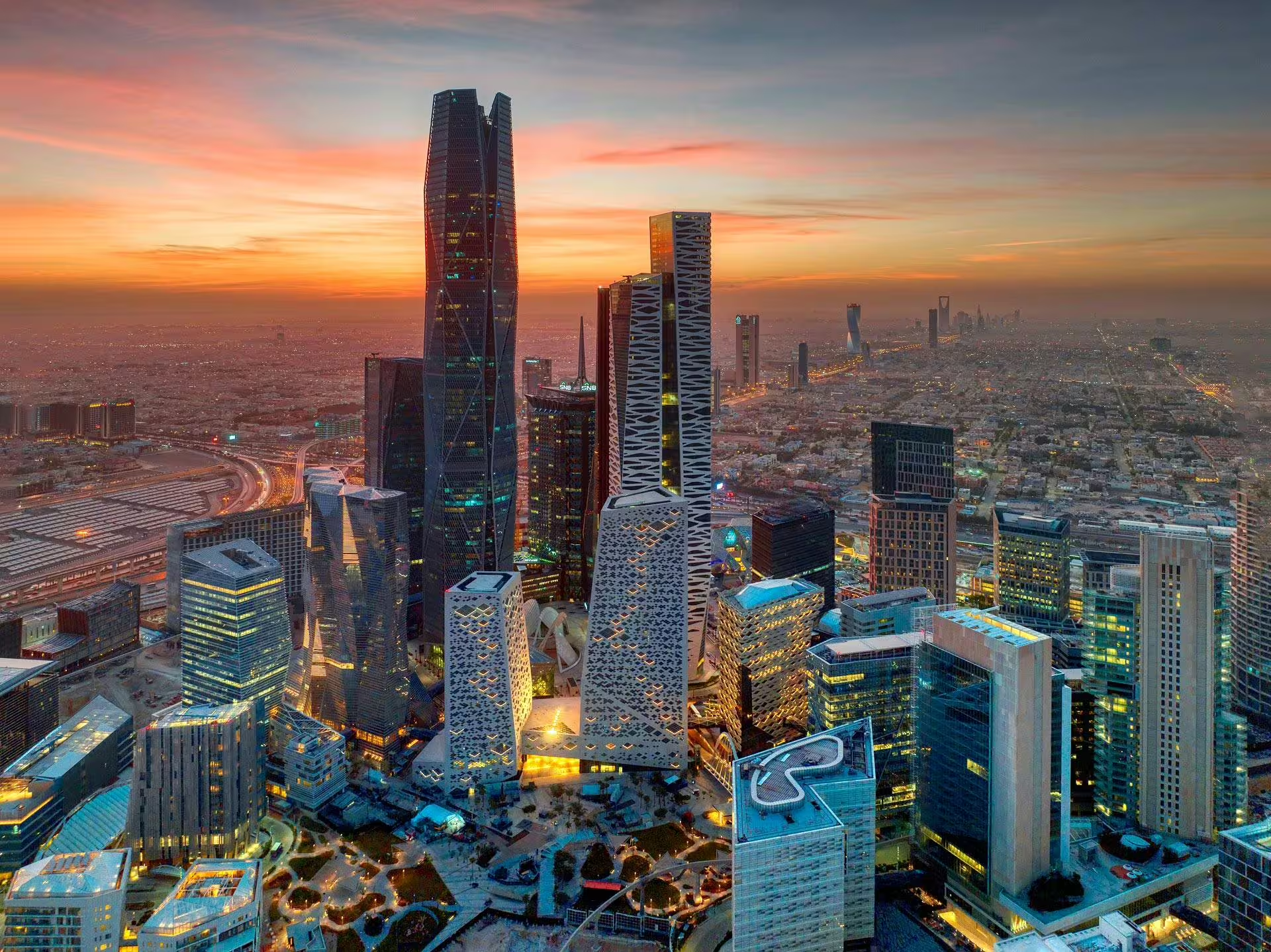
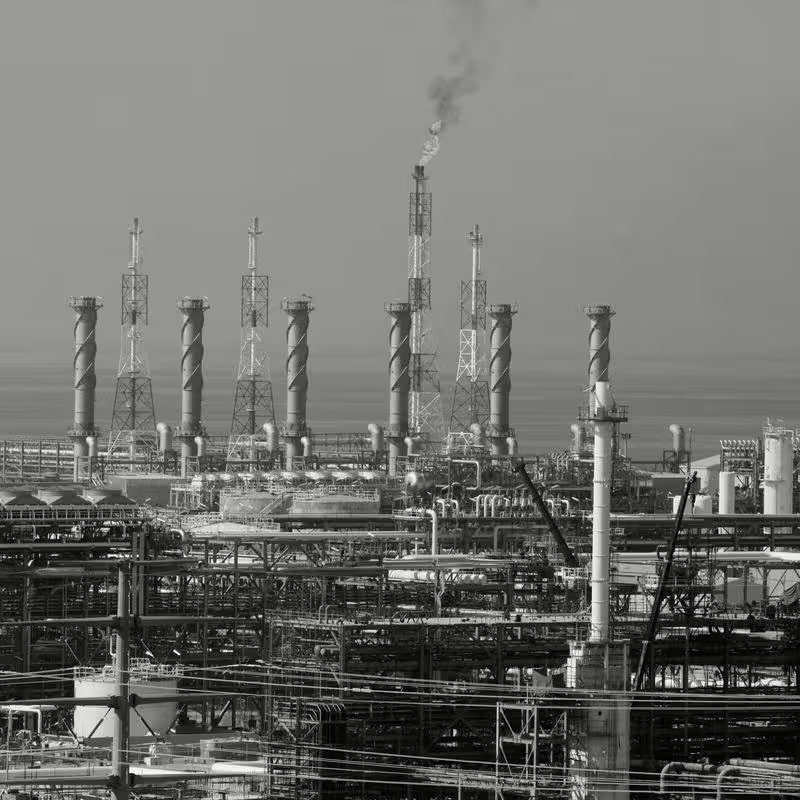
- Network exposure: Oil terminals, refineries, pipelines, ports and LNG facilities in Saudi Arabia, the United Arab Emirates, Qatar, Kuwait and Bahrain form an interconnected export network. Iran has previously warned that attacks on its energy infrastructure could bring retaliation against facilities elsewhere in the Gulf.
- Global pressure point: Hormuz carries a major share of global oil and LNG shipments under normal conditions. Prolonged disruption could affect energy prices, shipping insurance, supply chains and inflation far beyond the Middle East, giving control of access to the waterway broad economic significance.
- Alternative routes: Saudi Arabia has sought to restore and expand flows through its East-West pipeline to the Red Sea, allowing some crude to bypass Hormuz, while increasing shipments through Gulf terminals. Recent attacks have affected the East-West route. The United States has proposed joint investment with Arab partners to rebuild damaged infrastructure and develop other export corridors.
- Escalating rhetoric: Islamic Revolutionary Guard Corps spokesman Hossein Mohebbi called President Donald Trump a “big liar,” accusing him of false statements about Iran’s nuclear capabilities and saying the US military campaign had failed. His comments underlined the confrontational rhetoric continuing alongside mediation.
Background
Gulf governments face pressure to keep exports moving without direct escalation with Tehran. The confrontation has exposed the vulnerability of pipelines, ports, production sites and shipping routes that underpin the region’s role in world energy markets, while showing that bypass routes can also be drawn into the conflict.
What’s next
Negotiators must decide whether a phased reopening of Hormuz can be tied to a ceasefire, sanctions relief and renewed nuclear talks, while addressing Iran’s demand that its security and export access be treated as part of the wider Gulf energy system.