Key Points
- Remaining US forces are due to leave Iraq by September 30, closing a military chapter opened in 2003.
- Tehran and aligned Iraqi factions call the departure a victory after years of pressure against the deployment.
- Baghdad now faces sharper tests from armed factions, Islamic State cells and competing regional powers.
The latest
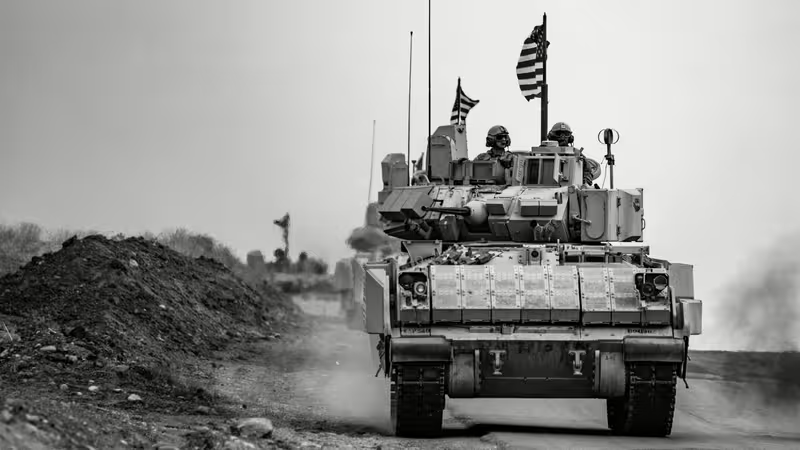
The United States is set to withdraw its remaining forces from Iraq by Wednesday, September 30, ending a presence that began with the 2003 invasion and cost more than 4,500 American lives over two decades. The exit was agreed under former President Joe Biden in 2024 and is being implemented by the Trump administration as Washington confronts Iran in a wider regional war. It gives Baghdad formal responsibility for a security system still challenged by Iran-backed armed groups and Islamic State networks.
Details
- Two-stage presence: The 2003 invasion toppled Saddam Hussein and led to occupation, insurgency and sectarian violence. US forces withdrew in 2011, then returned less than three years later after Islamic State captured large areas of Iraq and Syria. The deployment later shifted from combat toward advice and support.
- Coalition support: From 2014 to 2017, US-led forces supplied airpower, intelligence, training and logistics as Iraqi and Kurdish units dismantled Islamic State’s territorial control. Surveillance aircraft, drones and intelligence-sharing remained important for locating underground cells after the group lost its self-declared caliphate.
- Iran’s gains: Iranian officials and allied Iraqi factions describe the exit as a victory for Tehran’s “resistance axis.” Amir Hayat Moqaddam, deputy chairman of Iran’s parliamentary National Security Commission, said lasting security would prevail once American forces left Iraq and the wider region.
- Embedded influence: Tehran has close ties with powerful Shiite parties and armed groups. Some are incorporated into Iraq’s official security structures while retaining independent political and military capabilities. Security analyst Jasim al-Bahadli said Iran had “everything to gain strategically” because the departure removed a constraint on its influence.
- Balancing strain: Iraq has tried to preserve relations with both Washington and Tehran. Tensions intensified after a US drone strike killed Iranian Quds Force commander Qassem Soleimani near Baghdad airport in January 2020, followed by attacks from Iran-backed groups on US facilities and American retaliatory strikes.
- Persistent threat: Iraqi and Kurdish officials say Islamic State cells remain active in remote areas. Kurdish commander Sirwan Barzani said sleeper-cell activity increased after the withdrawal announcement, while Iraqi officials reported uncovering an alleged suicide-attack plot around the departure. Reduced surveillance could allow the network to rebuild operational capacity.
Between the lines
The withdrawal delivers a longstanding demand for many Iraqis but removes an external counterweight from a system where state institutions coexist with powerful armed factions. Baghdad’s task is to preserve sovereignty without opening space for militia dominance or a jihadist recovery.
What’s next
US forces are scheduled to complete their departure by Wednesday, September 30. The immediate indicators will be Baghdad’s control over security institutions, the activity of Iran-aligned groups and Islamic State cells, and whether intelligence-sharing and surveillance continue after the coalition mission ends.