Key Points
- Trump said he expects more U.S.-Iran talks this week after rejecting Tehran's proposal Saturday.
- Iran wants the naval blockade lifted; Washington is demanding nuclear concessions first.
- Qatari mediators are shuttling a compromise text, with separate meetings possible as early as Monday.
The latest:
More U.S.-Iran talks are expected this week, President Trump said in a phone interview with Axios on Sunday, one day after rejecting an Iranian proposal to end the war. Trump said Tehran wants a deal, but not the one he wants, adding that Iran overplayed its hand. Two regional sources confirmed his comment, telling Axios another round of indirect dialogue could begin Monday.
Details:
- The rejected offer: Iran proposed reopening the Strait of Hormuz and restarting nuclear talks within a week, conditioned on the U.S. lifting its naval blockade, removing sanctions on oil sales and reinstating a regional ceasefire, according to Axios. Trump rejected the proposal on Saturday.
- The gap: Iran wants any negotiation focused on the Strait of Hormuz and the naval blockade, while the Trump administration is demanding nuclear concessions, Axios reported. Regional sources said it is unclear whether those gaps can be bridged in the coming round.
- Trump’s framing: Trump said the terms Iran is seeking resemble what Washington might have accepted a year ago. Asked whether he is considering resuming strikes against Iran, he said he is always thinking about it, according to Axios.
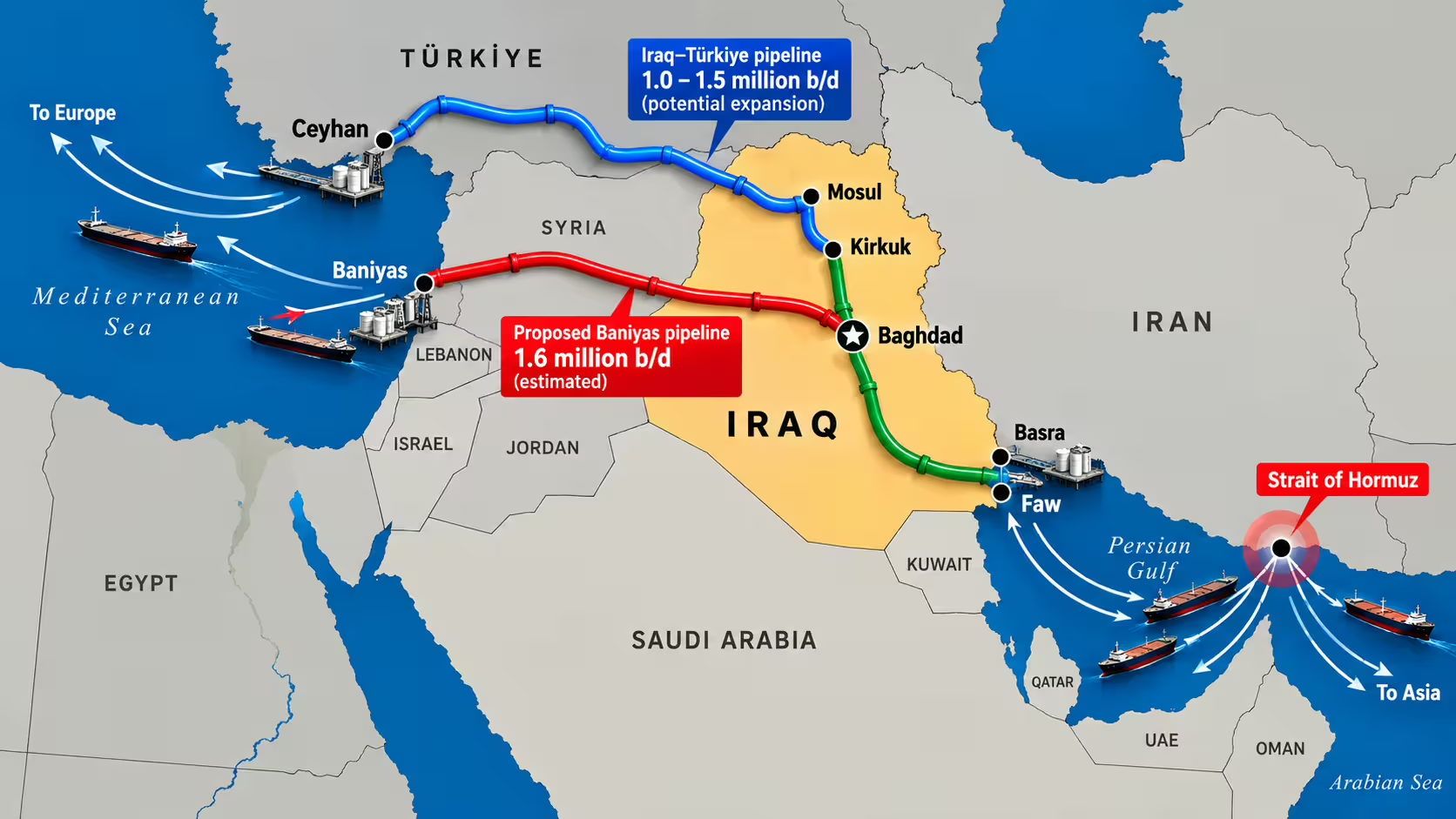
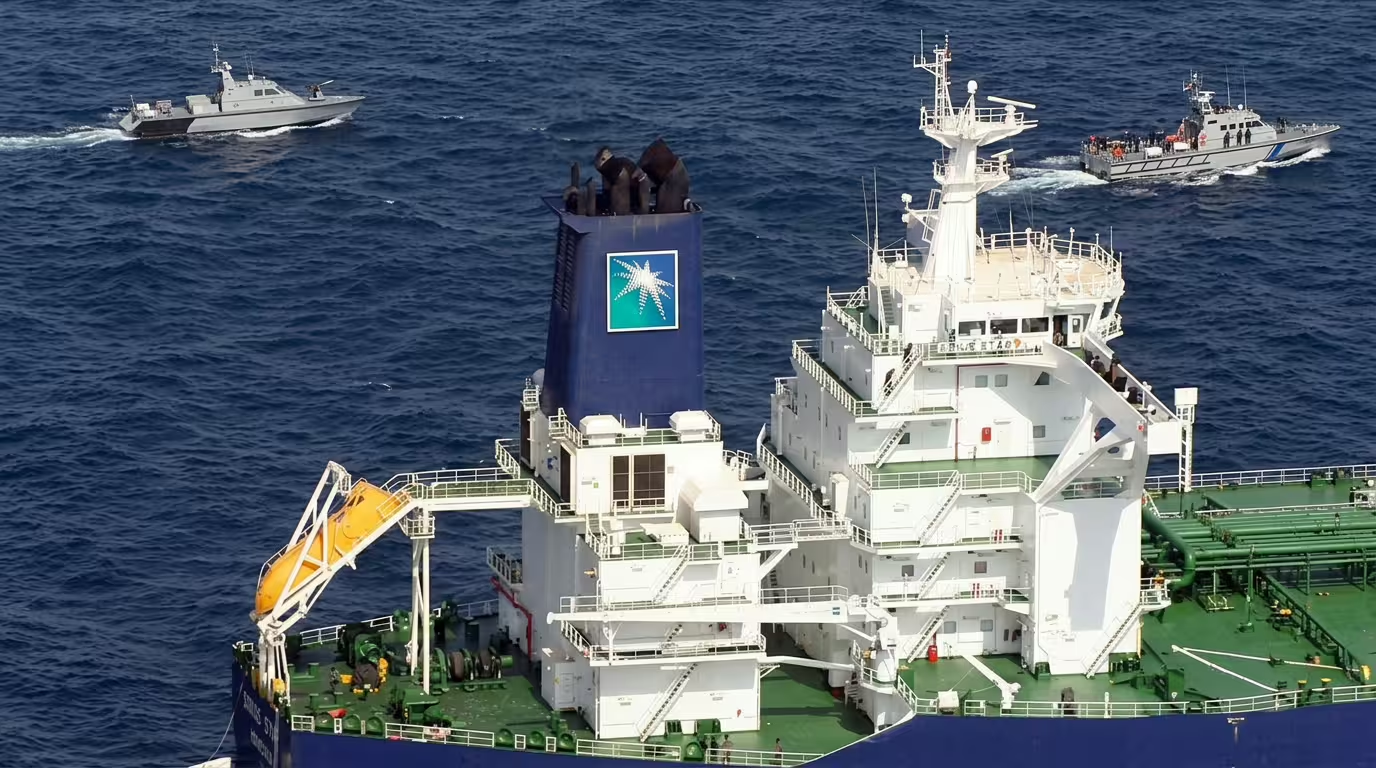
- The oil figure: Trump said the U.S. military is facilitating a large volume of oil out of the Strait of Hormuz, and that the weekend saw the highest transit since the war began, more than 20 million barrels. A U.S. defense official put Friday night’s exports at 22 million barrels.
- The New York round: U.S. envoys Steve Witkoff and Jared Kushner held indirect negotiations with Iranian Foreign Minister Abbas Araghchi on the sidelines of the UN General Assembly last Tuesday, with Qatari officials passing messages. Araghchi handed them Tehran’s conditions for reopening the strait and resuming nuclear talks, Axios reported.
- Qatari shuttle: Qatar’s prime minister met Iran’s president in New York on Thursday to discuss a potential deal with the Trump administration, then senior Qatari officials briefed Witkoff, a U.S. official and two regional sources told Axios.
- The compromise text: A regional source with knowledge of the indirect negotiations said Qatari mediators raised the original Iranian proposal with both parties and handed each a compromise proposal to review. Mediators spent the weekend moving between the Iranian and U.S. teams on changes to the text.
- Tehran’s response: Araghchi told NBC on Sunday that Iran still wants a diplomatic solution despite Trump’s rejection, and that the U.S. midterm elections are not part of Iran’s calculations. He said Tehran is still awaiting an official response through the mediators.
Background:
The talks follow a war that closed the Strait of Hormuz to normal traffic and brought a U.S. naval blockade. The strait is the chokepoint for a large share of seaborne crude exports, which is why its reopening sits at the center of Iran’s conditions.
Between the lines:
The two tracks are not symmetrical. Washington is already moving record volumes of oil through the strait under military escort, which weakens the leverage Iran’s reopening offer was built on. Trump’s line that Tehran overplayed its hand points to the same reading. Araghchi’s insistence that Iran awaits an official answer through mediators suggests Tehran is treating the rejection as a bargaining position rather than a closed door.
What’s next
Qatari mediators are expected to meet separately with Araghchi and Witkoff as early as Monday, with a further round of indirect U.S.-Iran dialogue possible the same day. Watch whether either side accepts the Qatari compromise text.