Key Points
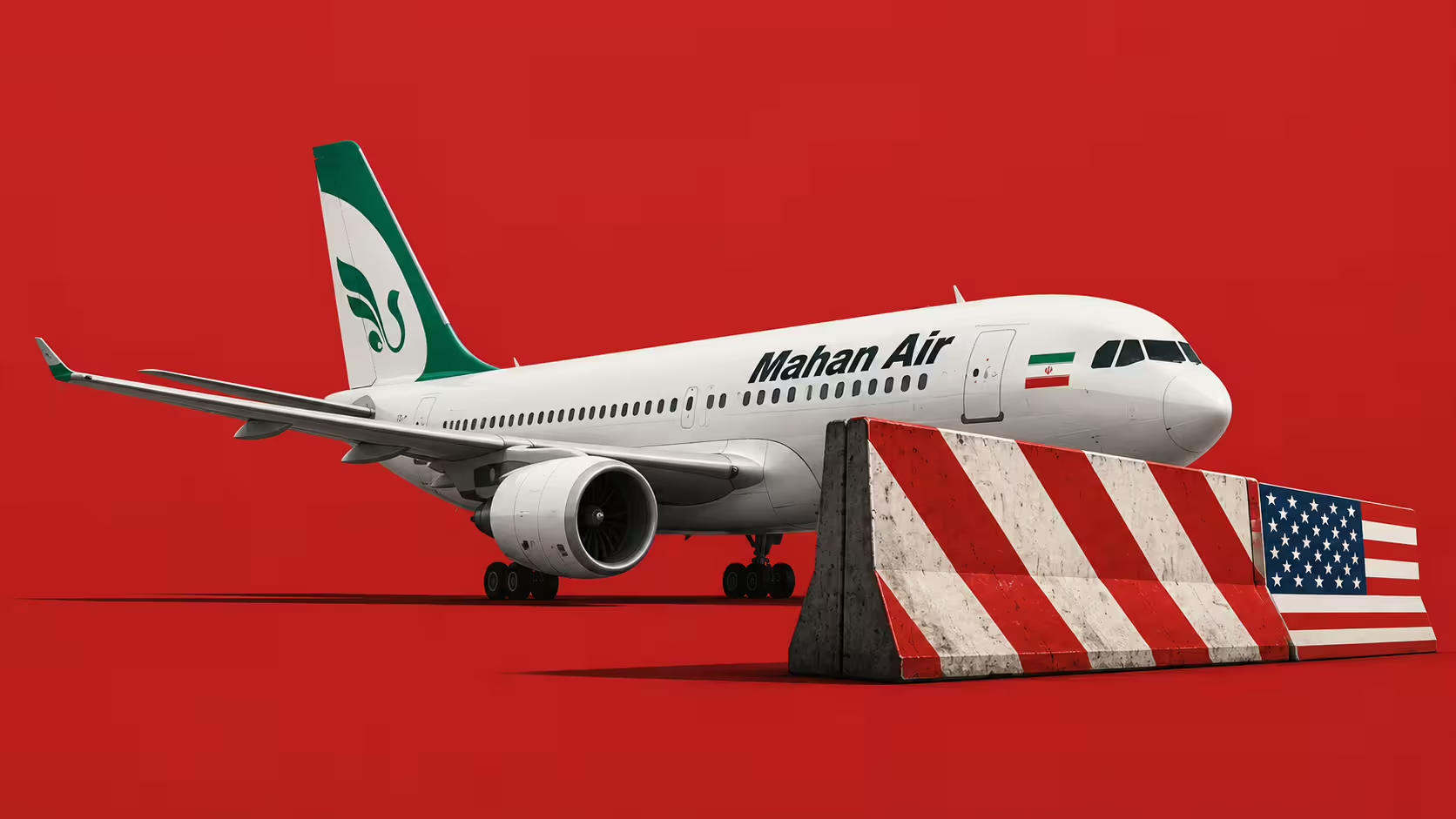
- Iraq suspended Iranian flights at Baghdad, Najaf, Erbil and Sulaimaniyah after US sanctions warnings.
- Najaf airport's director said the order came from Prime Minister Ali al-Zaidi's office.
- Iran-aligned factions threaten airport sit-ins, testing whether Baghdad can enforce its own decision.
The latest:
The suspension of flights to and from Iran widened this week from Baghdad to Najaf, Erbil and Sulaimaniyah, after Washington warned of sanctions on airports and companies servicing Iranian carriers. Najaf airport’s director said the order affecting his airport came from Prime Minister Ali al-Zaidi’s office. The decision has since drawn protests, accusations of submission to the United States, and a threat of sit-ins.
Details:
- The trigger: The immediate pressure was American. Washington had warned of sanctions against airports and companies servicing Iranian carriers, according to reporting by Al Jazeera and Channels TV. The suspension then spread beyond Baghdad to Najaf in the south and to Erbil and Sulaimaniyah in the Kurdistan region.
- Tehran’s framing: The Iranian consulate in Najaf cast the closure as a religious affront, asking how an airport serving the shrine of the first Shia imam could be shut to what it called the largest Shia country in the world. Iran’s Fars News Agency asked instead who stood behind the suspension order.
- The Iraqi charge: Haider al-Quraishi wrote on X that Zaidi had condemned a world ruled by the powerful in his UN speech while banning Iranian flights in submission to Washington. Fadak Jamal al-Amir said she rejected both the decision and the sanctions on Iran “categorically.”
- Factions escalate: The Iran-aligned Nujaba movement held a protest against the suspension, according to Sada4Press. Its leader Akram al-Kaabi called for preparations to stage sit-ins at Iraqi airports if flights were not restored — a threat of further action rather than an account of sit-ins already held.
- Kataib Hezbollah: The group urged Iraqis to help break Iran’s isolation, Al-Araby Al-Jadeed reported, putting a second armed faction behind the campaign against the suspension. Neither group has set a deadline tied to its threatened escalation.
- The nationalist reply: Ahmad al-Sadri described Nujaba’s action on X as a protest by the so-called movement. The nationalist objection is that an Iraqi government must decide what happens at Iraqi airports without armed factions threatening to occupy them.
- The Lebanese echo: Ahmad Hamieh circulated former prime minister Adel Abdul Mahdi’s criticism, which called the airport closures a grave mistake and a surrender of national sovereignty. Commentator Ali Hamade offered the opposite reading, writing that Hezbollah was pressing to open Beirut airport to Iranian flights as others closed.
- The cost: Passengers have been stranded by the suspension, and Najaf businesses depend heavily on Iranian visitors, according to Channels TV and 964 Media. Support for state control of the airports is not the same as enthusiasm for American sanctions.
- Baghdad’s move: Zaidi’s government is seeking an American exemption for some airports on humanitarian grounds, covering travel for medical treatment, study and religious visits, Al-Araby Al-Jadeed reported. The scope of the request and any US response have not been detailed.
Between the lines:
The argument has shifted from schedules to authority. Tehran’s consulate and Fars pushed two different questions — one religious, one about who issued the order — while Iraqi critics aimed at Zaidi personally, contrasting his UN language on sovereignty with the suspension. Kaabi’s sit-in threat turns that dispute into a test of whether the state controls its own airports.
What’s next
Watch whether Washington grants the humanitarian exemption Zaidi’s government requested, whether Nujaba converts Kaabi’s sit-in call into action at any airport, and whether the suspension is lifted at Najaf, Erbil or Sulaimaniyah.