Key Points
- Gulf oil producers are lobbying Washington against sanctions relief for Tehran, people familiar with the matter said.
- Qatar and Oman are pushing for fresh U.S.-Iran talks as early as next week.
- Riyadh's shift narrows the diplomatic path to reopening the Strait of Hormuz.
The latest:
Saudi Arabia and the United Arab Emirates are pressing the Trump administration to maintain economic pressure on Iran and reject concessions on sanctions or the U.S. Navy blockade, people familiar with the matter told The Wall Street Journal. The lobbying cuts against a mediation push by Qatar and Oman to restart talks on ending the war and reopening the Strait of Hormuz.
Details:
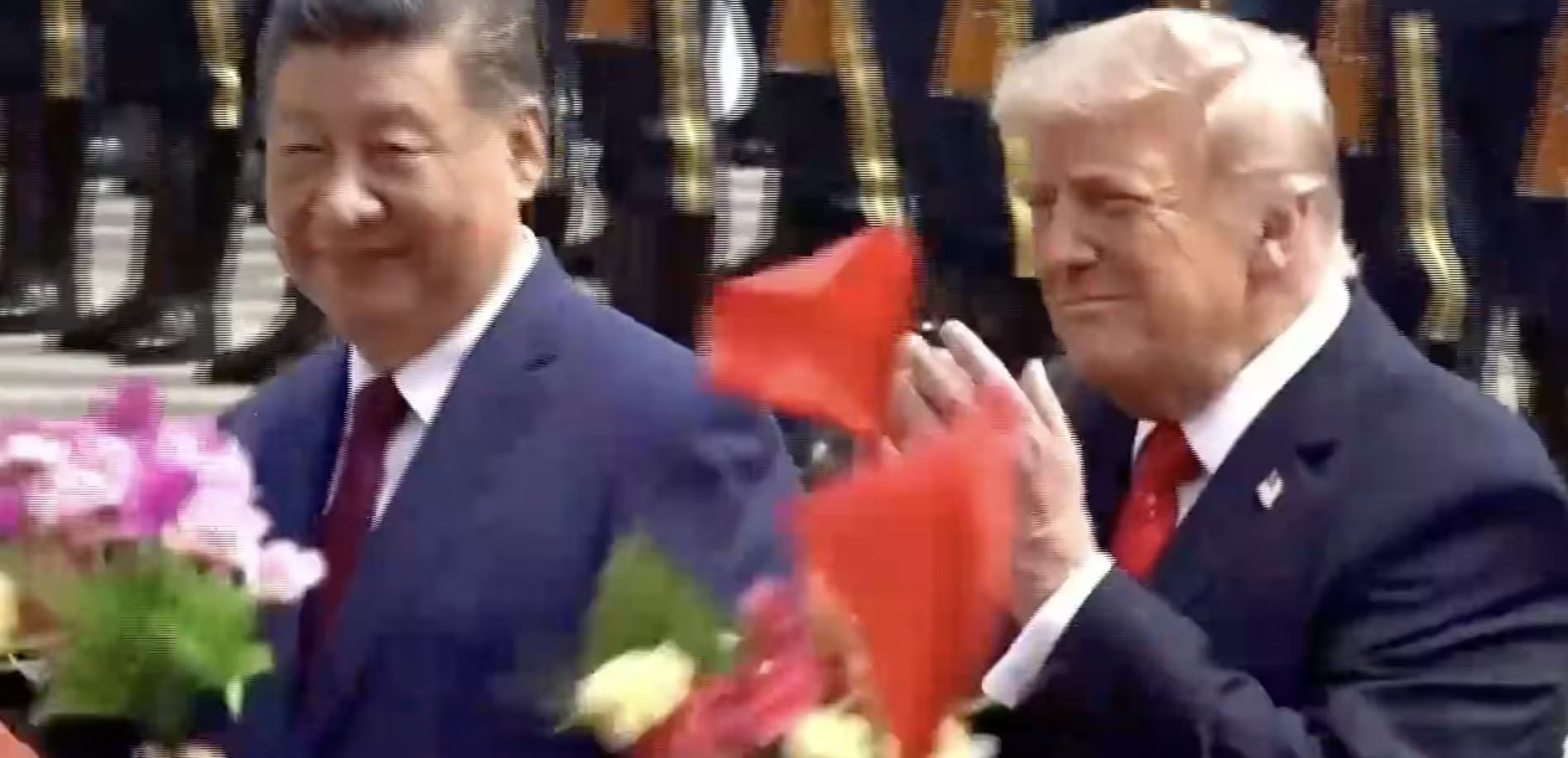
- The mediation: Mediators including Qatar are pressing for a new round of talks in Oman as soon as next week, aimed at getting Washington and Tehran to reopen the Strait of Hormuz and begin winding down the war, people familiar with the matter said. Trump said Tuesday he believed the two sides would meet again soon.
- The Gulf shift: Arab states led by Saudi Arabia pushed through the summer for negotiations and were willing to countenance a deal acknowledging some Iranian sway over Hormuz, the people said. Iranian attacks on Saudi ships in the waterway have since raised doubts in the Gulf that Tehran is serious about an agreement.
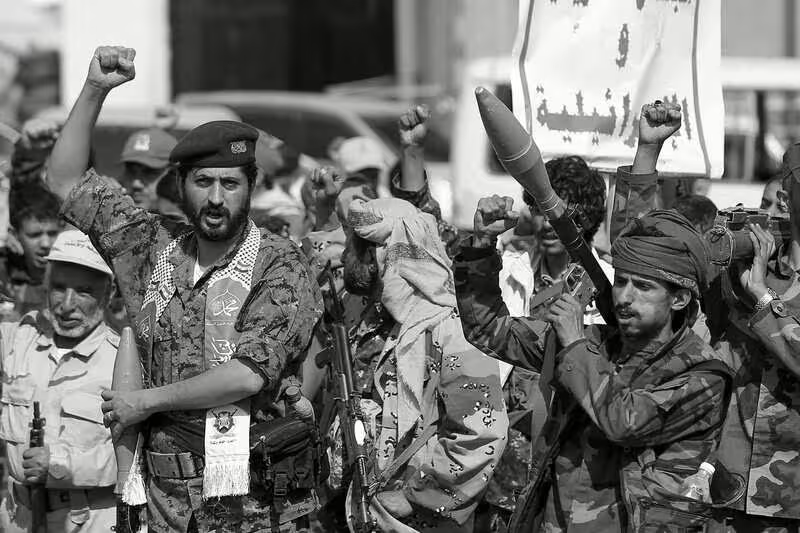
- The Saudi position: Crown Prince Mohammed bin Salman recently told American officials the U.S. should continue the blockade until Iran is compelled to sign a new agreement, some of the people said. Riyadh is also facing new obstacles getting oil to market after Iran’s Houthi allies in Yemen began squeezing shipments through the Red Sea.
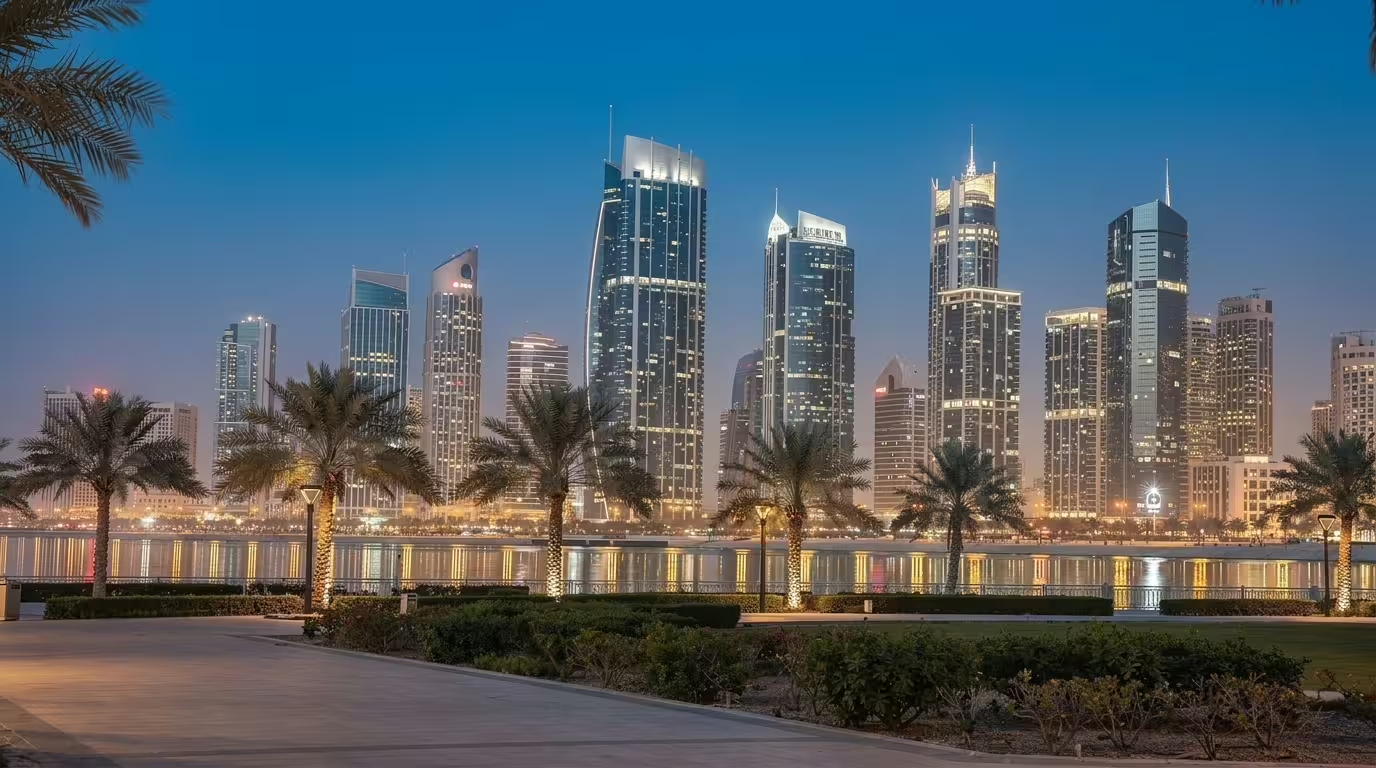
- The Emirati line: U.A.E. officials who previously said their state was eager to end the conflict diplomatically have poured water on expectations for talks, the people said. They argued that attacks on ships show Tehran is in no rush to return to diplomacy, and that Gulf states should not accept permanent Iranian control of the strait.
- The White House: An official said sanctions and the blockade had left the U.S. in a strong position, adding that while Trump is open to talking under the right circumstances, “he has no need to negotiate with the Iranians.” Washington has told mediators it believes economic pressure will eventually force Tehran into terms more favorable to the U.S. and Gulf states.
- The proposal: Iran’s foreign minister landed in Doha on Sunday to discuss new ideas including a seven-day pause in fighting that could end Iranian attacks on shipping in exchange for lifting the blockade, people familiar with the matter said. The U.S. has regularly told Qatar that Trump has no intention of lifting the maritime embargo.
- The hard-liners: Arab mediators said Iranian diplomats have floated several proposals and acknowledged the deepening economic crisis at home, but that the Islamic Revolutionary Guard Corps is sending a different message, refusing new formulas and saying it is prepared for a long war.
- The June terms: The Revolutionary Guard wants to return to something closer to the preliminary deal Trump struck with Iran in June, which promised relief from oil sanctions, access to frozen Iranian assets and a role for Tehran in administering Hormuz in exchange for opening the waterway. Washington has told mediators it has no interest in reviving it.
- The other camp: Oman and Qatar argue the region has already suffered significantly and say a phased reopening of Hormuz paired with a halt to attacks on Gulf states is the only viable route out of the war, the people said. Qatar has been working the sidelines of the U.N. General Assembly to restart contacts.
- The obstacles: Beyond Gulf lobbying, the people cited Trump’s own inclination to keep the blockade, Iranian suspicions that talks would merely buy Washington time until after the midterm elections before resuming attacks, and a harder tone from Tehran hard-liners as U.S. economic pressure bites.
Background:
A satellite image this month showed the aftermath of a drone attack on Saudi Arabia’s East-West pipeline, a route the kingdom uses to bypass Hormuz. With the Red Sea alternative now under Houthi pressure, Riyadh’s export options have narrowed on two fronts at once.
Between the lines:
Behnam Ben Taleblu of the Foundation for Defense of Democracies argued that reactivating the Houthi threat to the Gulf’s south has done more than anything to push those states toward conforming with U.S. sanctions, calling it the cost of Iran overplaying its hand. The pattern tracks the sequence described above: Riyadh backed talks in the summer, then hardened after attacks on its ships and its Red Sea route.
What’s next
Watch whether the Oman round convenes next week, whether Qatar’s seven-day pause proposal survives U.S. rejection of lifting the embargo, and whether the Revolutionary Guard shifts from its refusal of new formulas.