The latest:
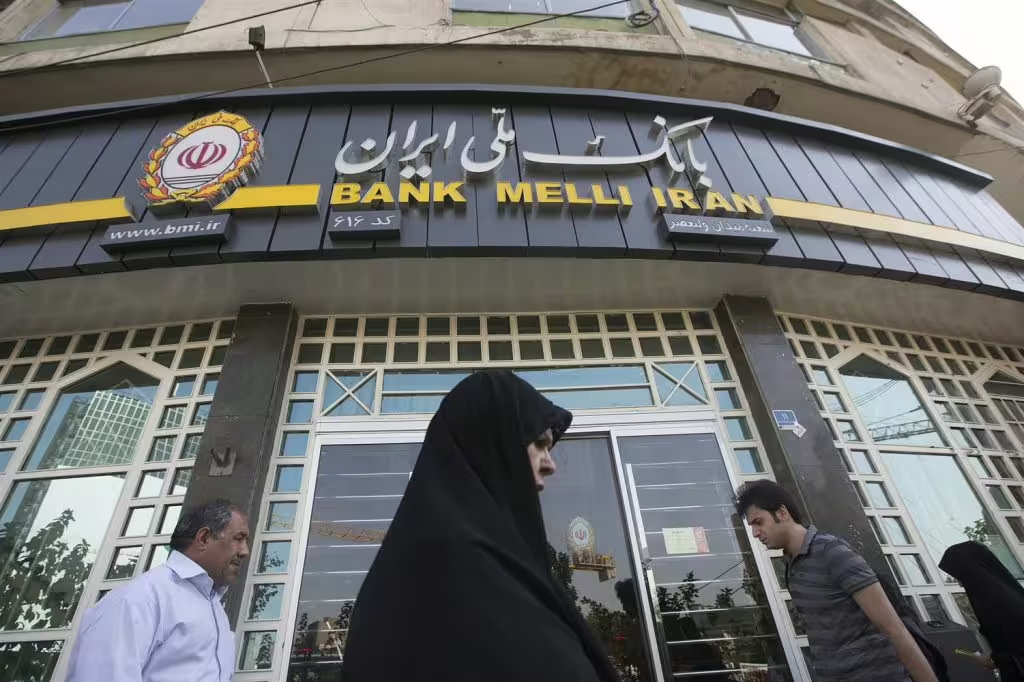
Bank Melli Iran’s branches in the United Arab Emirates are now barred from conducting any financial transactions to or from Iran, including trade finance and money transfers, the UAE central bank announced Wednesday. The regulator said the ban followed inspections that uncovered breaches of local supervisory rules, among them requirements on anti-money-laundering, terrorism financing and proliferation financing.
Details:
- The findings: On-site inspections showed the Iranian lender’s UAE branches failed to comply with applicable regulations, laws and supervisory decisions, according to a statement carried by WAM. The cited failures centred on the anti-money-laundering, counter-terrorism-financing and counter-proliferation-financing framework the UAE applies to all licensed institutions.
- The legal basis: The measures were taken under Article 168-1-C of Federal Decree-Law No. 6 of 2025 on the central bank and the regulation of financial institutions, activities and insurance business, the regulator said, exercising powers granted to the governor under prevailing laws.
- What is banned: The prohibition covers any financial transaction to or from Iran, explicitly including trade finance and remittances. The statement did not set a duration for the ban or describe what the branches may continue to do inside the UAE market.
- The US pressure track: On August 28, the US Treasury sanctioned the manager of Bank Melli’s Dubai branch as part of measures targeting what Washington described as networks helping Iran access the international financial system.
- The sanctions record: Bank Melli Iran has sat on US sanctions lists for years, with the designation extending to its offices and branches in several countries. Records of the Treasury’s Office of Foreign Assets Control link the bank to the Islamic Revolutionary Guard Corps-Quds Force and flag it as exposed to secondary sanctions.
- A wider pattern: Turkey revoked the licence of Iran’s Bank Mellat branch in Istanbul in September, while Washington in August moved against Banque Misr in the UAE over what it said was a role in facilitating Iranian access to the dollar.
- The wartime backdrop: Agence France-Presse reported the announcement came against the backdrop of the Middle East war that began with US and Israeli strikes on Iran on February 28, and amid intensified American economic pressure on the Islamic Republic.
- Abu Dhabi’s earlier step: The UAE announced last month that it was suspending commercial and financial exchanges with Tehran, according to AFP. The Emirates was hit during the war by Iranian attacks that also struck several other Gulf states, and Abu Dhabi accused Iran of attacking Emirati vessels.
- The Dubai factor: Dubai hosts an Iranian community estimated at hundreds of thousands of residents, a population that helped build the emirate’s commercial growth and has weathered successive periods of tension with Tehran.
Background:
Bank Melli is Iran’s largest state-owned bank and long operated Gulf branches that served Iranian trade through Dubai. Iran has also tightened its grip on the Strait of Hormuz since the war began, according to AFP.
Between the lines:
Abu Dhabi framed the decision as a supervisory compliance matter, citing inspection findings and a 2025 federal decree-law rather than the conflict. But the sequence it sits in — the Treasury sanctioning the Dubai branch manager in August, the suspension of trade with Tehran last month, and the strikes that drew Iranian attacks on Emirati territory — points to a financial channel closing under both regulatory and geopolitical weight.
What’s next
Watch whether Tehran responds, whether the central bank moves against other Iranian lenders licensed in the UAE, and whether Washington adds further designations tied to Iranian banking networks in the Gulf.