Key Points
- Dubai ranks ninth and Abu Dhabi 13th in the September 2026 Global Financial Centres Index.
- Abu Dhabi rose eight places, supported by ADGM growth and a 54% increase in assets under management.
- Two complementary hubs broaden the UAE’s appeal to institutions, investors and highly skilled professionals.
The latest
Dubai and Abu Dhabi emerged as the Middle East and Africa’s highest-ranked financial centres, reinforcing the UAE’s strategy of building complementary gateways for international capital. Dubai retained a global top-10 position despite slipping two places, while Abu Dhabi’s eight-place rise reflected its expanding institutional investment ecosystem. Nagham Hassan, MENA market analyst at eToro, said the dual presence strengthens the country’s ability to attract international business and support wider economic growth.
Details
- Dubai’s standing: Dubai placed ninth, down from seventh, even as its underlying index score increased. The shift reflected faster gains by competing centres rather than deterioration in Dubai’s financial ecosystem. DIFC, international banks, investment firms, professional-services companies and a large expatriate workforce remain central to its offer.
- Global gateway: Its position keeps the emirate alongside New York, London, Hong Kong and Singapore. Dubai has spent decades developing an international business environment serving banks, companies, wealth managers and investors operating across the Middle East, Africa and South Asia.
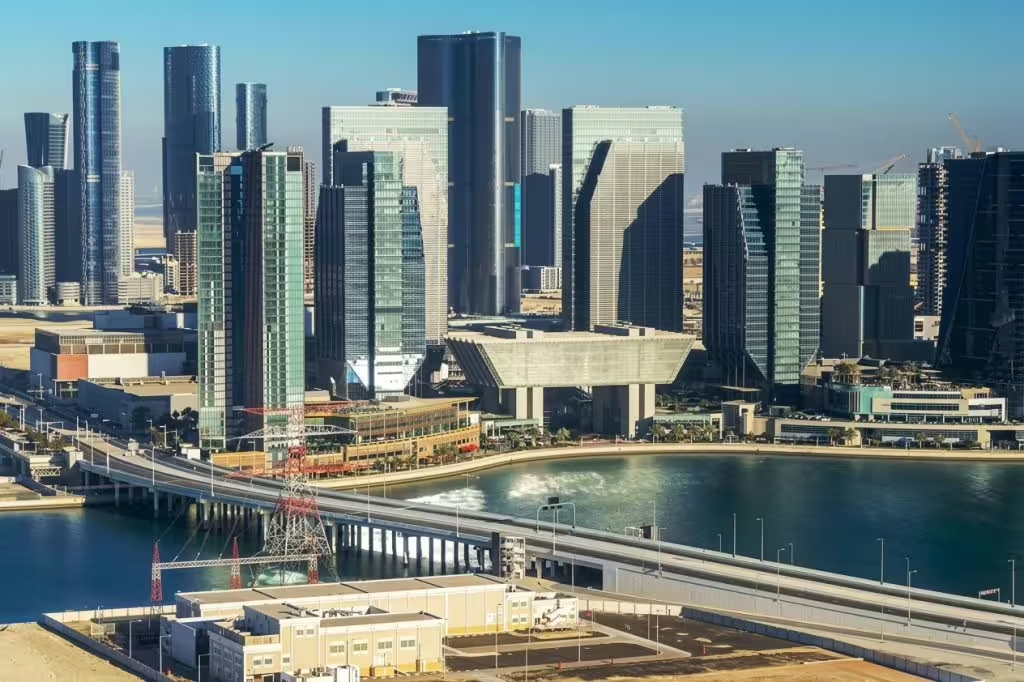
- Abu Dhabi momentum: ADGM reported a 54% year-on-year increase in assets under management during the first half of 2026. Bain Capital, Barings, Hillhouse Investment, Rokos Capital Management and Man Group established, launched or expanded operations in Abu Dhabi during the period.
- Different strengths: Dubai combines banking, investment and broad financial services with a global commercial base. Abu Dhabi is increasingly focused on institutional capital, sovereign wealth, asset management and private markets. Their differing roles give international capital more than one entry point into the UAE.
- Economic reach: International financial institutions bring highly paid professionals, headquarters and demand for legal, accounting, consulting and technology services. Their presence also supports commercial real estate, housing, hospitality and education, linking financial-sector expansion to activity across the broader economy. These links make finance an engine for employment and services beyond banks and investment firms.
- Policy backdrop: The UAE has used residency reforms, business-friendly regulation and specialised financial zones to encourage long-term operations. Hassan said progress reflects sustained investment in infrastructure, regulatory frameworks, and visa and residency options. Regional tensions can influence sentiment and capital flows, although institutions typically make expansion decisions over longer horizons.
Background
Abu Dhabi’s financial expansion forms part of a wider effort to diversify beyond hydrocarbons into finance, technology, artificial intelligence, advanced manufacturing and clean energy. Major state-backed investment institutions support the capital’s development, while Dubai benefits from its established role as a global business and commercial hub. This dual-centre model also strengthens the country’s effort to attract multinational companies, wealthy investors and skilled workers.
What’s next
The next Global Financial Centres Index will test whether Dubai’s higher underlying score converts into a ranking gain and whether Abu Dhabi sustains its climb. ADGM’s subsequent assets-under-management figures will provide another concrete measure of institutional expansion.