The latest:
The State Department told Americans in the Middle East to exercise heightened caution and prepare for flight cancellations, airspace closures and travel disruption, citing the potential for unexpected escalation. The advisory named the Houthis alongside Iran for the first time, hours after a Houthi missile strike on Riyadh. Trump left Camp David a day ahead of schedule and returned to the White House overnight.
Details:
- The advisory: The warning sent to US embassies said the security situation remains complex and that Americans in the region should expect possible flight cancellations, airspace closures and travel disruption. The department separately urged Americans to reconsider travel to or through the Middle East.
- Who received it: Beyond Israel, the warnings went to US missions in Oman, Lebanon, Iraq, Bahrain, Jordan, Kuwait, Qatar, Saudi Arabia and the United Arab Emirates, with repeated language that US diplomatic posts, including outside the region, have been targeted in the past.
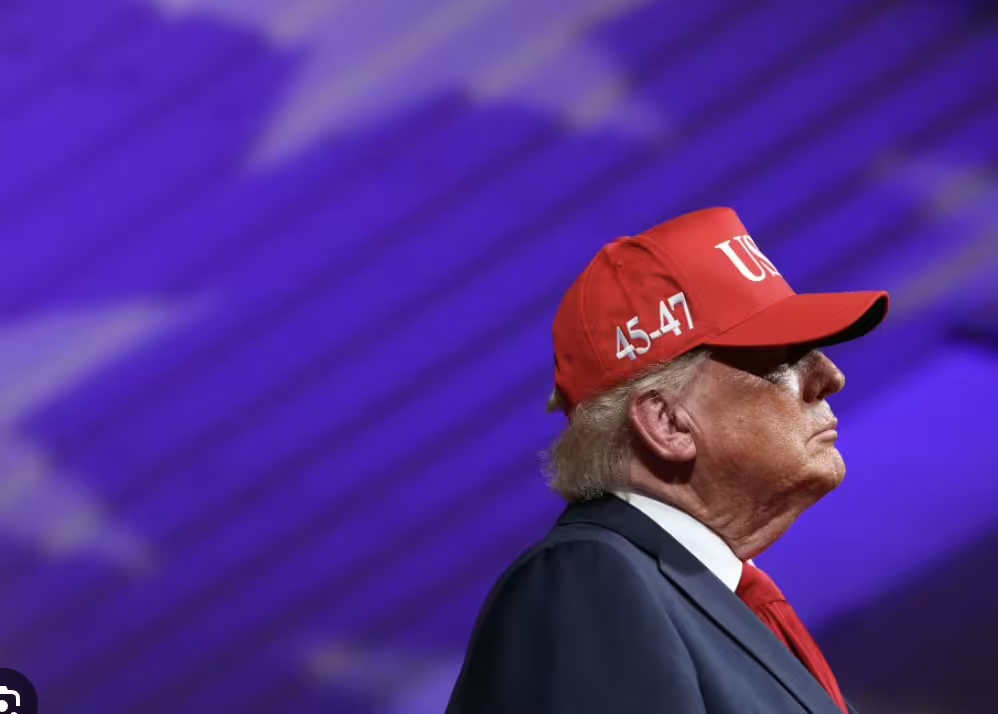
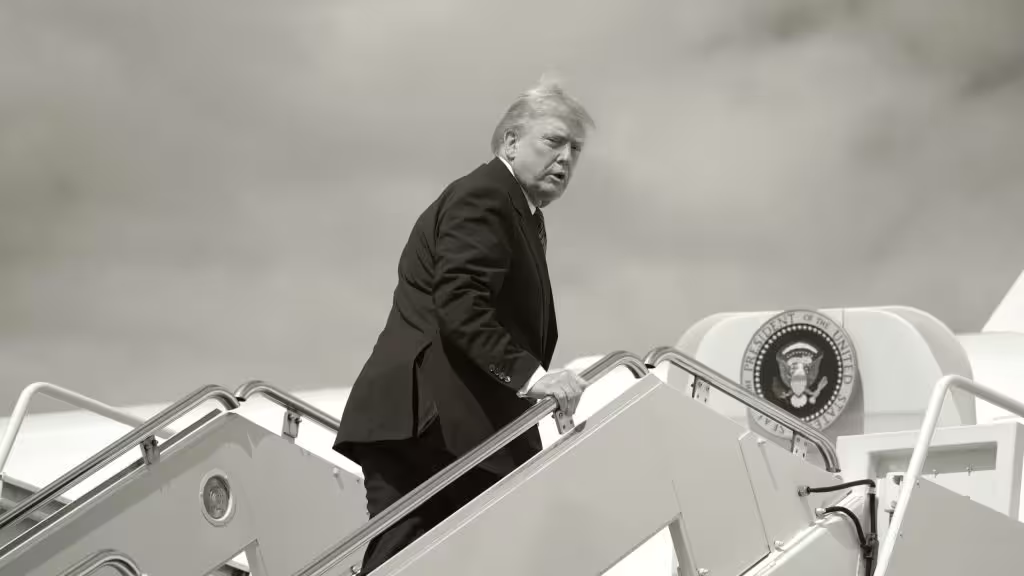
- Trump’s early return: The president left Maryland a day before his scheduled departure and was back at the White House overnight Saturday into Sunday. The White House offered no explanation, and no meetings or decisions were announced alongside the change.
- The Riyadh strike: Saudi Arabia said the Houthi attack involved a single ballistic missile that was intercepted. Residents heard an explosion and a smoke column was later seen near the airport, with no casualties or damage reported. Riyadh said further attempts on Yanbu, Taif, Bish and Farasan failed.
- The Houthi account: Military spokesman Yahya Saree claimed the group hit sensitive sites in Riyadh and an Aramco facility at Yanbu, causing huge fires. He said the strikes answered 732 Saudi air raids since the escalation began, and dismissed as slander Saudi claims of a drone launched toward Mecca.
- The Yanbu problem: Saudi Arabia has used Yanbu throughout the war with Iran as an alternative oil export route while Hormuz is closed. That route was already disrupted after an attack last week by Iran-aligned militias in Iraq on the pipeline carrying crude from the kingdom’s east to the western port.
- Tehran’s warning: Iranian state media said the central military command received information that the United States, backed by some regional states, is preparing to resume operations against Iran. The military said any American attack would trigger sustained strikes on US bases and interests, and that regional backers would be treated as parties to the conflict.
- Iran’s terms: Supreme National Security Council secretary Mohsen Rezaei told Al Jazeera that Tehran gave Washington seven conditions to begin talks, including ending the war on all fronts, releasing frozen funds and lifting the naval blockade on its oil exports. He said Qatar and Pakistan are mediating and Doha has passed the terms on.
- Rezaei’s escalation: Rezaei said Iran is ready for a decisive war, argued Trump’s calculations were wrong, and did not rule out a future change to the nuclear doctrine that officially denies weapons development. Parliament speaker Mohammad Bagher Ghalibaf said Hormuz will not reopen until Iran’s conditions are met.
- The blockade numbers: US Central Command chief Admiral Brad Cooper said more than 1 billion barrels of crude left the Gulf through Hormuz over the past two months while Iran exported none under the American blockade. He said more than 2,000 commercial transits received coordinated protection and main channels were cleared of mines.
Background:
Iran has been trying to close the Strait of Hormuz with attacks on tankers, prompting a US naval counter-operation to escort shipping and keep crude flowing to global markets, where prices remain elevated.
Between the lines:
CNN reported that multiple Gulf actors now read the Houthi front as part of the wider Iran-US war, and doubt progress against Tehran is possible without resolving it. Former US diplomat Joey Hood told the network that Houthi gains in the Red Sea embolden the Revolutionary Guard, and that the Houthis need Iranian support even if Tehran does not control them directly.
What’s next
Watch for a US response to the seven conditions relayed through Doha, further Houthi strikes on Saudi energy infrastructure, and whether Washington upgrades its advisory or orders embassy drawdowns in the ten listed countries.