The latest:
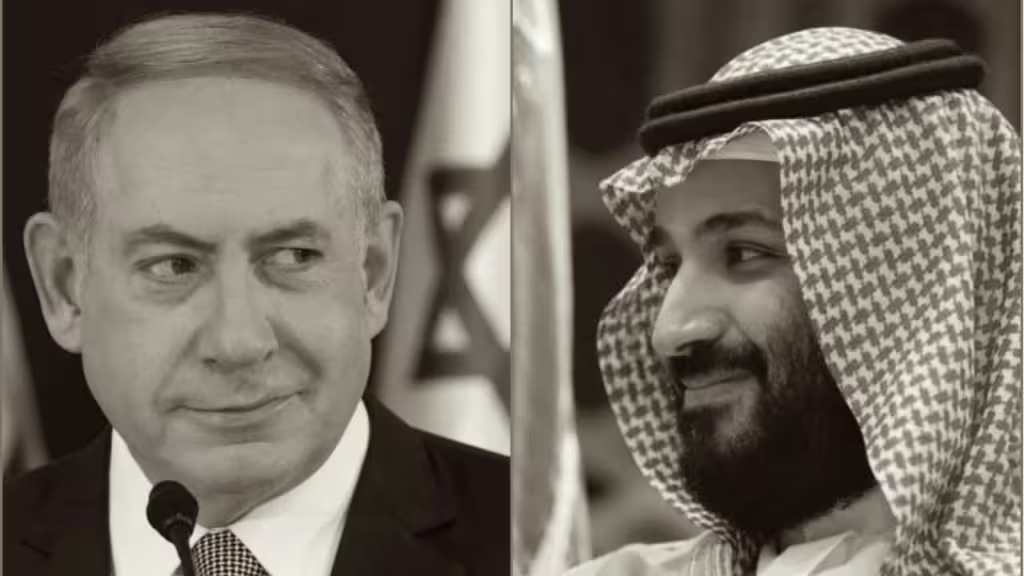
Saudi Arabia and Israel have discussed intelligence cooperation against the Houthis through mediation by US Central Command, according to diplomatic sources in the region. The sources said Riyadh’s request likely centered on building a fuller picture of Houthi military deployment and identifying possible plans for future operations, after a week of drone strikes on Saudi oil infrastructure.
Details:
- The channel: Diplomatic sources in the Middle East said the talks were brokered by CENTCOM. Israel Hayom reported Israel received an indirect approach through the command on sharing intelligence and other assistance. The sources pointed to Israeli naval intelligence work near the Strait of Hormuz, where it helped US forces map Iranian force positions.
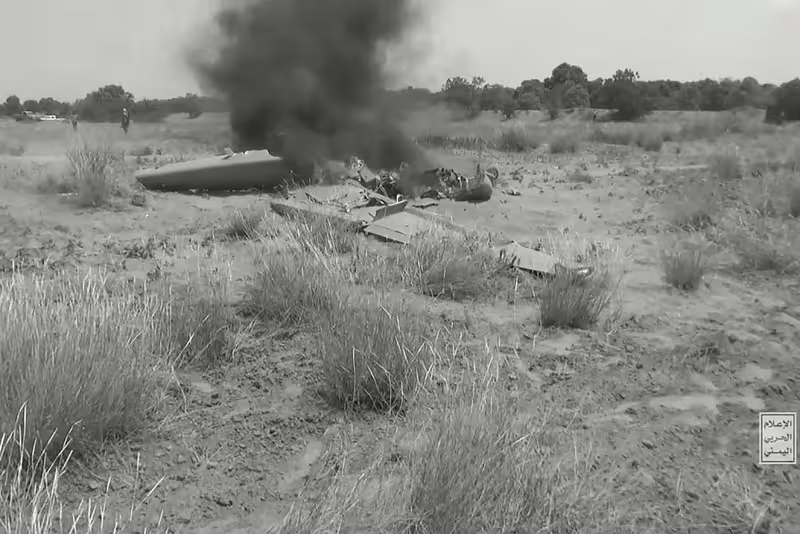
- The attacks: The Houthis intensified strikes on Saudi Arabia over the past week, including a drone attack on oil pipelines and pumping stations that partially halted operations along the main pipeline. The group also attacked Saudi civilians inside a mosque and adjacent buildings near the Yemeni border.
- The blockade: Houthi forces seized several strategically located Red Sea islands and barred Saudi ships from passing through Bab al-Mandab, imposing what the sources described as an economic and diplomatic siege. Last week they overran the port of Mokha and took Perim island, while government-aligned forces withdrew from Hanish and Zuqar.
- The analyst: Brandon Friedman, research director at Tel Aviv University’s Moshe Dayan Center, told the Jerusalem Post on Monday that closer Israeli-Saudi ties are unlikely despite Riyadh’s outreach. He said cooperation would make sense given a shared adversary, but remains “highly unlikely under current conditions” because foreign policy is read through Israel’s elections.
- Quiet support: Friedman assessed any Israeli assistance would have to be delivered quietly because of Saudi domestic political needs, and judged that whatever Israel offers now would be framed to give the governing coalition a boost before the vote.
- Washington’s refusal: Crown Prince Mohammed bin Salman urged President Donald Trump last week to take military action against the Houthis, and Trump told him he was not prepared to do so, according to officials briefed on the calls, cited by the New York Times.
- The Jeddah meeting: Saudi state media confirmed the crown prince met CENTCOM commander Admiral Brad Cooper in Jeddah on Monday on regional developments. CENTCOM spokesman Tim Hawkins said Cooper met senior Saudi civilian and military leaders on regional security cooperation, without giving dates or naming the crown prince.
- The British track: Bloomberg reported Riyadh also asked Britain for help pushing the Houthis back from Bab al-Mandab and defending its oil infrastructure. According to the report, Burnham agreed to send British military advisers but has not committed to further assistance.
- The nuclear file: Security officials said Trump’s decision to let Saudi Arabia develop a civilian nuclear program alarmed Israel’s security establishment. Trump tied progress on the file to Saudi-Israeli normalization, while Riyadh wants the diplomatic track to follow a resolution of the Israeli-Palestinian conflict.
- Oil prices: Brent crude rose about 4% to above $108 a barrel on Monday, roughly 50% higher than before the war. Saudi civil defense issued warnings of imminent attacks on Khamis Mushait and Abha, with no casualties reported.
Background:
The Houthis have fought Yemen’s internationally recognized, Saudi-backed government since 2014. Violence eased under a 2022 truce until July, when the group declared a blockade on Saudi shipping in the Red Sea and began attacking Saudi vessels.
Between the lines:
Two pressures point in opposite directions. Riyadh’s exposure is rising — pipelines hit, islands lost, shipping blocked — while Trump has refused military action and Britain has committed only advisers, narrowing the pool of partners. That logic favors the Israeli channel. But Friedman’s assessment is that Israel’s election calendar and Saudi domestic sensitivities cap any cooperation at the quiet, deniable level.
What’s next
Watch whether CENTCOM converts the Jeddah meetings into a formal intelligence-sharing arrangement, whether Britain moves beyond advisers, and whether Brent holds above $108 as Houthi forces consolidate positions north of Bab al-Mandab.