Key Points
- Houthi missile and drone attacks wounded 13 civilians, prompting Saudi warnings of firm action and more than 50 airstrikes.
- Houthi gains along Yemen’s Red Sea coast are increasing pressure near the Bab al-Mandab Strait.
- Pipeline disruption and constrained Hormuz shipping threaten Saudi export routes and add pressure to global oil markets.
The latest
Saudi Arabia threatened a “firm” response after ballistic missile and drone attacks on Khamis Mushait, Abha and Taif wounded 13 civilians, as the Houthis reinforced positions along Yemen’s Red Sea coast. Riyadh’s warning came amid a renewed ground offensive, an outage on its East-West oil pipeline and severe disruption through the Strait of Hormuz, exposing the kingdom to simultaneous pressure on export infrastructure and the two maritime gateways connecting Gulf energy producers with world markets.
Details
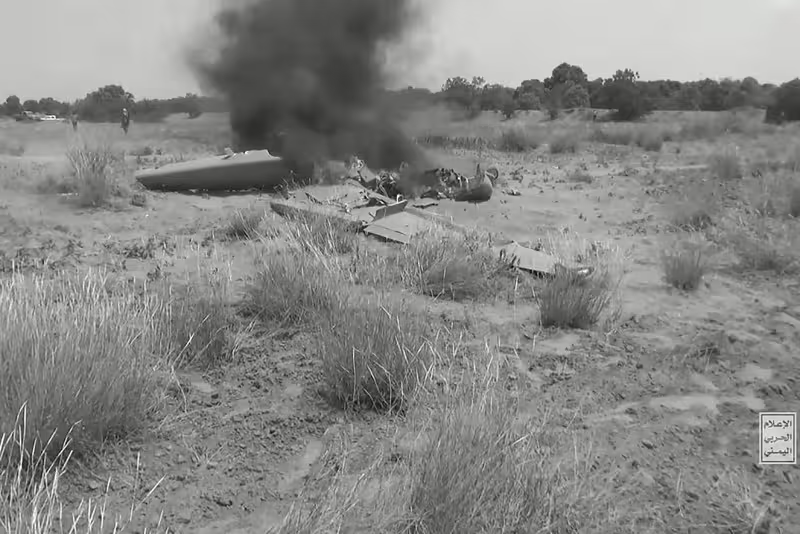
- Attack scope: The Houthis said Monday their “large-scale” operation used dozens of ballistic missiles and drones against King Khalid airbase in Khamis Mushait, targeting hangars, radar systems, runways and ammunition depots. The Saudi-led coalition confirmed attacks on three cities, and authorities issued emergency alerts across the south.
- Saudi counterstrikes: Riyadh responded with more than 50 airstrikes against Houthi positions, according to the rebels, after a similar wave the previous day. The coalition promised all necessary operational measures to deter what it called a hostile and extremist approach and protect Saudi sovereignty.
- Coastal gains: Yemeni officials said the Houthis had strengthened their grip over most of the western coastline and seized Perim Island at the entrance to Bab al-Mandab. A Houthi strike in western Yemen killed eight government soldiers, according to two military sources.
- Pipeline shock: An aerial attack last week knocked the 1,200-kilometre East-West pipeline offline. Saudi Arabia built the route in the 1980s to move crude from the Gulf to the Red Sea if Hormuz were threatened. Riyadh blamed Iranian-backed militias in Iraq and gave no restart date.
- Market stakes: Traders estimate a prolonged pipeline shutdown could put as much as 4% of global oil supply at risk while Hormuz remains disrupted. Crude prices rose more than 4% on Monday before settling about 1% higher. The strait carried roughly one-fifth of global oil exports before the war.
- Washington stance: Saudi Arabia requested greater US military involvement, but Washington has resisted direct intervention beyond intelligence support, according to three sources. President Donald Trump said he had spoken with Crown Prince Mohammed bin Salman and that the Houthis had urged Washington to stay out. The crown prince met US Central Command chief Admiral Brad Cooper in Jeddah on Monday.
- Stalled talks: Oman postponed planned talks between Iran and Gulf Arab states on reopening Hormuz, with Tehran saying the delay came at Riyadh’s request. Iran’s Revolutionary Guard said the strait remained closed under its “smart control” and warned vessels not to transit without authorization.
What’s next
The next indicators are Saudi Arabia’s decision on further operational measures, the restart date for the East-West pipeline, and Oman’s rescheduling of the postponed Iran-Gulf talks on Hormuz.